Blogerroom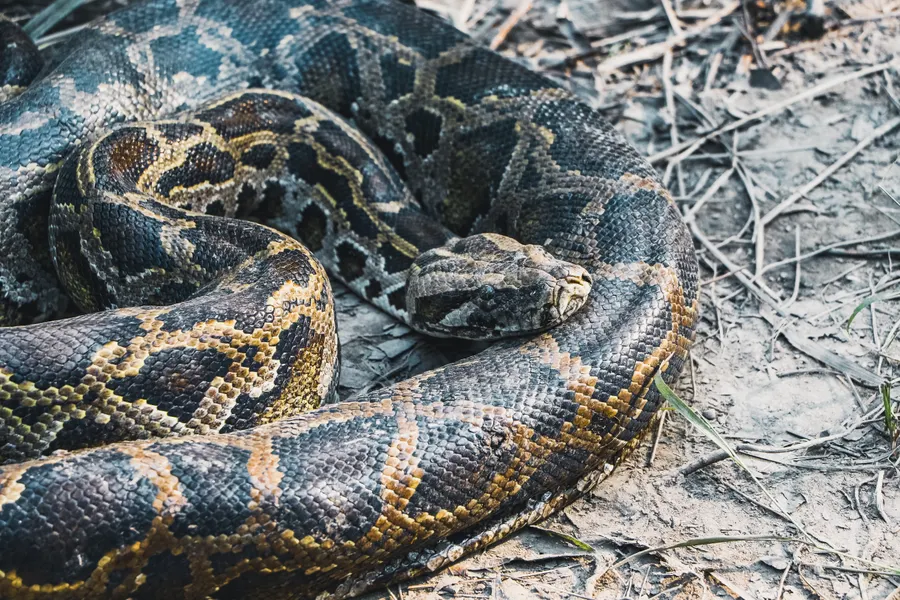
Florida Study Ranks Pythons by How Much Removal Matters
A UF study weights 1,556 captured Everglades pythons by survival and breeding value, showing winter catches matter far more than counts suggest.
Count the snakes caught in a month and you learn how busy the hunters were. It tells you much less about what the hunt achieved. That is the argument behind a new University of Florida study of Burmese python removals in the Everglades, which assigns each captured snake a value based on how much it is likely to add to the next generation.
The paper, published Sept. 21 in the journal Ecological Applications and publicized by UF/IFAS on Sept. 28, introduces what the authors call the Weighted Removal Index. The lead author is Alexander Romer of the UF/IFAS Fort Lauderdale Research and Education Center.
Why Counting Heads Misleads
Burmese pythons are hard to find. According to the paper, they spend most of their time at rest, often submerged, and estimates of how often hunters detect them run between 1% and 5%. Contractors hired through the South Florida Water Management District's Python Elimination Program catch about 0.09 snakes per hour of searching, a figure the authors cite from earlier work.
And a snake is not just a snake. Juveniles rarely survive: the paper cites a two-year survival rate of 7.1% for hatchlings, against roughly 90% annual survival modeled for adults. A mature female averages 34 eggs per clutch, with a recorded maximum of 96. Removing a hatchling that probably would have died anyway does little. Removing a large breeding female does a lot.

How the Index Works
The index combines two factors, survival and reproduction. Females only count for breeding once they reach about 260 centimeters in snout-vent length, and their value climbs steeply with size. Males get a smaller reproductive weight above a size threshold. Romer gave an illustration in UF's release: a big female might be worth 100 arbitrary ecological points, while a small snake might be worth five. The numbers are arbitrary, but the principle is not.
The team applied the index to 4,092 survey events between May 2020 and April 2022, covering 16,336 survey hours and 1,556 python removals.
Winter Matters More Than the Totals Show
Raw counts peak in summer, when hatchlings are abundant. Weighted by the index, the picture changes. According to the paper, winter months from December to February contributed a disproportionate share of total removal value despite far fewer captures, because the snakes taken then were large, mature adults. Romer told UF that January and February look unimportant by headcount, but demographic weighting makes them look much more important.
The authors also found that survey value was higher on waning crescent and waning gibbous moons, when surveys had assistants, and in warmer, more humid conditions. A neural network could predict which surveys would find a snake with a balanced accuracy of 70%, and when it predicted a catch, it was right more often than 84% of contractors' typical capture rates. Contractor identity was the single biggest driver of results, accounting for 33.7% of the boosted-tree model's influence. In other words, who goes out matters more than the weather.

The Caveats
This is a decision tool, not a proof that pythons are being beaten. Three limits stand out. First, the survival curve rests on thin data: juvenile survival comes from field estimates, but adult survival comes from expert opinion, the paper says. Second, the model assumes removing snakes lowers the population without triggering a compensating rebound, which has not been tested here. Third, the predictions were only tested within the same program, so they may not carry over to other properties or years.
The forecasting skill is also modest. Three in four surveys found no python, and the best models still got many predictions wrong. My own reading is that the value of the paper lies less in forecasting than in changing what gets measured.
What It Could Change
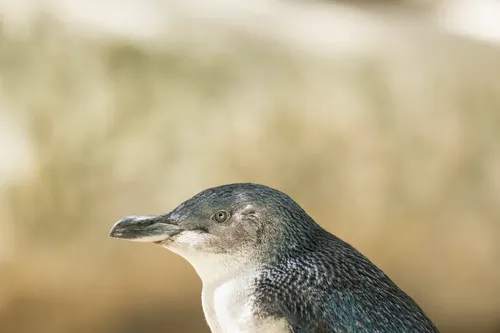
The authors point to program design. The paper notes that the program's current incentive is weighted by snake length, which only partly separates a large breeding female from a juvenile. The paper suggests the index could shape incentives so that effort shifts toward the conditions that produce mature females. That choice about what to count mirrors the debate Blogerroom covered when New Zealand set a limit of four fishing deaths a year for yellow-eyed penguins: a cap or a quota is only as good as the number it counts.
Surveillance faces the same issue for other invaders, such as the flesh-eating screwworm now tracked on a UC San Diego dashboard. Knowing where a pest is matters less than knowing which individuals drive its spread.
The stakes are real. The paper cites earlier research showing observations of several mammal species in Everglades National Park fell by 87.5% to 100% between 2003 and 2011 as pythons spread, and wading birds made up about 21% of identified python prey. Whether the index helps depends on the next step: a field trial that rewards mature-female removals and then tracks whether native mammals return.
Written by
Mr. Jitendra Bhatt
Msc in Chemistry and field researcher.