Blogerroom
Flesh-Eating Screwworm Parasite Returns to the US
The New World screwworm has reached Texas and New Mexico, and a new UC San Diego dashboard tracks where the flesh-eating fly could strike next.
A pest the U.S. thought it had beaten for good
The New World screwworm was one of the rare pest-eradication success stories in American agricultural history, a parasite the United States spent decades and enormous resources pushing entirely out of the country and south into Panama. That victory is now unraveling. The flesh-eating fly has reached Texas and New Mexico again, threatening livestock, wildlife, pets, and in rare cases people, and researchers at the University of California San Diego, working with the County of San Diego Health and Human Services Agency, have built a new tracking dashboard specifically designed to help public health officials get ahead of where the parasite might spread next.
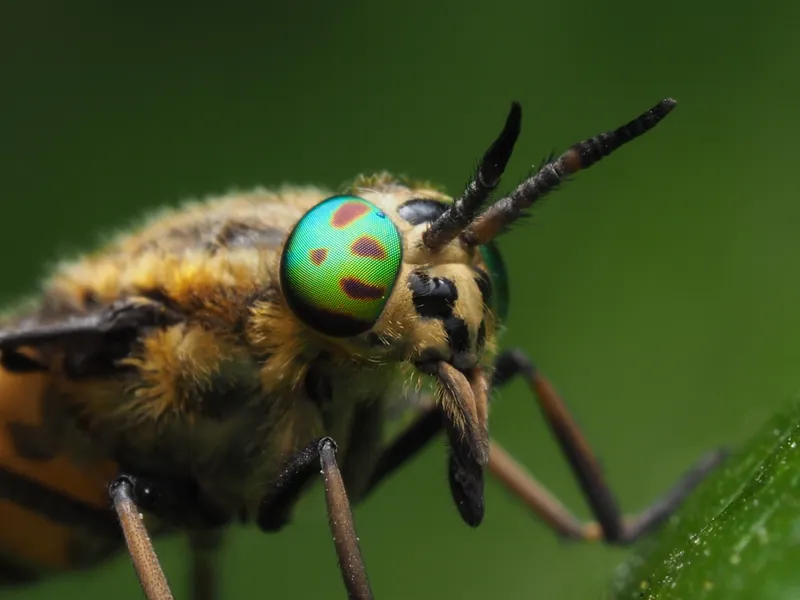
Unlike most fly larvae, which feed on dead or decaying tissue, screwworm larvae are unusual among their kind in feeding on living flesh, burrowing into open wounds on warm-blooded animals and expanding the injury as they grow. That single biological difference is what makes this particular fly considerably more dangerous than an ordinary agricultural pest.
What the parasite actually did the last time it was here
The scale of the original problem is worth remembering precisely because it explains why officials are treating this resurgence with real urgency rather than routine pest-management concern. In the 1950s, before the original eradication campaign succeeded, New World screwworm infestations inflicted enormous losses on U.S. livestock producers, an estimated $50 million to $100 million in damage every year in the hardest-hit Southwest alone, figures that would represent considerably larger sums in today's dollars. That economic toll, combined with the direct animal welfare and occasional human health consequences of the infestation, drove one of the more ambitious pest-control campaigns the country has ever undertaken, ultimately pushing the parasite's range back to Panama for decades.
That successful eradication is precisely why its return now carries such weight. This isn't a parasite the U.S. has always coexisted with at some baseline level; it's one the country specifically defeated through sustained, expensive effort, and its northward creep back into Texas and New Mexico represents the unraveling of a decades-old public health and agricultural achievement, not merely a new pest emerging for the first time.
Why officials needed a new tool to track it
Dr. Eliah Aronoff-Spencer, professor of medicine at UC San Diego School of Medicine and an affiliate member of the UC San Diego Design Lab and Qualcomm Institute, explained what prompted the new tracking system directly: "Our County public health partners alerted us to the need for better situational awareness of New World screwworm. We built a dashboard to generate regional risk profiles." That collaboration reflects a fairly practical problem local officials were facing: traditional detection relies on confirmed laboratory cases, a reporting pathway that can lag actual spread by days or even weeks, precisely the kind of delay that matters enormously when a parasite is actively expanding its range.
The dashboard's design addresses that lag directly by combining multiple data streams rather than waiting solely on confirmed lab reports. Rather than simply plotting confirmed detections after the fact, the system incorporates environmental conditions that could allow the fly and its larvae to survive and reproduce, alongside media coverage of reported cases, producing county-by-county risk estimates meant to flag where the threat may be growing before official laboratory confirmation catches up. Aronoff-Spencer framed the broader significance of that approach: "This is just one example of how we are responding to County needs with a focus on real-world issues," and described the project as "providing shareable, open reference designs that demonstrate exactly how public health, academia and industry can successfully work together."
The eradication playbook getting a second run
The response to this resurgence isn't starting from scratch; it's reviving and updating the same fundamental strategy that worked the first time. Led by the U.S. Department of Agriculture, the current eradication effort has reintroduced the sterile insect technique, historically the backbone of the original 1950s-era campaign, combined with targeted pesticide use and quarantines restricting animal movement out of affected areas. The sterile insect technique works by releasing large numbers of sterilized male flies into affected areas; when those sterile males mate with wild females, the resulting eggs don't hatch, gradually collapsing the local population over successive generations without requiring broad pesticide application across the landscape.
The current campaign includes a genuinely modern addition to that decades-old strategy: the U.S. Environmental Protection Agency is being asked to approve a genetically modified all-male strain of the fly, currently in field testing, which would let officials release sterile males without needing to first separate males from females using older, more labor-intensive methods. UC San Diego researchers are separately developing next-generation genetic technologies intended to strengthen future control and eradication efforts further, suggesting the broader technical toolkit for fighting this parasite is expanding well beyond what was available during the original mid-20th-century campaign.

Why veterinarians are the other half of the surveillance system
Beyond the dashboard and the sterile-insect campaign, on-the-ground surveillance depends heavily on veterinarians, since the parasite can affect any warm-blooded animal, not just cattle and livestock specifically. Emily Trumbull, a veterinarian and lead for the Epidemiology Unit's One Health Program, described ongoing coordination between researchers and agricultural regulators: "We are working closely with the California Department of Food and Agriculture to connect local veterinarians with screwworm resources for surveillance in our region." That kind of direct clinician involvement matters because veterinarians treating animal wounds in affected or nearby regions are often the first professionals positioned to spot an infestation before it spreads further, making them a genuinely critical surveillance layer that a purely data-driven dashboard can't replace on its own.
What this means as the parasite continues moving
As of official USDA reporting in mid-August, southern U.S. states remained the primary zone of concern, but officials tracking the outbreak have explicitly framed the current moment as a particularly urgent phase, with the tracking dashboard's own developers describing themselves as being "in a very concerning phase right now." That concern centers less on the current confirmed footprint in Texas and New Mexico specifically, and more on the parasite's demonstrated capacity to expand further north if containment efforts don't hold, a trajectory the new dashboard is explicitly designed to anticipate rather than simply document after the fact.
The broader story here extends beyond one parasite's geographic range. It's a case study in how quickly a genuinely defeated public health threat can reemerge once conditions allow, and how modern data tools, environmental modeling, real-time media monitoring, and genetic engineering, are being combined with a decades-old eradication strategy in an effort to defeat it a second time before it can reestablish itself as durably as it did the first time around.
Written by
Mr. Jitendra Bhatt
Msc in Chemistry and field researcher.