 Blogerroom
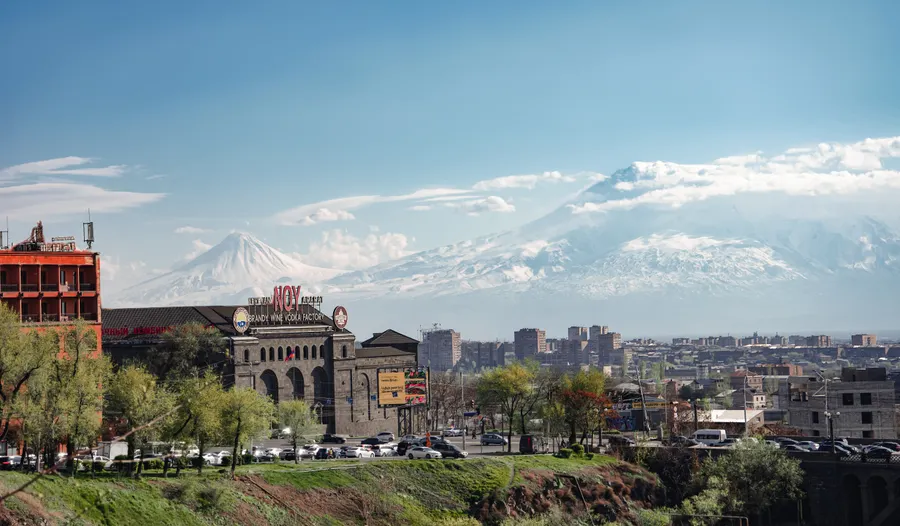
COP17 Ends in Overtime With a Deal, but Little Money
Nearly 200 nations adopted COP17 texts in overtime, but finance stayed voluntary, the Cali Fund held just $8,990 by Oct. 26, and full texts are unpublished.
"And that's it. Perfect," COP17 President Hambardzum Matevosyan told delegates in Yerevan as he brought down the gavel on the final documents. Nearly 200 countries had adopted the agreements after two weeks of tense talks that ran past the scheduled Friday close and into Saturday, according to AFP and The Climate Watch. It was a diplomatic win in a process that stalled the last time, in Colombia in 2024. The harder question is what the agreements actually commit anyone to do.
What was agreed
The summit adopted decisions on the first global review of progress under the Global Biodiversity Framework and on resource mobilization, and it took up the proposed Yerevan Pathway, a package meant to speed implementation through 2030, The Climate Watch reported. The pathway pushes governments to fold biodiversity into national development strategies and budgets, with stronger monitoring, financing and the participation of Indigenous Peoples, local communities, women and young people.
Ecuador was chosen early Saturday to host COP18 in 2028, beating Panama by 55 votes to 53 in a secret ballot, according to the same report. Governments also adopted 14 decisions in the first week, on topics including invasive alien species, biosafety and gender equality.
One caution applies to everything below. AP noted that the final versions of the documents were not immediately available, and that the agreed global review had still not been published hours after its adoption. It was not clear which recommendations from the draft made it into the final text.

The review's verdict
The global review itself delivered an unflattering scorecard. Fewer than half of the national biodiversity targets assessed were reported to be on track, and progress on most of the framework's 23 global targets remains insufficient, The Climate Watch reported. The UN's first review before the summit had reached the same conclusion.
Protected and conserved areas cover about 19 percent of land and inland waters and 10 percent of the ocean, against a pledge of 30 percent by 2030, according to the review as reported. That figure matters because a recent Nature study argued that more land, about 26.8 percent, is conserved than the official record shows, mostly in national datasets that have not been reported. The review is collective and non-punitive, so it does not sanction countries that miss targets.
The money problem
Finance was the issue that decided how long the talks lasted. The agreed text did not compel any country to contribute to biodiversity finance but asked for volunteers to "signal interest," AFP reported. Negotiators reached a compromise on resource mobilization, though the agreement does not itself guarantee substantial new funding, The Climate Watch said.
The dividing line was familiar. The European Union pushed to widen the group of contributors, arguing that economically stronger emerging countries should share more of the cost. India, Brazil and China opposed it, saying developed countries should first meet existing commitments, and Saudi Arabia and Gulf states resisted new obligations, according to the same report.
The existing commitments are large. The framework aims to mobilize at least $200 billion a year by 2030 from all sources, including $20 billion a year in international finance for developing countries by 2025 and $30 billion by 2030. Those goals predate Yerevan, The Climate Watch noted, and were not new guarantees secured there. In the first week, Germany, Iceland, Monaco, Quebec and Berlin announced about $60.22 million for the Global Biodiversity Framework Fund, with Germany's €50 million the largest pledge. The convention's secretariat said hundreds of millions of dollars in new funding were announced across the conference.

A fund that holds $8,990
The clearest measure of the gap is the Cali Fund, the mechanism for sharing profits from companies that use genetic sequence data from nature. According to reporting during the summit, deposits stood at just $8,990 on October 26, and five companies had contributed by October 29, The Climate Watch said. The fund was meant to raise $1 billion a year for conservation in developing countries when it launched in early 2025, AFP reported.
Put side by side, $8,990 is about 0.0009 percent of that annual goal. The rules ask large companies in relevant sectors to give indicative rates of 1 percent of profits or 0.1 percent of revenue, but the scheme remains voluntary, and at least half the money is meant to go to Indigenous Peoples and local communities. Efforts to refine the fund in Yerevan proved difficult, AFP said.
Subsidies, science and Indigenous rights
Governments still pay far more to damage nature than to protect it. About $2.4 trillion a year flows into subsidies harmful to biodiversity, according to figures cited at COP17, against a Target 18 goal of cutting them by at least $500 billion a year by 2030. The presidency launched three voluntary initiatives, including a group of Friends of Target 18 co-chaired by Finland and Colombia and a finance challenge with an initial $2 million from Germany. None is binding.
Two other fights ran to the last hours. One was over how the decisions refer to scientific assessments by the IPBES, the intergovernmental biodiversity science panel, and whether governments should welcome the findings or merely take note of them. AFP reported that a French delegate accused Saudi Arabia, Russia, Argentina and Brazil of frustrating negotiations over that language. The Climate Watch stressed that this reflects negotiators' views, not a formal finding.
The other was over a permanent body on Indigenous Peoples and local communities, where governments disagreed over self-nomination, regional representation and who should lead.
What happens next
The agreements keep the process alive, and that matters. At the last summit, in 2024, talks ended without a deal. The review gives governments a shared account of how far off track they are, and the 2028 meeting in Quito becomes the next checkpoint.
But a process is not money. The measure of Yerevan will be the national plans filed over the next two years, the publication of the actual texts, and whether the voluntary funds, the Cali Fund above all, start receiving amounts that resemble the goals they were created to meet. Until then, the summit's most accurate summary is the one in its own numbers: a deal that nearly 200 countries could agree to because it asks so little of any one of them.
---
Written by
Mr. Jitendra Bhatt
Msc in Chemistry and field researcher.

