Blogerroom
Antarctic Sea Ice Peaks at Third-Lowest Level on Record
Antarctic sea ice peaked at 17.59 million sq km on Sept. 14, about 6% below average, as scientists debate whether the decline is structural.
Every September, the sea around Antarctica freezes to its largest extent of the year. This year the ice reached about 17.59 million square kilometers on Sept. 14, according to the US National Snow and Ice Data Center (NSIDC). That is the third-lowest winter peak in a 48-year satellite record, and scientists say the pattern behind it is less settled than the Arctic's.
The key detail is that nobody is yet sure what kind of decline this is.
The Third-Lowest Peak
NSIDC's preliminary figure of 17.59 million square kilometers sits above the record low of 16.96 million set in 2023 and the 17.16 million of 2024, the second lowest. Against the 1981 to 2010 average winter maximum of about 18.71 million square kilometers, a figure NASA used when it reported the 2023 record, this year falls short by roughly 1.1 million square kilometers, about 6%. That difference is my arithmetic from those two figures.
The Met Office, using a different dataset, put the 2026 maximum at 18.12 million square kilometers on Sept. 11 and also ranked it third lowest. The gap in raw numbers comes from different methods; the ranking agrees.
NSIDC first called Sept. 14 the likely peak and then waited, because Antarctic ice can swing substantially near its maximum. Walt Meier, a senior scientist at NSIDC, pointed to a lot of potential variability at this stage of the cycle before the date could be confirmed, according to a report relayed by National Herald India. Ice extent fell afterward, which led scientists to conclude the maximum had passed.
Not a Straight Line Down
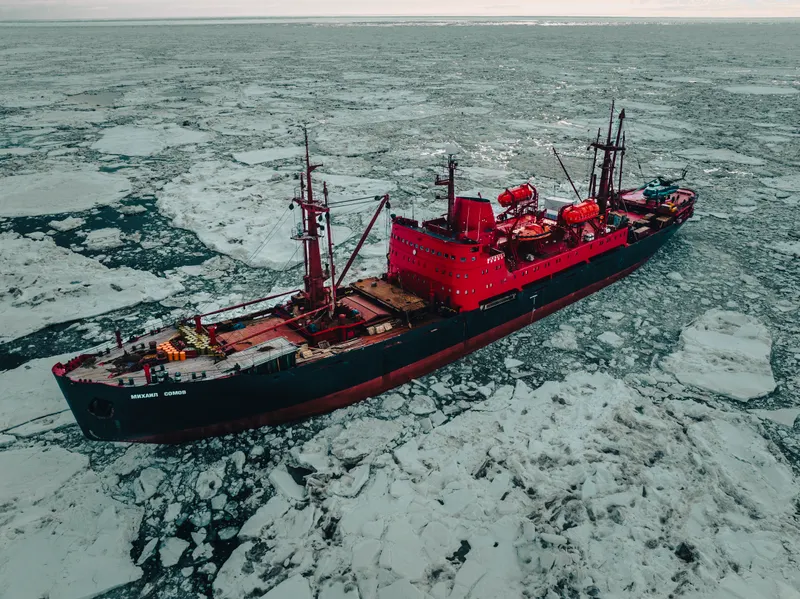
Antarctic sea ice does not follow the Arctic's steady slide. NASA noted in 2023 that ice around the continent grew slightly, about 1% per decade, until a record high in 2014. It then fell sharply, and the 2023 low smashed the previous record. NSIDC notes that the Arctic's 20 lowest summer minimums all occurred since 2007, while a summary of its findings says the Antarctic does not show the same consistent long-term decline. Even so, ice there has stayed below average for much of the past decade.
Clare Eayrs, a postdoctoral researcher at the Korea Polar Research Institute, told Carbon Brief that the five lowest July extents have all occurred since 2022 and the four lowest August extents since 2023. This year's July and August ranked fifth and fourth lowest.
A Changing Map
The totals hide a shifting pattern. Eayrs said the Bellingshausen Sea was almost ice-free in April while the neighboring Amundsen Sea had more ice than usual. By late August, changes in air pressure and winds meant the Bellingshausen shortfall had largely recovered, while ice was unusually scarce in the Amundsen Sea and across much of East Antarctica.
The Met Office noted that on Sept. 11 extent was rather high in the Bellingshausen and Weddell seas, but below normal elsewhere, apart from an unusual arm of ice reaching north from the Ross Sea. The year also included a heatwave over the Antarctic Peninsula and a large stretch of open ocean in a region where ice would normally sit, according to the report on the confirmed peak.
Human Cause or Natural Swing?
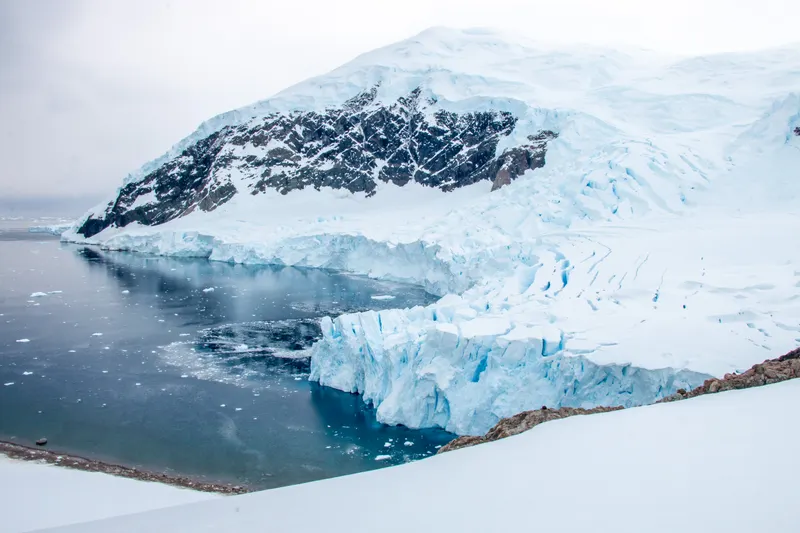
Lettie Roach, a polar climate scientist at the Alfred Wegener Institute in Germany, said the maximum was well below average for the season and that, after several decades of stable or increasing winter ice, it is concerning to see low values persisting. She was careful about cause. Compared with the Arctic, she told Carbon Brief, it is less clear how much recent Antarctic change comes from human-caused warming and how much from natural variability, and more years of observations are needed to say whether this is a structural shift.
That caution is worth respecting. Patterns that once looked like stable background can change, as Blogerroom reported when a study found warming is breaking a 400-year link between the Indian and Pacific oceans. Natural variability is not a fixed baseline.
Watching With Fewer Instruments
There is a quieter problem underneath. In March 2026, NOAA ended a global air-pressure dataset that scientists relied on to produce PIOMAS, the widely used Arctic sea ice thickness reanalysis, so both datasets stopped publishing updates, Carbon Brief reported. The PIOMAS website says finding replacement data will take considerable effort and time and that it does not yet know whether that is possible with available funds.
Zack Labe, a scientist at Climate Central, said researchers need more observations of other sea ice measures such as thickness, especially in years when the ice pack is very fragmented. Thickness is the missing half of the story: extent tells you how much ocean is covered, not how much ice is there.
That matters for the Arctic as well. Blogerroom covered NASA's finding that the Arctic melt season stopped getting longer around 2010, a plateau scientists still cannot fully explain. Explaining plateaus and sudden drops needs continuous data, and some of that continuity is now at risk.
What to Watch Next
The next marker is the Antarctic summer minimum in February, which was near average this year, so a rebound is not impossible. Another low winter peak in 2027 would extend a run in which 2023, 2024 and 2026 already hold the three lowest maxima on record, and would strengthen the case that something has shifted. Roach's point stands: it takes years of data to separate a new state from a run of unusual years.
For now, the safest conclusion is the one scientists are drawing themselves. Antarctica's ice is low and has been low for a while. Why it is low, and whether it stays low, is still an open question.
Written by
Mr. Jitendra Bhatt
Msc in Chemistry and field researcher.