Blogerroom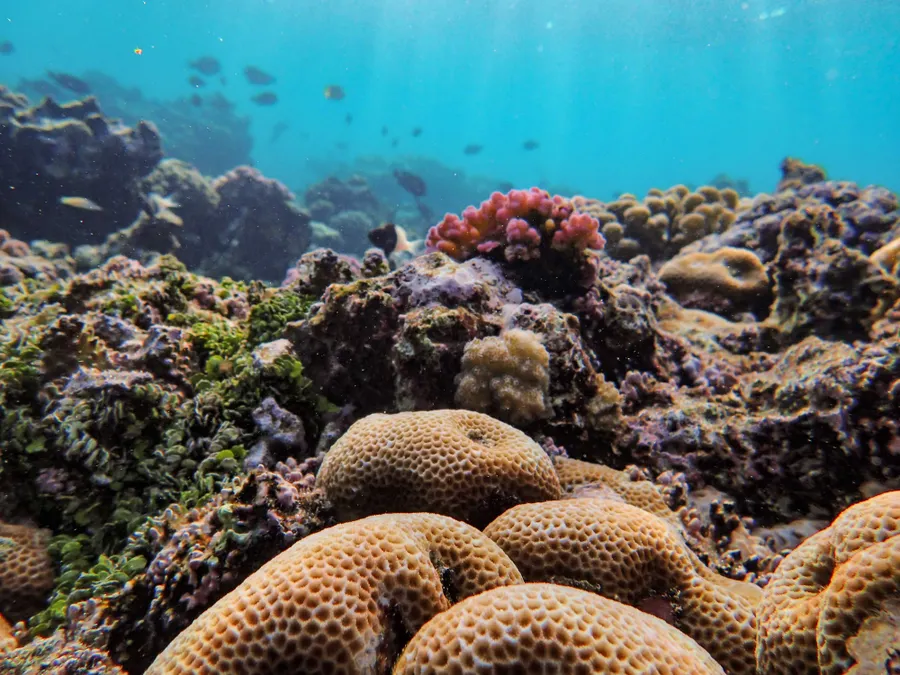
Ecosystems Have Less Backup Than Thought: 423-Study Review
A Nature Ecology & Evolution analysis of 423 studies finds most ecosystem benefits keep rising with biodiversity, led by ocean carbon capture.
For years, a comforting idea has sat quietly inside conservation debates: ecosystems carry plenty of spare capacity, so losing a species here and there does little harm. A study published on October 6 in Nature Ecology & Evolution says the data does not support that idea for most of what nature does for people. The authors, from King's College London and Imperial College London with the Natural History Museum and The Alan Turing Institute, call it the largest analysis of its kind.
What the researchers actually did
The team did not run a new experiment. They pooled 423 published studies and 222,829 data points covering land, freshwater, marine and estuarine ecosystems, according to King's College London. That is more than twice the size of the biggest database built before, the university says.
They sorted the evidence into 23 categories of ecosystem services and functions, from pollination to water purification to carbon storage. In most of them, benefits rose steadily as biodiversity increased. They did not flatten out once a handful of species were present, which is what the "spare capacity" argument predicts. The technical name for that argument is functional redundancy, the idea that species can stand in for one another so a loss does little damage.
Dr. Emma Moffett, the study's lead author and a geographer at King's, put the shift plainly: the benefits keep climbing as diversity rises, which means they are falling as species disappear.
The ocean result that stopped the team
The most striking finding came from the sea. Ocean carbon sequestration, the capture and storage of carbon dioxide in marine waters and sediments, showed by far the strongest positive response to biodiversity of any service measured, King's reported. The chain runs from phytoplankton to the microbial food webs that carry carbon into deep water.
Moffett said the result stopped the team in their tracks, and then added the caveat that matters. It rests on a small number of datasets, and the authors flag it as an urgent gap in current knowledge. That honesty is worth noting. A strong signal from thin data is a reason to study the ocean more, not a settled fact.
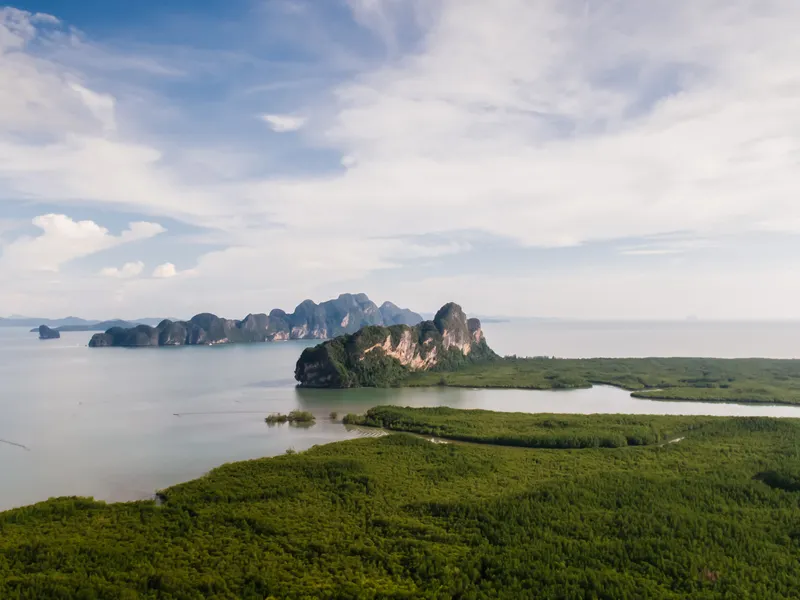
It still bears on climate policy. Countries are counting on coastal and marine ecosystems to absorb carbon. If their ability to do so depends on diverse communities rather than on a few dominant species, then protecting a mangrove or a reef as a carbon asset while letting the life inside it thin out could backfire. Our earlier piece on how waves, not just tides, decide where mangroves can grow dealt with where restoration can physically work. This study raises a second question: what lives there once it does.
Where the rule breaks
Not every service tracks diversity, and the authors say so. Protection against coastal flooding and erosion was relatively insensitive to biodiversity overall, because it often depends on one or two foundational species. The example given is the shrubs that stabilise sand dunes.
That produces an uncomfortable policy lesson. Conservation cannot choose between protecting overall diversity and protecting irreplaceable keystone species. The study argues it has to do both, which is more expensive and harder to sell than either slogan alone. A budget that protects only the charismatic anchor species would fail on the services that need breadth. A budget that spreads thinly across everything could miss the one shrub holding a dune in place.
Food, pests and who loses first
The team also used the database to look forward, linking it to the socioeconomic scenarios the Intergovernmental Panel on Climate Change uses for projections. Their model predicts that biological pest control on farmland, the free service provided by the natural enemies of crop pests, declines under a fossil-fuel-driven development path compared with one using less fossil fuel. The sharpest losses fall in countries with rapid population growth and lower levels of development, according to King's.
That is a projection from a model, not an observed decline, and it inherits every assumption in the scenarios. But the direction is pointed. The places least able to replace natural pest control with pesticides or imports are the ones the model flags as losing the most.
The same unevenness shows up in species data. A 549-species analysis we covered, on how birds now migrate 14 days earlier, found that only the spring shift helps, while earlier autumn departures were linked to declines. Living systems rarely absorb change evenly, which is the broader point of this study.
What to watch
The full database and model forecasts across all 23 categories have been made public to support policy and planning, King's said. That is the most useful part of the release, because a pooled analysis lives or dies on scrutiny. Other ecologists can now test whether the no-plateau pattern holds when the studies they trust most are weighted differently, or when the ocean data thickens.
If it survives that, the practical consequence is simple. Treating species loss as a slow leak that ecosystems can absorb is no longer a defensible default. Every extinction needs to be priced as a withdrawal from an account whose balance nobody had counted properly.
---
Written by
Mr. Jitendra Bhatt
Msc in Chemistry and field researcher.