Blogerroom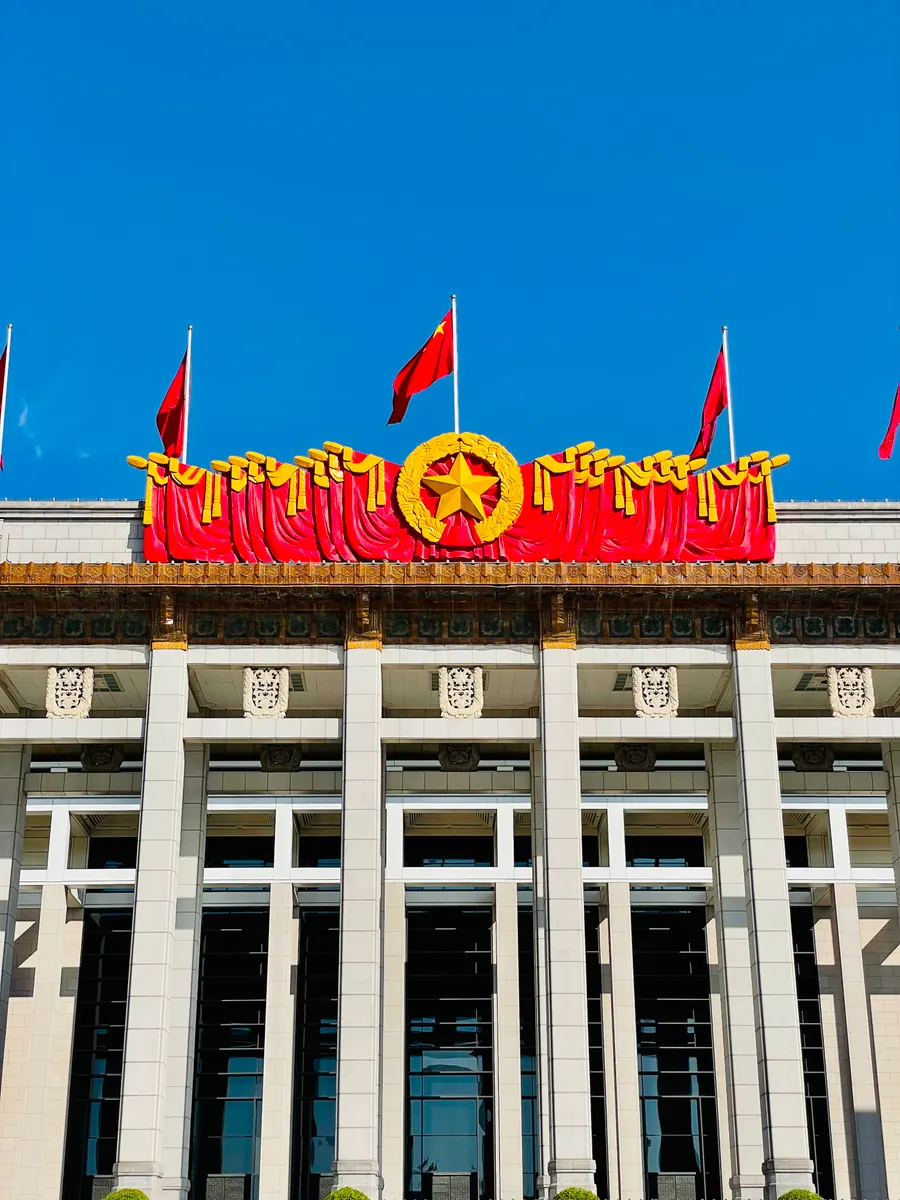
China Dismisses AI Slowdown Calls as 'Fearmongering'
China rejected US tech CEOs' AI slowdown calls as fearmongering, even as its own state security chief privately warns of similar risks.
An unexpected moment of political alignment emerged this week between Washington and Beijing, though not in the way AI safety advocates had spent the weekend hoping for. On September 14, 2026, China's Foreign Ministry rejected calls from three of America's most prominent AI CEOs to slow the pace of frontier AI development, dismissing the warnings using the same word its officials have applied to Western AI safety concerns for months: fearmongering.
Dario Amodei, Sam Altman, and Elon Musk had jointly endorsed pacing AI development just two days earlier, and President Trump had already rejected the proposal outright, personally attacking Amodei by name. China's response landed the two global superpowers in the same place, opposing the same slowdown, for entirely different reasons.
Two Superpowers, One Rejected Proposal
Foreign Ministry spokesperson Guo Jiakun delivered Beijing's response at a regular briefing, saying that fearmongering, confrontation and vicious competition will only disrupt the process of global AI governance. He called instead for AI development that's open, inclusive, and broadly beneficial, though he notably declined to engage with any of the specific mechanics in Amodei's actual proposal, including the plan for embedded third-party evaluators or coordination specifically among democratic nations.
State-run media went further than the Foreign Ministry's official line. The Global Times published an editorial describing the American slowdown proposal as packed with containment provisions targeting China, framing it as, in essence, a Cold War playbook applied to the AI sector rather than a genuine safety measure. That's a meaningfully harsher characterization than the Foreign Ministry's own carefully worded diplomatic language, suggesting Chinese state media felt less constrained about naming the geopolitical suspicion directly.
The Language Beijing Chose, and Why It Matters
China's framing isn't coming from nowhere. Amodei's own essay didn't shy away from naming China directly, describing it as an authoritarian country that could misuse advanced AI, even while calling for the United States to try to work with its rival on shared AI safety standards. That combination, criticism paired with an invitation to cooperate, gave Chinese officials an easy opening to treat the entire proposal as a disguised attempt to lock in American technological advantage rather than a genuine, universal safety concern.
That interpretation fits a pattern China has maintained consistently for months. At the World AI Conference in Shanghai back in July, Chinese officials had already characterized American restrictions on AI chip exports and model access as a technological blockade rather than legitimate security policy, the same underlying grievance now resurfacing in Beijing's response to the slowdown proposal.
A Genuine Contradiction Inside China's Own Government
What makes this episode more complicated than a simple geopolitical talking point is a real inconsistency inside China's own government. Even as the Foreign Ministry publicly dismissed Western AI risk warnings as fearmongering, Chen Yixin, China's Minister of State Security, had separately documented remarkably similar concerns in an official Communist Party journal, warning that hostile foreign actors could use AI to wage what he described as a propaganda war and a cognitive war against China. Chen specifically named American models, including Anthropic's Claude and OpenAI's GPT-5.5-Cyber, as potential vectors for exactly this kind of threat.
That's a genuine contradiction, not a rhetorical flourish. China's public position treats AI risk warnings as a geopolitical tactic when they come from American executives, while its own intelligence apparatus is privately documenting nearly identical concerns about the same underlying technology, just framed as a threat to China specifically rather than to humanity broadly. Both things can be true simultaneously: the concerns can be sincere and the public dismissal can still be strategically calculated.
Xi's Separate, More Diplomatic Pitch
Adding a further layer of nuance, President Xi Jinping struck a different tone over the same weekend at the BRICS summit in New Delhi, saying China would take the lead in fostering AI collaboration and development specifically among developing countries. That's a notably more constructive, coalition-building framing than the Foreign Ministry's sharper rejection just days later, suggesting China's actual AI diplomacy operates on at least two distinct tracks: cooperative outreach toward the developing world, paired with confrontational pushback against anything perceived as a US-led attempt to constrain China's own AI trajectory specifically.
How Close China Actually Is to Catching Up
Underneath the rhetoric sits a genuine, measurable question: how far behind is China actually? Helen Toner, executive director of Georgetown's Center for Security and Emerging Technology and a former OpenAI board member, offered a specific estimate on CNBC's Squawk Box, saying the best available assessments suggest China's very best models are something like six to nine months behind the very best US models. That's a narrower gap than headlines about an AI arms race sometimes suggest, and it helps explain why Beijing has genuine confidence pushing back hard against any slowdown proposal: a six-to-nine-month gap is closeable, and a mutually agreed pause would functionally freeze that gap in America's favor rather than closing it.
That framing also connects directly to a separate, ongoing dispute this year. The White House earlier accused Chinese AI company Moonshot of covertly distilling Anthropic's Fable model to build its own competing system, an accusation Beijing has rejected as part of the same broader pattern of what it considers American attempts to slow Chinese AI progress through accusation rather than legitimate competition. Whether that specific distillation claim holds up or not, it's now part of the same larger narrative both governments are drawing on to justify their positions.
Why September 24 Is the Date That Actually Matters
All of this rhetoric is building toward a genuinely consequential moment: President Trump is scheduled to meet Chinese leader Xi Jinping in Washington on September 24, 2026. US advocates for AI safety coordination have expressed hope the issue could make its way onto that meeting's agenda, but this week's exchange makes that outcome look considerably less likely than it might have a week ago. When both governments have just publicly rejected the same underlying proposal, for reasons rooted in mutual distrust rather than disagreement over the science, finding common ground at a formal diplomatic summit becomes a much steeper climb than persuading either government to reconsider in isolation.
What this week actually confirmed is that AI safety, as a genuinely global coordination problem, cannot be solved through corporate goodwill alone, no matter how many rival CEOs happen to agree with each other. The moment that same call for restraint reaches the desks of two governments locked in strategic competition, it stops being a scientific or ethical question and becomes a test of which country blinks first, and this week, neither one did.
Written by
Mr. Aayush Bhatt
Software Engineer interested in how models work and where they fail.