Blogerroom

Microsoft Exits UK's Biggest AI Site Over Power Delay
Microsoft ended its Nscale deal for the 23,040-GPU Loughton site after grid operators pushed power into the 2030s. Nscale says it remains committed.
Britain's biggest planned AI data centre has lost its only publicly named customer, and the reason is a cable, not a chip. Microsoft terminated its agreement with Nscale for the Loughton site in Essex, The Telegraph reported on October 18, and a Microsoft spokesperson confirmed on October 19 that the decision concerns a single site. The site was meant to switch on early next year with 23,040 Nvidia GB300 GPUs and 50 megawatts of capacity, according to Reuters. Now, reports say, the grid operator has told Nscale that power will not arrive until the 2030s.
What was cancelled, and what was not
Microsoft's exit covers Loughton only. Its spokesperson said the company remains committed to both the project and the UK, and that it is exploring alternative power sources and other expansion sites in Britain, per Reuters. Nscale also says it stays committed. A report from winbuzzer says Loughton was only a small part of Microsoft's overall business with Nscale, though neither company has put a value on the cancelled agreement.
The project carried political weight. Reuters notes that it was announced during US President Donald Trump's state visit in September 2025 as a showcase for Britain's AI ambitions. IBTimes puts the data centre's cost at £2 billion, about $2.6 billion, and it was expected to create 250 permanent jobs, according to BBC reporting relayed by Small Business Daily.
Power, not hardware, set the date
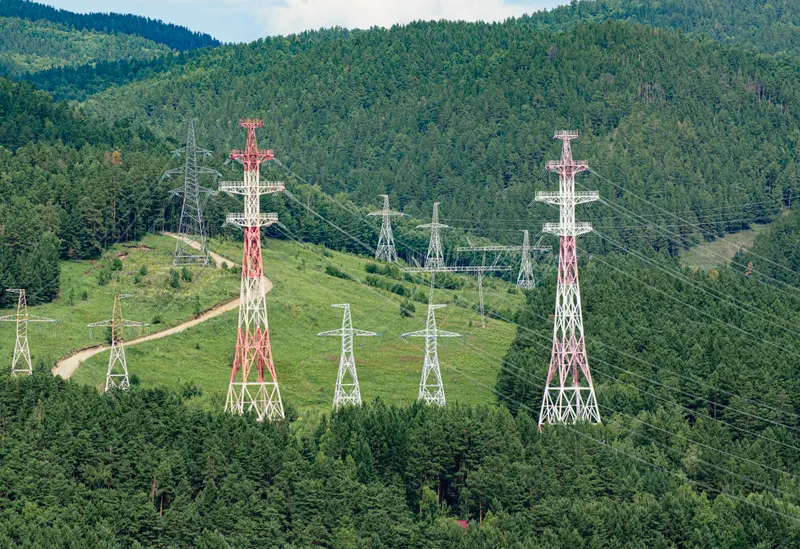
UK Power Networks told Nscale the power connection would not be ready for its 2026 target because of grid capacity problems upstream of the site, according to City AM. Reuters says the expected supply date has moved into the 2030s, and IBTimes reports officials pointed to the early to mid-2030s. Against a target of early 2027, that is, by my arithmetic, a delay of at least three years and possibly eight.
Loughton is not unusual. Reuters says grid-connection queues have delayed data centre projects in Britain by as long as 13 years. The Guardian reported in March that the Loughton site was still being used as a scaffolding yard, and The Register notes that UK Power Networks cannot discuss individual connections under the Utilities Act. The pattern suggests the real constraint on British AI capacity is the electricity network, not the supply of Nvidia chips.
What the numbers show
Spread the reported specifications and the facility looks like this. At 50 megawatts across 23,040 GPUs, each chip accounts for about 2.2 kilowatts of site capacity once cooling and other overhead are included. If the £2 billion covers the whole site, that is roughly £87,000, or about $113,000, per GPU installed. Those are my calculations from reported figures, and the companies have not published a breakdown.
Microsoft is not short of compute ambition. As we reported, it finished pre-training MAI-Base-2 on 16,000 GB200 GPUs. My read is that its behavior here is a pattern more than a retreat: a company that large will pay for capacity where power arrives on time. Other sovereign plans face the same question. Korea's state-backed plan for 10,000 Vera Rubin GPUs targets a March 2027 start, and none of the reports I found says how those machines will be connected to the grid.
The IPO makes the loss bigger
Nscale filed an S-1 with the SEC in September for a New York listing, and Bloomberg called Microsoft's exit a setback for its IPO hopes. The filing describes a power-first strategy that secures large-scale, low-cost power, which is awkward given that its flagship UK site has none for years. Bloomberg also reports that Nscale's Norway site is six months behind schedule, with only 6.4 megawatts of an intended 30 megawatts running. That is about 21 percent of the plan.
The market backdrop is unfriendly. As we reported, AI debt fears hit neocloud stocks last week, with CoreWeave's bonds topping 15 percent. For an investor weighing Nscale, an anchor tenant is the thing that converts a building into a revenue stream, and Loughton now has none. Nscale's S-1 also shows where its newer capacity is going: a West Virginia campus targeting 2 gigawatts by the first half of 2028, and a 200 megawatt site in Portugal bought in April.
What happens to Loughton now
Nscale says it is exploring alternative power sources for the site and other expansion sites in the UK, according to City AM. Both routes are slow. On-site generation raises its own permitting and cost questions, and a replacement customer would have to accept the same delay Microsoft just refused.
The larger lesson is about sequencing. Britain announced AI compute first and discovered the grid timetable second. Unless connection queues shrink, announcements like Loughton will keep outrunning the wires, and the sites that actually open will be wherever the electricity already is, whether or not that is a sovereign choice.
Written by
Mr. Aayush Bhatt
Software Engineer interested in how models work and where they fail.