Blogerroom

Anthropic's 5% Pledge vs Musk's Shares: What's Missing
Anthropic put 5% of its shares in a public benefit fund and Musk pledged about $11B in SpaceX stock to children. Neither plan yet names recipients or rules.
Within 24 hours, two of the most powerful figures in AI said they would give away a slice of their companies. On Sunday, October 18, Anthropic said it would commit 5 percent of its shares to a new Anthropic Public Benefit Fund, pending stockholder approval, according to the Associated Press. On Monday, Elon Musk said he would give one SpaceX share to every child in America next year. Both pledges arrive as AI faces rising public anxiety about jobs, and both leave the most important questions unanswered.
Two plans, two theories of who should hold the money
The two pledges rest on different ideas. Anthropic's fund is a new entity inside the company that may make larger donations to traditional nonprofits or payments to specific groups of people, AP reports, and it will not fund lobbying or political giving. Musk wants no middleman. He said on X that giving shares directly to the people is the way, and called his pledge the first of many.
The size of Musk's gift is an estimate. Reuters, as carried by Calcalist, put it at roughly $11 billion, and CryptoSlate counted about 72 million American children, a figure that works out to roughly $150 a child. Musk has not said how the shares would be delivered. In neither case do recipients, rules or timing exist yet.

Five percent of a company worth a trillion dollars
Scale is where Anthropic's pledge looks bigger. AP notes the company was valued at close to $1 trillion earlier this year and is preparing an IPO as soon as November, and one report puts a possible listing value as high as $2 trillion, though that figure remains uncertain. Five percent of $1 trillion is $50 billion, and of $2 trillion it is $100 billion. That is about 4.5 to 9 times Musk's estimated $11 billion.
Anthropic also says roughly 20 percent of its shares will be dedicated to public purposes when its other pledges are counted. Reuters says those include its co-founders' pledge to donate 80 percent of their equity and an employee matching program. The IPO is the condition for all of it, and markets are shaky. As we reported, AI debt fears hit the Nasdaq hard last week, and its leaked IPO prospectus warned that its AI may be an existential risk. A pledge made in shares is worth what the shares are worth on the day they are sold.
The legal wrapper matters more than the percentage
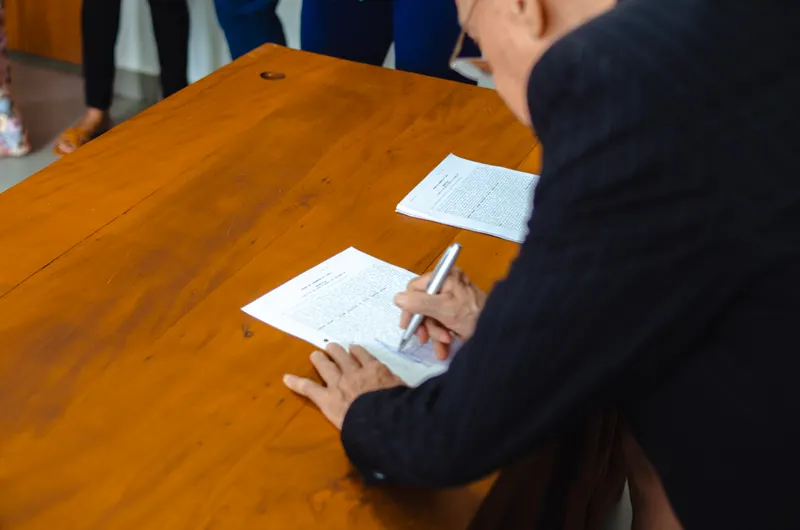
The most useful detail in the AP report is structural. Anthropic is setting up its fund as a limited-liability company, the route Meta's Mark Zuckerberg has also taken, and not as a private foundation. Experts quoted by AP say that gives the owners more control and flexibility, and less transparency.
Here the arithmetic is revealing. A US private foundation must distribute at least 5 percent of its endowment each year, AP notes. On a $50 billion endowment that would be $2.5 billion a year, and on $100 billion it would be $5 billion. An LLC faces no such floor, so the fund could in principle hold the shares for years while paying out little. That is possible, not probable, and Anthropic has said it will share details on structure and governance in the coming months.
The tax treatment is also deferred. Katherina Rosqueta of the University of Pennsylvania and Brian Mittendorf of Ohio State told AP that the company claims no write-off until donated shares reach a public charity. Mittendorf described the pledge as a commitment to "yet-to-be-specified wider goals," more an intention than an act.
Why now: jobs fear and an IPO
Public worry gives the timing its logic. A June Pew Research Center survey found 71 percent of US adults expect AI to mean fewer jobs over the next two decades, up from 64 percent in 2024, and only 5 percent expect more. Anthropic named labor-market disruption as an example of what the fund might address, and it has already set aside $200 million to study AI's effects on workers.
Reaction splits along predictable lines. Jay Ritter of the University of Florida told AP the announcement helps investors know what they are buying. Gary Marcus accused Anthropic of courting public favor while keeping control and resisting disclosure. Phil Buchanan of the Center for Effective Philanthropy was hopeful but wanted evidence before getting excited. Our own reporting on UNCTAD's finding that profits take 68 percent of an AI server's value shows why the question of who gets the gains is not abstract.
What to watch next
Anthropic is not alone. AP notes that the OpenAI Foundation has committed $1 billion to build out grantmaking, that OpenAI proposed a Public Wealth Fund in April, and that OpenAI plans its own IPO next year. The pattern is clear: companies about to list are promising to share, and none has yet said who decides who benefits.
My read is that the first real test is small and dull. It is the stockholder vote, followed by the governance document. A binding payout schedule, named trustees and published grants would turn a pledge into a program. Without them, the 5 percent is a number attached to a valuation that has not yet been tested by a public market.
Written by
Mr. Aayush Bhatt
Software Engineer interested in how models work and where they fail.