Blogerroom

UNCTAD: AI Server Profits Take 68%, Workers Under 15%
UNCTAD's Oct. 9 report finds post-tax profits take 68% of traced value in an AI server rack and workers under 15%, as AI hardware leads goods trade.
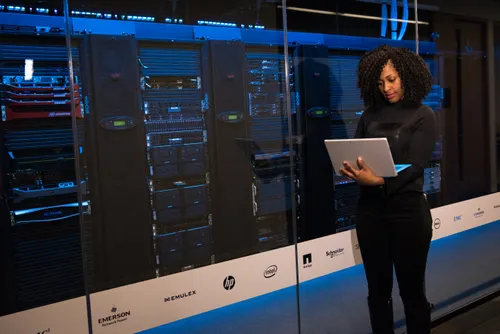
When the United Nations traced who actually keeps the money from an advanced AI server rack, it found that post-tax profits take 68 percent of the value added, while workers receive less than 15 percent. The figure comes from the Trade and Development Report 2026, which UNCTAD presented in Geneva on October 9. It is a single case study, not an industry average. Even so, it is the clearest public number yet on a question the AI boom keeps raising: if AI hardware is driving world trade, who is being paid for it?
The 68 percent figure, and what it leaves out
Profits take at least 4.5 times what workers do in this rack. Divide 68 by 15 and the ratio is about 4.5, and it is higher in practice because the workers' share is stated only as less than 15 percent. Add the two and at least 17 percent of the value goes somewhere else, though the summaries I found do not say where.
The case has limits. UNCTAD's summaries do not name the rack or its maker, and one supply chain cannot speak for every company. What makes the finding credible is that it fits the wider report: AI products are now the main driver of merchandise trade, but the gains are concentrated, according to UNCTAD's own release.
AI hardware now leads goods trade
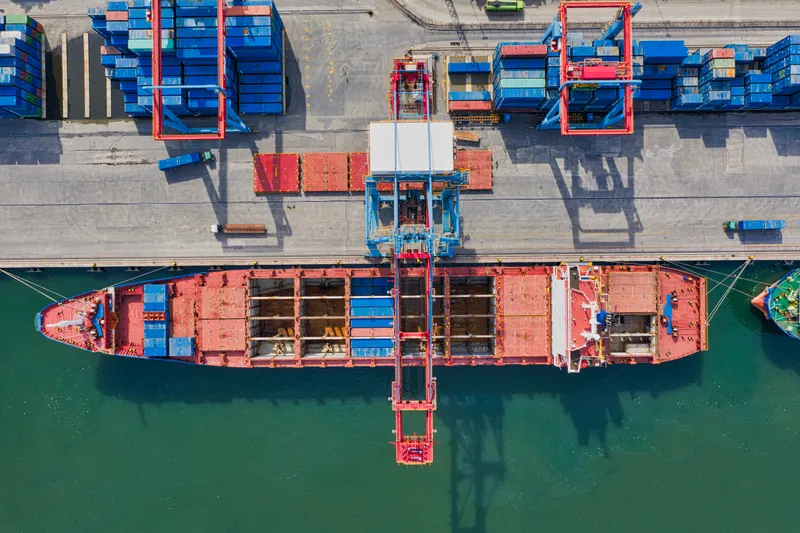
AI is no longer a software story in the trade data. UNCTAD says AI-related products have become the main driver of merchandise trade, following strong growth in semiconductors, servers and advanced computing equipment, as Economy Middle East reported. Global trade reached a record $35 trillion in 2025, per Business Standard's account of the report, and trade is projected to grow about 4 percent at constant prices in 2026.
The same pattern shows in national figures. Our Finance desk reported that China's September exports jumped 36.3 percent, driven by chips and autos. Memory is where the profit is most visible. Meritz Securities estimated Samsung's memory margin near 76 percent last quarter, as we covered when Samsung's record profit came from prices, not volume. A 76 percent margin in one component and a wage share below 15 percent in a finished rack describe the same economy from two ends.
Investment follows the profits
Developed economies captured about 70 percent of the value of announced greenfield investment in strategic sectors from 2020 to 2025, UNCTAD found. Those sectors are semiconductors, energy-transition technologies and AI infrastructure. That works out to roughly 2.3 dollars invested in rich economies for every dollar invested everywhere else.
Developing economies lead somewhere else: they attracted 60 percent of new foreign direct investment in critical minerals, according to Business Standard's summary. In effect, they supply raw materials to an industry whose high-value stages are being built elsewhere. Export controls and investment screening make it harder for new entrants to join the strategic sectors, UNCTAD adds, and trade between China and the United States has fallen by more than 20 percent since 2024 while East Asia has expanded trade with both.
Asia still gains. UNCTAD projects the region will contribute 59 percent of global growth in 2026, with India expanding 7.3 percent. The tension is that growth and bargaining power are separate things.

UNCTAD and the IMF read the same boom differently
UNCTAD projects global growth of 2.6 percent in 2026, down from 2.9 percent last year, and developing-economy growth of 4 percent, down from 4.7 percent. That is half a point below the 3.1 percent forecast we covered when the IMF held its 2026 growth outlook and leaned on AI to support it. The two forecasts are not strictly comparable, so the gap is not a disagreement on the numbers alone.
The framing differs more than the figures do. The IMF treats AI investment as something propping growth up. UNCTAD flags financial-stability risk because markets are increasingly exposed to a small number of companies tied to the AI boom, Business Standard reports. It also notes that official development assistance is projected to fall almost 7 percent in 2026, the third straight annual decline. One institution sees a support. The other sees a concentration of risk, while aid to the poorest countries shrinks.
What UNCTAD tells developing countries to do
The advice is practical and hard. UNCTAD recommends coordinating industrial, financial and technology policies, linking foreign investment to local suppliers to raise domestic value added, and building regional trade links, according to the report summaries. Prioritizing key sectors and diversifying trade profiles are also on the list.
My read is that the 60 percent share of critical-mineral investment is the one real lever, because rack makers cannot build without the metals. UNCTAD does not say so, and whether any government can turn that supply into local jobs and not just export earnings is the open question. In this case study, at least, the profit stays with the owners of the capital, and nothing in the report suggests that changes without such terms.
Written by
Mr. Aayush Bhatt
Software Engineer interested in how models work and where they fail.