Blogerroom

IMF Holds 2026 Growth at 3.1% but Leans on Hormuz and AI
The IMF sees 3.1% global growth and 4.7% inflation in 2026, but warns the 3.4% rebound assumes Hormuz reopens by March and the AI boom holds.
The International Monetary Fund looked at a world with a hot war in the Gulf, oil above $100 and central banks raising rates, and concluded that global growth will come in at 3.1% this year. That is a slight upgrade from July's 3.0%. It is also an uncomfortable number, because the IMF says two fragile props are holding it up: the Strait of Hormuz reopening on schedule and an artificial-intelligence investment boom that does not stall.
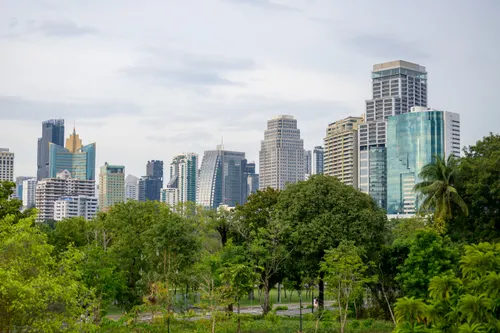
The October World Economic Outlook, released in Bangkok at the Fund's annual meetings with the World Bank, comes with a warning built into the title of one headline: resilience is nearing its limits.
What the Forecast Says
The IMF expects the world economy to grow 3.1% in 2026, down from 3.5% last year, and 3.4% in 2027, unchanged from July, according to CNBC's report on the release. Global consumer price inflation is forecast at 4.7% this year, up from 4.1% in 2025 and 0.7 percentage points above the April projection, easing to 4.1% in 2027, as reported by IndexBox.
The Fund's chief economist, Silvana Tenreyro, said a prolonged Middle East conflict could add to price pressures, while a reassessment of AI profitability and extreme weather could weaken the outlook further, according to the Globe TV summary of the briefing.
A World Growing Through Fewer Engines
The headline number hides a narrower picture. Only 32 economies now generate 95% of global growth, down from 54 in April, IndexBox reported. About 47% of the world's economies had their growth forecasts downgraded. The IMF described growth as being reallocated among countries according to their exposure to the war's supply shock and to demand linked to AI.
Winners and losers are clear. The IMF sharply downgraded Gulf economies, including Saudi Arabia, under the shadow of the regional war, CNBC reported, and IndexBox reported cuts to Latin American forecasts as the AI boom bypasses most of the region. Economies with diversified energy sources and AI-linked demand are doing best.
Two Big Assumptions
The baseline rests on a timetable. The 2027 recovery assumes the Strait of Hormuz reopens by March 2027, with broader normalization of shipping, insurance, production and payment arrangements by October 2027, according to IndexBox. The IMF notes this is a gradual restoration, not an on-off switch.
Blogerroom has followed the stalemate. Talks stalled when the US rejected Iran's terms on the strait, and Gulf producers are still pumping well below their quotas, as covered in the report on how OPEC+ held quotas steady while output ran 5 million barrels a day short. A March reopening is a hope, not a given.
The second prop is AI. Heavy investment is offsetting the energy shock, the Fund says, but it expects the boom to moderate and does not foresee a major productivity boost next year. The IMF also says the AI investment boom is itself adding to inflation and risks financial fragility.

The Inflation Problem
Inflation is where the outlook is least comfortable. Core inflation, which strips out food and energy, is proving sticky: the IMF projects it will not return to 2% until the middle of 2028 in the United States and Europe, according to IndexBox. The Fund's models put the probability that global inflation exceeds 5% in 2027 at about 35%, up from 30% in April, CNBC reported.
That feeds directly into central bank decisions. Blogerroom covered the energy-driven jump in eurozone inflation to 3.8%, and the IMF's forecast suggests that kind of pressure will linger.
The Downside Case
The IMF also modeled a worse path. In a scenario in which the war worsens and crude oil reaches $130 through early 2027, global growth would be 0.2 percentage points lower in 2026 and 0.5 points lower in 2027, while inflation would rise another 1.1 points to 5.2%, according to the Globe TV summary.
Those growth numbers look modest, which is the part worth questioning. The cushion, the Fund said, is "rapidly narrowing" in the near term. Global oil reserves are being drawn down at about 2.7 million barrels a day, nearing levels that could trigger sharp price moves, CNBC reported. My view: the adverse scenario's effect on growth looks small precisely because it assumes the world can absorb $130 oil with stocks still available. If inventories run short first, the price path could be steeper than the model.
What to Watch Next
The annual meetings run through the week, and finance ministers and central bankers will use them to react. In the near term, US inflation data on Wednesday and the start of bank earnings will show how the energy shock is reaching consumers and lenders. Beyond that, the two assumptions matter most: whether Hormuz traffic recovers on the IMF's timetable, and whether AI spending keeps growing fast enough to hold the headline number up.
This article is general information, not financial advice.
Written by
Mr. Jitendra Bhatt
Deep understading of finance area and writer covering markets, investing, and economic policy.