Blogerroom
Eurozone Inflation Hits 3.8% as Energy Costs Surge
Eurozone inflation hit 3.8% in September, a three-year high, with energy up 18.8% while core edged up to 2.5%, setting up the ECB's Oct. 29 call.
Eurostat's flash estimate on Friday put euro area inflation at 3.8% in September, up from 3.2% in August and the highest reading since September 2023. Economists had expected about 3.6% to 3.7%, according to Euronews and Bloomberg. The European Central Bank has been raising rates for two quarters running, and the number gives it little reason to stop.
What the Flash Estimate Showed
Prices rose 0.6% in September alone, Eurostat said. Energy was the main force: it climbed 18.8% from a year earlier, against 14.3% in August. Core inflation, which strips out energy, food, alcohol and tobacco, edged up to 2.5% from 2.4%, exactly as forecast, according to Euronews.
Services, about 47% of the basket, rose 3.2% from 3.0%. Unprocessed food inflation jumped to 4.0% from 2.7%. Non-energy industrial goods were the only major category to slow, at 1.1%. The final September data arrives on Oct. 16.
Energy Does Half the Work
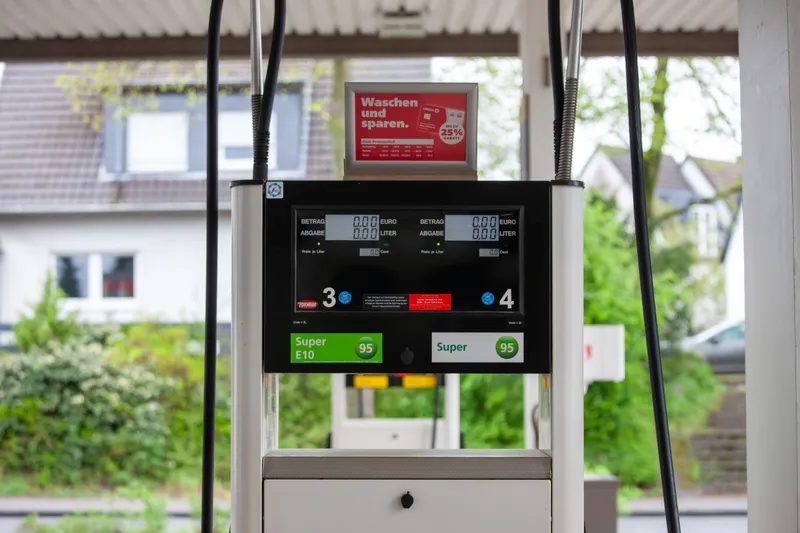
Energy carries a weight of about 9% in the index. At 18.8%, Euronews estimates it added roughly 1.7 percentage points to the 3.8% headline, close to half of the total. Strip that out and the remainder is about 2.1 points, which is not far above the ECB's 2% target.
The pump tells the same story. Euronews reported on Oct. 1 that diesel in the EU hit a record of €2.24 a litre, and on Oct. 2 that the G7 agreed to a 100 million-barrel emergency oil release. The cause is the Middle East conflict. Talks over the Strait of Hormuz stalled when the US rejected Iran's terms, and Europe, a heavy importer, pays for each setback at the fuel station.
A Currency Area Pulling Apart
One interest rate now covers countries with very different experiences. Lithuania recorded the highest rate at 6.1%, followed by Bulgaria, which joined the euro on Jan. 1, at 5.6%, then Cyprus and Luxembourg at 5.2%, Greece at 5.1% and Spain at 5.0%, according to Euronews. Six of the 21 member states were at 5% or above. Malta had the lowest rate at 2.4%.
Among the big four, inflation accelerated everywhere. Italy rose to 4.1% from 3.2%, with a 2.0% monthly jump, the biggest in the bloc. France went to 3.4% from 2.6%, overtaking Germany's 3.3%. A French rate above Germany's is a small reversal of the usual order, and it matters for politics as much as markets.
The ECB's Dilemma
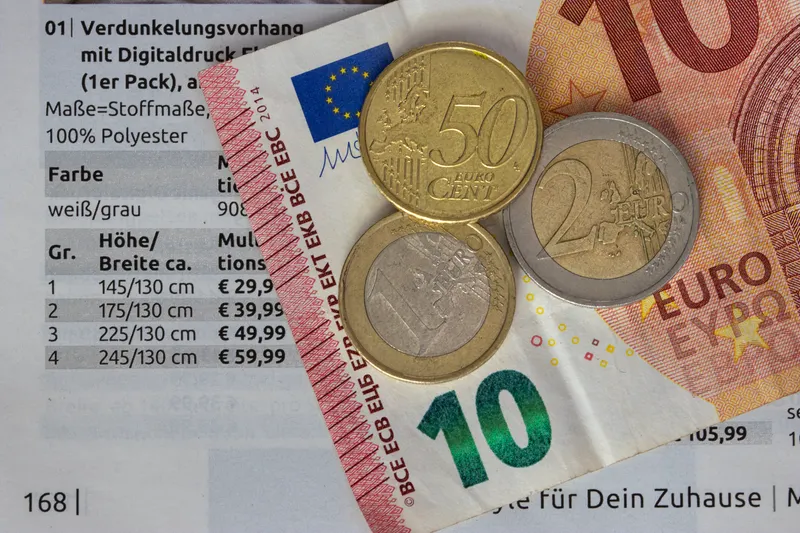
The ECB raised its three key rates by 25 basis points on Sept. 10, taking the deposit rate to 2.50%. It was the second hike this year, after June, Euronews reported. In its September projections the ECB expected headline inflation to average 3.0% this year, 2.5% in 2027 and 2.1% in 2028.
Harry Woolman of Validus Risk Management told CNBC that the jump suggests the problem is "more than an energy story." He noted that markets had trimmed expectations of back-to-back hikes after President Christine Lagarde suggested higher bond yields were doing some of the tightening for the bank, and said the new data makes that argument harder. Euronews reported that prediction markets assign a 91% chance of another hike at the Oct. 28 to 29 meeting.
My view: an October hike looks nearly certain, which makes it the least interesting part of the story. The harder question is guidance. Core at 2.5% is only half a point from target, and a hike aimed at an oil shock mostly squeezes demand without lowering the price of diesel. That is the same debate playing out in Australia, where the Reserve Bank lifted rates a day before inflation hit 4%, and in India, where economists expect the first RBI hike since 2023.
What to Watch Next
Three things will decide how hawkish the ECB sounds. First, services inflation: at 3.2% and rising, it is the clearest sign of broader pressure. Second, whether the 4.0% jump in unprocessed food proves a one-month blip. Third, bond yields, since Euronews reported on Oct. 2 that French borrowing costs hit a 24-year high and UK 30-year yields topped 6% before the selloff paused.
The Oct. 29 meeting will not include new staff projections, which come in December, so any shift in tone will rest on speeches and press conference answers. If core stays near 2.5% while energy keeps rising, the ECB may hike and then spend months explaining why that was enough.
This article is general information, not financial advice.
Written by
Mr. Jitendra Bhatt
Deep understading of finance area and writer covering markets, investing, and economic policy.