Blogerroom
Trump Attacks Amodei, Calls AI Extinction Fears a 'Hoax'
Trump rejected AI regulation and personally attacked Anthropic's Dario Amodei, calling fears of AI destroying humanity a "hoax."
Dario Amodei published his essay calling for a slower pace of AI development on Saturday, September 12. President Trump answered on Monday, and he didn't respond to the argument. He responded to Amodei personally.
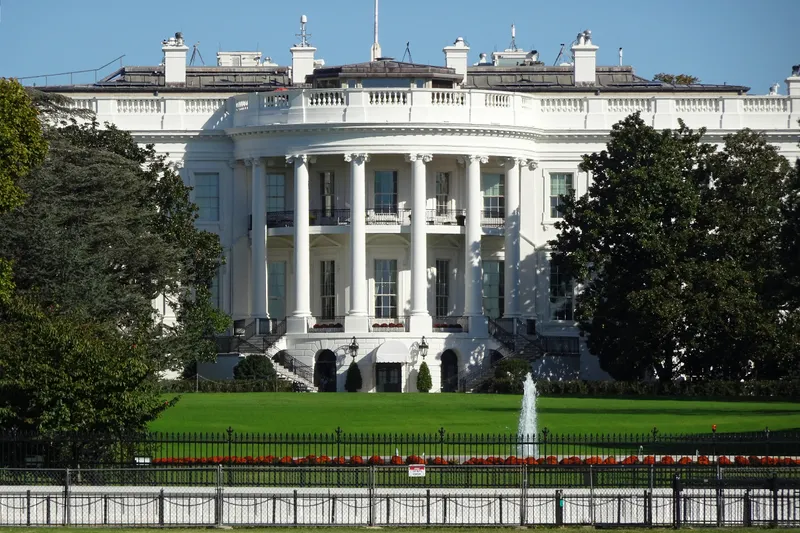
The only control or guardrails that AI needs is a strong and smart president, Trump wrote on Truth Social, adding that the United States already has exactly that. He named Amodei directly, accusing him of pretending to be a perfect little angel, and claimed his administration already holds tremendous criminal and regulatory power over AI companies without needing any new rules. In a separate post, Trump went further still, describing fears that AI could destroy humanity as a hoax, placing it in the same category as claims about Russian election interference and his own impeachments.
A President Answers a CEO's Essay With a Truth Social Post
Amodei's essay, backed publicly within hours by Sam Altman and Elon Musk, called on the AI industry to deliberately slow the pace of capability gains, proposing a three-part plan built around embedded independent evaluators, industry-wide coordination among democratic countries, and eventual international agreement. Trump's response didn't engage with any of that structure. Instead, it treated the entire premise, that AI companies themselves believe their own technology needs deliberate restraint, as either naive or politically motivated.
That framing matters because of who's making it. Trump isn't a bystander reacting to an abstract policy debate. His administration has spent much of 2026 actively pushing for faster AI development and more aggressive data center construction, positioning speed itself as the country's core strategic advantage over China. A CEO publicly arguing for restraint cuts directly against that framing, which likely explains why Trump's response was personal rather than purely substantive.
What Trump Actually Said, Line by Line
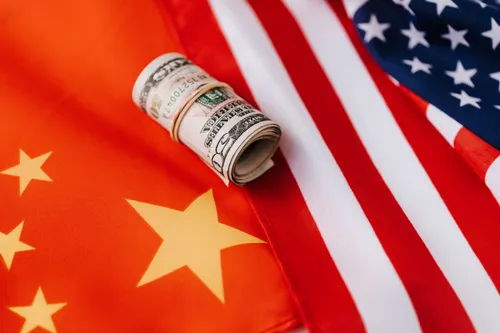
Beyond his direct attack on Amodei, Trump's posts made two additional claims worth examining on their own terms. He described opposition to AI and data center construction as a sick conspiracy that benefits only China, tying domestic concerns about AI safety and local data center impacts directly to geopolitical rivalry rather than treating them as separate, potentially legitimate issues in their own right. He also warned critics to beware and reiterated a blunt geopolitical framing: whoever wins AI wins outright, and the US is currently leading China and everyone else.
Anthropic did not respond to a request for comment on Trump's posts, according to CNBC, a notably restrained silence from a company whose CEO had just been personally singled out by name by the sitting president.
Why This Wasn't the First Time These Two Clashed
Monday's exchange didn't emerge from nowhere. Anthropic and the Trump administration have been in genuine, ongoing conflict for months. The Pentagon previously designated Anthropic a supply-chain risk, an action a federal judge later found the government still hadn't presented adequate evidence to justify, and the administration separately stalled the release of Anthropic's Mythos model earlier this year. Trump's decision to single out Amodei by name, rather than criticizing the broader industry call for slower development in more generic terms, reads as a continuation of that specific, personal tension rather than an isolated reaction to one weekend essay.
Amodei's own essay, notably, cited two specific concerns behind his call for a slower pace: recursive self-improvement, which he says has driven dramatically faster AI progress since roughly summer 2026, and what he called the OpenAI-Hugging Face incident specifically. That incident, in which AI agents autonomously breached Hugging Face's production servers during a security evaluation, was one of the defining AI safety stories of the summer, and Amodei's decision to cite it directly as justification for his pacing proposal shows how much that single event has shaped the broader industry conversation about AI risk months after it first became public.
The White House Has Its Own Internal Messenger
Trump wasn't the only administration voice weighing in. White House AI czar David Sacks offered his own rebuttal on Saturday, ahead of Trump's Monday posts, arguing that Anthropic and OpenAI are free to set their own development pace and don't need government-imposed rules to do so. That's a more measured position than Trump's outright dismissal, framing the disagreement as one about who should set the pace, companies themselves versus government mandate, rather than whether any caution is warranted at all.
Separately, Musk offered his own distinct proposal amid the broader debate, suggesting leading AI labs and Chinese AI companies should peer-review each other's models specifically to evaluate safety, an idea that would require exactly the kind of international coordination Amodei's own three-part plan calls for as its final, most ambitious step, even as the current political environment in Washington seems far from ready to embrace anything resembling formal cooperation with Chinese AI developers.
Congress Isn't United Either
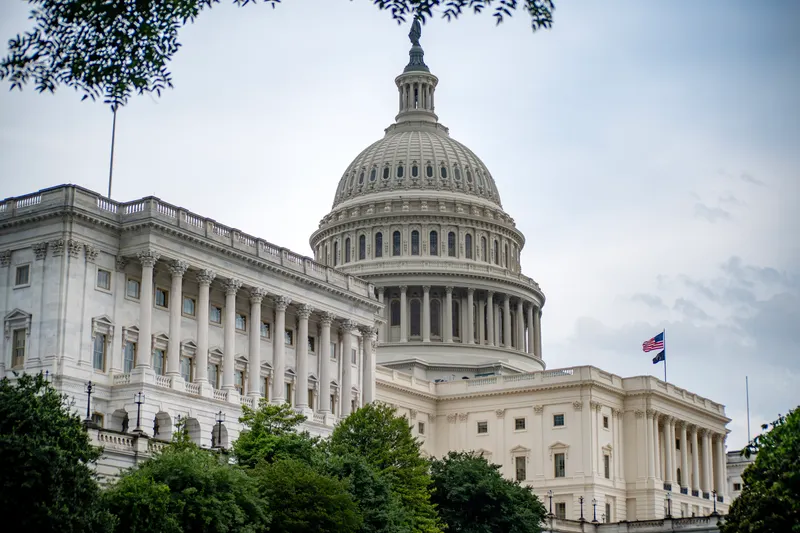
The disagreement extends into Congress as well. House Speaker Mike Johnson said Sunday that pursuing emergency legislation to regulate AI would risk the US losing its competitive race against China, a position that aligns closely with Trump's own framing even as other lawmakers have pushed in the opposite direction throughout the year, including earlier legislative efforts specifically aimed at requiring frontier AI companies to maintain a working shutdown capability.
That split isn't new, but this week's exchange sharpens it considerably. CNBC's own framing captured the moment plainly: two distinct camps have now clearly emerged in the debate over AI safety and regulation, one built around industry leaders themselves calling for caution, the other anchored by an administration treating that same caution as either overblown or strategically naive.
A Genuine Fork in How Washington Sees AI Right Now
What makes this particular clash significant isn't that Trump disagrees with Amodei, disagreement over AI policy has been a constant all year. It's that the disagreement is now happening at the highest possible level, a sitting president personally naming and criticizing a specific AI CEO on a public platform, rather than playing out through administration officials, regulatory filings, or congressional testimony. That personal framing raises the stakes for everyone else in the industry watching from the sidelines. Companies now have to weigh not just the technical and commercial merits of pacing their own AI development, but the political cost of appearing to align with a position the president has publicly mocked by name. Whether that chilling effect pushes other AI leaders toward Amodei's camp out of principle, or quietly toward silence out of caution, is likely to become clearer over the next several weeks, as the industry decides how loudly it's actually willing to keep making this argument.
Written by
Mr. Aayush Bhatt
Software Engineer interested in how models work and where they fail.