Blogerroom
Xi's First Washington Visit in 11 Years Yields Little
Trump gave Xi Jinping a rare military welcome and state dinner, but the summit mostly extended a trade truce two more months.
Two B-1 bombers flew over the tarmac. Cannons fired. A military band played the national anthem. That's the welcome President Trump arranged for Xi Jinping on Wednesday evening at Joint Base Andrews, the first time a U.S. president has personally greeted a foreign leader at the base in eleven years, since Barack Obama welcomed Pope Francis there in 2015, according to C-SPAN's records cited by U.S. News.
By Thursday night, after a full day of talks, an arrival ceremony, and a state dinner, the substance to show for all that pageantry amounted to a two-month extension of an expiring trade truce and a shared commitment to keep talking about artificial intelligence. It was Xi's first visit to Washington in more than a decade, and by nearly every outside account, it delivered exactly what analysts predicted going in: heavy symbolism, light substance.
What the two leaders actually agreed to
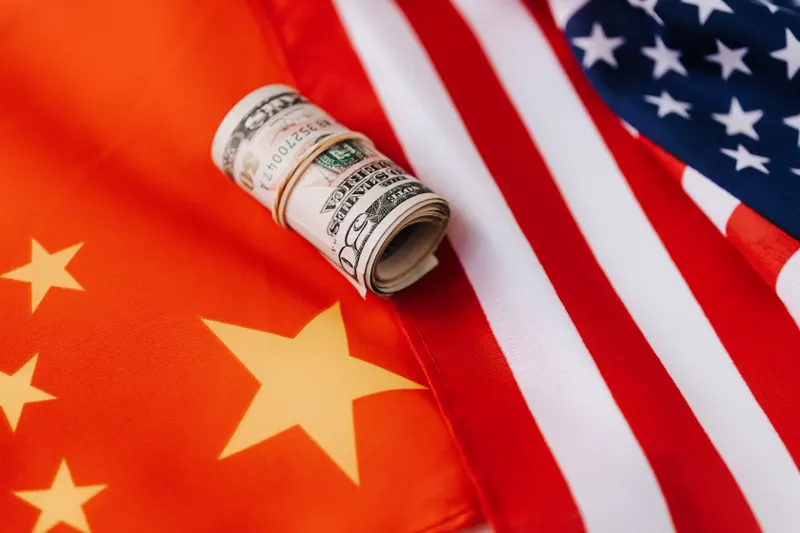
The most concrete outcome from Wednesday's preliminary talks was an extension of the year-old trade truce, originally set to expire November 10, pushed back by two months, according to the Associated Press's coverage carried by U.S. News. That's a modest, almost procedural result for a summit built around this much fanfare, functionally buying both sides more time to negotiate rather than resolving anything.
Trump struck an upbeat public tone regardless. Touting what he described as new trade progress, he said he and Xi "have made tremendous strides on the issues facing our two countries," according to CNN's live coverage of the visit. People familiar with the discussions told NBC News the talks could also yield narrower deals covering reduced tariffs on specific goods, cooperation on combating fentanyl trafficking, and expanded military-to-military dialogue, though none of that had been formally confirmed as agreements by the time Xi departed Thursday evening.
The Iran war hangs over the summit
Iran's ongoing conflict with the U.S. threaded through the talks in a way that connects directly to the diplomatic maneuvering Trump has been conducting on that front all week, including his UN threat to "annihilate" Iran followed by a surprise three-hour meeting between his envoys and Iranian officials. U.S. News reported that Trump wants China to use its influence with Iran, a request rooted in Beijing's status as one of Tehran's few remaining major trading partners and a significant buyer of Iranian oil throughout the conflict.
China had already shown some willingness to cooperate on this front earlier in the year. According to Wikipedia's tracking of the broader U.S.-China relationship, Defense Secretary Pete Hegseth announced in April that Beijing had provided high-level assurances it would not send weapons to Iran, explicitly ruling out any transfer of surface-to-air missiles to the Iranian military, a commitment Hegseth attributed directly to what he called the "strong and direct relationship" between Trump and Xi.
Taiwan remained the summit's sharpest edge
If trade produced modest movement, Taiwan produced none. According to CNN's live coverage, Xi told Trump during their White House meeting that he hopes the U.S. will oppose Taiwan's independence, a position Chinese state media promptly publicized. China's ambassador to the U.S., Xie Feng, had already laid down the marker in writing days earlier, describing Taiwan as one of China's "red lines" in any discussion with Washington, alongside human rights, in a piece published in the Chinese Communist Party's official People's Daily newspaper, according to NBC News.
Trump, for his part, appeared more focused on a different concession: maintaining the pause on U.S. military equipment exports that has been in place amid the broader trade détente. "So far, the outcome has been quite good for China, which is the pause on U.S. export of military equipment," Trump said, according to NBC News's reporting, adding that extending or even canceling sales of "more offensive weaponry" would be an improvement from Beijing's perspective. That's a notable admission from an American president, framing an arms pause as a win for the other side rather than negotiating leverage for his own.
Why neither side expected a breakthrough
China analysts had set expectations low well before Xi's plane landed. NBC News reported that experts broadly predicted the leaders' personal rapport and each side's underlying policy goals would produce a cautious summit yielding few major deliverables, a forecast that held up almost exactly as described. Since a trade war rattled the global economy last year, the relationship between the world's two largest economies has settled into what NBC News characterized as an effective standstill, with both governments using the intervening time to reinforce their own strengths and shore up vulnerabilities rather than pursue a comprehensive resolution.
That standstill dynamic helps explain why this summit, despite the flyovers and the state dinner, was never likely to produce more than incremental progress. Both leaders, per CNN's coverage, stressed the importance of continuing AI-related discussions specifically, a subject significant enough to warrant its own dedicated commitment even as trade, Taiwan, and Iran all remained largely unresolved.
The optics Beijing wanted, and got
Regardless of the summit's substantive limits, China's state media treated the visit itself as a diplomatic win. CNBC reported that Chinese outlets blanketed coverage with images of Xi's arrival, framing the red-carpet treatment, the military flyover, cannon fire, and the personal presidential welcome at the tarmac, as further proof of Beijing's standing on the world stage. That messaging extended onto social media as well, with pro-Beijing accounts amplifying footage of the reception.
For an administration that has simultaneously pushed legislation through Congress this month giving Trump authority to impose tariffs as steep as 100% on countries buying Russian oil, a list that includes China alongside India, the contrast between that hardline legislative posture and this week's ceremonial warmth toward Xi is difficult to miss. It's a reminder that U.S.-China relations under this administration continue running on two tracks simultaneously: adversarial pressure through trade legislation and sanctions threats on one hand, personal diplomatic overtures and symbolic gestures of respect on the other.
What comes next
With the trade truce now extended only through early January rather than resolved outright, the fundamental disagreements that have defined this relationship for the past two years, Taiwan's status, technology export controls, and the broader trade imbalance, remain exactly where they were before Xi's plane touched down at Andrews. The two-month extension buys time without settling anything, which appears to have been precisely the point for both leaders.
Whether that time gets used to negotiate a more durable agreement, or simply postpones the same standoff to early 2027, will likely depend on how the parallel pressures each side is currently managing, Iran for Washington, Taiwan and its own economic headwinds for Beijing, evolve over the coming months. For now, both governments got what they came for: Trump secured a public show of engagement with the world's other superpower ahead of the midterms, and Xi got the kind of high-profile, image-boosting reception that plays well back home, even without a single major deliverable to point to.
Written by
Dr. Anand Sharma
Deep Understanding of domestic and international policy.