Blogerroom

Flávio Bolsonaro Beat the Polls and Leads Lula 47% to 45%
Flávio Bolsonaro won Brazil's first round 47.03% to 45.16%, beating final polls that had Lula ahead. Lula now needs 6 in 10 votes from rivals' backers.
Lula thought he was heading for a first-round win. He told reporters afterward that he had expected it, according to Folha de S.Paulo, as relayed by the Americas Society/Council of the Americas (AS/COA). Instead, Brazil's electoral court counted Senator Flávio Bolsonaro ahead on October 4 with 47.03 percent of valid votes to Lula's 45.16 percent, a gap of about 2.2 million votes, per the Rio Times. It was Lula's first loss in a first round since 1998. The runoff is on October 25, and the numbers now lean toward the challenger.
The polls missed by three to five points
Every final poll pointed the other way. As we reported on October 1, Datafolha had Lula at 40% to Flávio's 36% among all voters. Among valid votes, Datafolha's October 3 reading, as cited by the Rio Times, showed Lula at 45 percent to Flávio's 42, and Quaest's final release, reported by the Latin Times, had Lula at 46 to 45.
Set those against the result and the error is easy to measure. Datafolha had Lula ahead by 3 points, but he lost by 1.87, a swing of about 4.9 points. Quaest had him ahead by 1, a swing of about 2.9. Both polls missed in the same direction. Alessandra Ribeiro of Tendências Consultoria told Americas Quarterly that strategic voting around the candidate best placed to beat Lula explains much of the gap. In his closing appeal, Flávio had urged other candidates' supporters to unite behind an "anti-Lula" vote, AS/COA reported.
Where Lula lost his votes
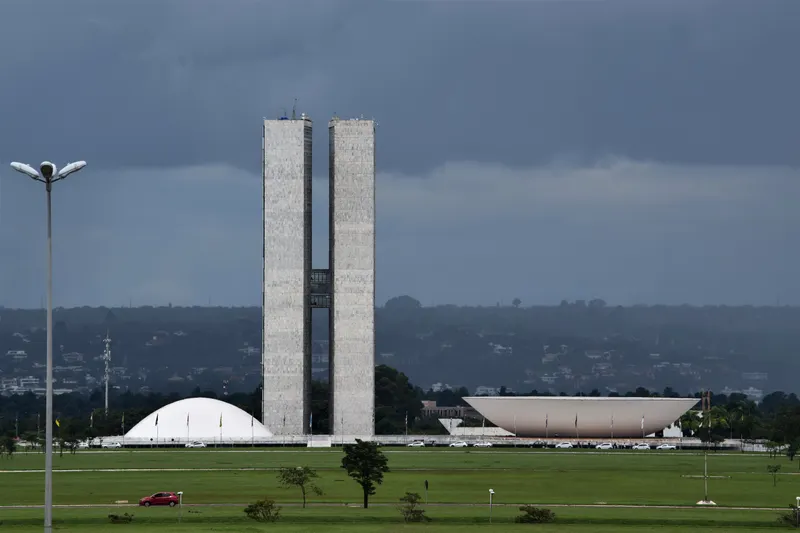
The losses were broad, not local. Lula won fewer votes than in 2022 in 25 of 27 states, and Flávio won in more than 700 municipalities that Lula had carried four years ago, according to AS/COA. Lula held the Northeast, his traditional base, but not by enough to offset losses elsewhere.
A comparison with 2022 shows the scale. In that first round, Lula took 48.43 percent and Jair Bolsonaro 43.20 percent, according to Brazil's electoral court results for that election. This year Lula is 3.27 points lower and the Bolsonaro name is 3.83 points higher, a combined swing of about 7.1 points. Lula's vote fell without Flávio needing to win over anyone new, since the right appears to have consolidated behind one family candidate.
The runoff math favors Flávio
Only about 8 percent of valid votes went to other candidates, AS/COA notes. Subtracting the two leaders' shares gives 7.81 percent. Flávio needs about 2.97 points of that pool to reach 50 percent, or roughly 38 percent of it. Lula needs 4.84 points, or about 62 percent. AS/COA, citing Atlas, puts Lula's requirement at six of every ten votes from losing candidates, which matches.
Turnout adds uncertainty. Abstention passed 21 percent, the highest since 1998, with a record 33.5 million Brazilians not voting and nearly 6 million casting null or blank ballots, AS/COA reports. Quaest's September polling found that over a quarter of the third-, fourth- and fifth-place candidates' voters planned to void their ballots or stay home in a runoff. In 2022, valid votes rose only 0.3 percent between rounds, so a large turnout surge is unlikely. The first runoff polls on October 8, from PoderData and Datafolha, put Flávio ahead 52 to 48 percent of valid votes, the Rio Times reported.
Congress could matter as much as the presidency
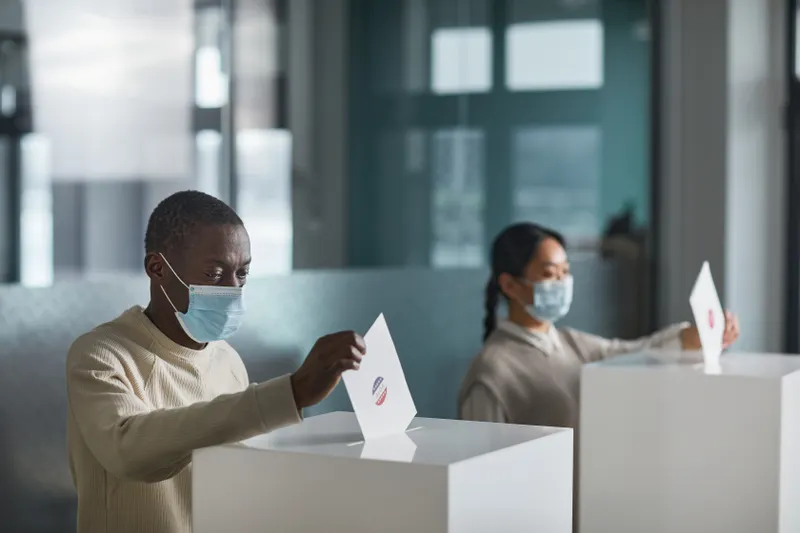
The Liberal Party (PL) won 121 of 513 Chamber seats, five governorships and a surprise win in Rio de Janeiro, according to AS/COA. In the Senate, it grew from 9 to 28 of 81 seats and becomes the largest bloc. Among its campaign promises was impeaching Supreme Court justices, a power the Senate holds. AS/COA counts 49 senators in favor from February, five short of what a motion needs, while Folha counts at least 51, three short. Both counts put the right within sight of that threshold.
That makes the runoff matter beyond who sits in the presidential palace. A Lula victory would face a hostile Senate that also approves central bank directors and ambassadors. A Flávio win would join a Senate close to being able to remove justices, including some linked to the Banco Master financial scandal that the court itself must judge.
Washington stays in the background
Donald Trump did not endorse a candidate, AS/COA notes, but his influence was visible. Flávio met him at the White House in May, and Lula's ads called his rival "Trump's candidate" while warning about US intervention. If Flávio wins, AS/COA expects him to seek Brazil's entry into the Shield of the Americas, a security group of aligned Latin American governments. The runoff is therefore a vote on Brazil's alignment as much as on Lula's record, and the campaign has two weeks to find out which message works better against a rival who already leads.
Written by
Dr. Anand Sharma
Deep Understanding of domestic and international policy.