Blogerroom
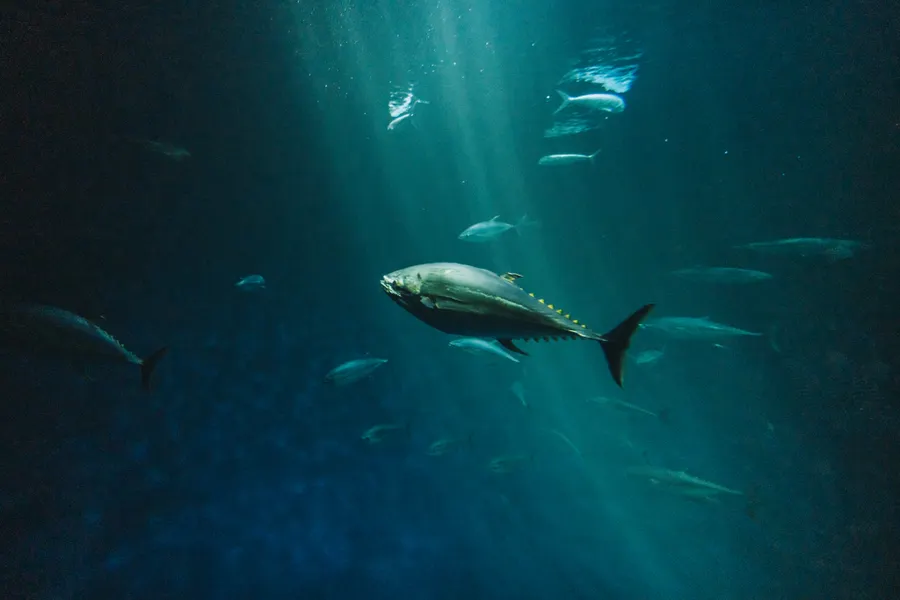
Tuna Fishing Dates Back 44,000 Years, but Scale Is New
A PNAS review by 18 researchers traces tuna fishing to East Timor 44,000 years ago, finding ancient catches of thousands of tons versus millions today.
People were catching tuna at least 44,000 years ago, in a place that is now East Timor. They were doing it again in Japan and Korea 7,000 years ago, in the Mediterranean 3,000 years ago and along North America's Pacific coast more than 5,000 years ago. Tuna fishing is one of humanity's oldest relationships with the open sea. That is the finding of a review published in the Proceedings of the National Academy of Sciences on Oct. 16, and the more striking point is how little that long history resembles what happens today.
The paper, a Perspective with 18 authors led by Torben Rick of the Smithsonian Institution, drew on bones from archaeological sites, rock art, frescoes and vases, historical records and ethnographic accounts from Indigenous communities. Rick and his colleague Emma Elliott Smith summarized the work in a piece for The Conversation.
The Oldest Tuna
The earliest definitive evidence is a set of skeletal remains, likely skipjack tuna, from East Timor about 44,000 years ago. Deep-water channels near the coast probably brought the fish close to shore, the authors say, which made catching them possible without long ocean voyages. It is an unusual case. In most parts of the world, evidence of tuna fishing does not appear until 10,000 years ago or later.
A few tuna bones found at a Neanderthal site in Gibraltar, dated to about 26,000 years ago, may have been scavenged from the shore, not caught.
A Coastal Habit
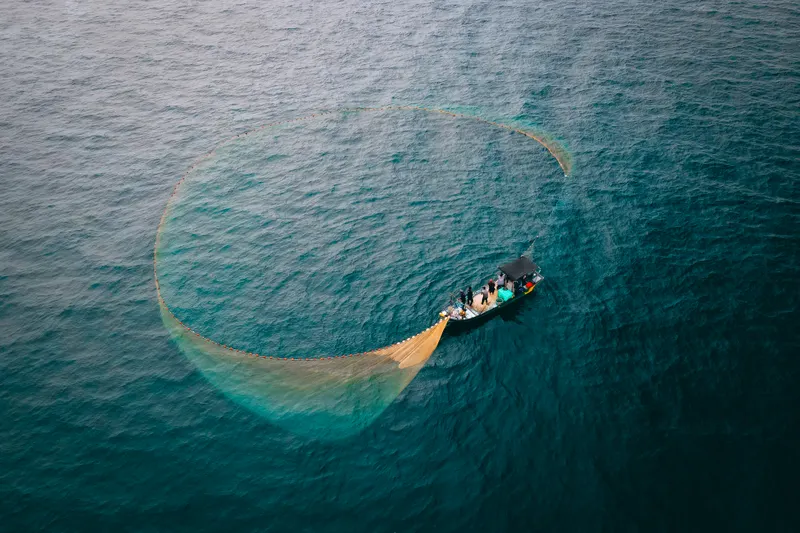
As people spread, tuna fishing took local forms. Fishers in Japan and Korea took tuna from at least 7,000 years ago, in a tradition that continues in the region's cuisine, according to the authors. On the Pacific coast of North America, Indigenous people, particularly in Nuu-chah-nulth territory, ran an important and complex fishery for Pacific bluefin tuna for more than 5,000 years.
The Mediterranean developed what may be the most elaborate early industry. By 3,000 years ago a commercial Atlantic bluefin fishery had formed there, with large-scale trade and specialized nets and traps, and the fish appear in art and writing. Bluefin vertebrae have turned up at 23 archaeological sites in the region, and ancient Greeks considered tuna worthy of sacrifice to Poseidon. Fishers relied on the predictable migrations of bluefin past the coast, so no dangerous ocean crossings were needed.
From Thousands to Millions of Tons
The authors use the quantity of tuna bones at archaeological sites as a rough measure of how much was taken. Even the largest ancient fisheries, in the Mediterranean, probably removed only thousands of tons over millennia, they report. Today, millions of tons are caught every year, supporting an industry worth about $40 billion annually.
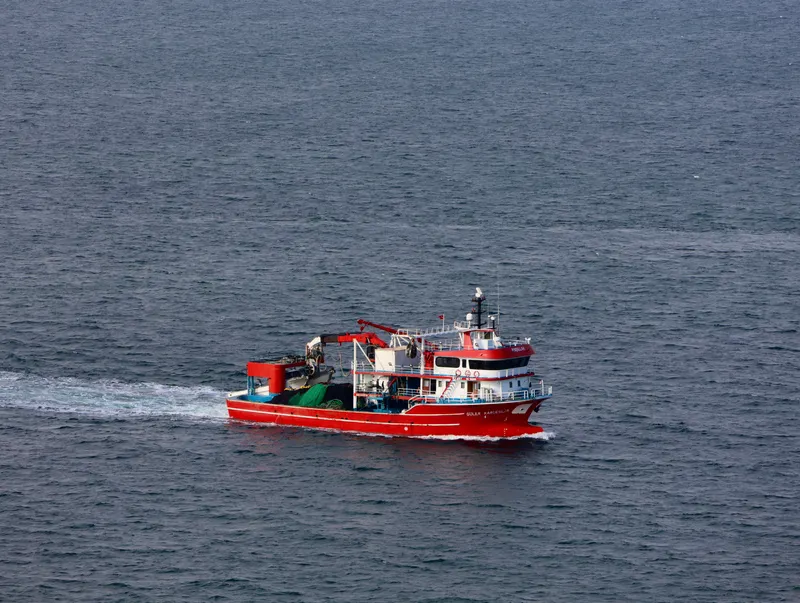
The middle of the story is the shift away from the coast. By the 16th and 17th centuries, people may have caught tens of thousands of tons annually. Tuna then rose sharply in popularity during the First and Second World Wars, and Southern California canneries in Los Angeles and San Diego, run with Japanese and Portuguese immigrant fishing communities, helped build a global industry. Once an inexpensive canned protein, bluefin tuna can now fetch millions of dollars at auction.
What the Past Cannot Tell Us
Archaeology offers a rough yardstick, not a stock assessment. Bones recovered from sites depend on what people ate, what was thrown away and what survived, so the totals are crude. I have read the authors' summary of the paper rather than the paper itself, and the specific figures should be checked there.
The comparison is still useful. It shows that today's catches are not an extension of an old pattern. They are a break from it, tied to oceanic fleets and an industry built around canning, not coastal traps.
Lessons for Management
The authors do not argue that the past was a golden age or that modern fishing can be undone. They write that the human capacity for innovation, channeled into international cooperation and science-based management, may help keep global tuna stocks at sustainable levels, even though they are unlikely ever to return to precommercial abundance.
The governance question is the same one that arises elsewhere at sea. Blogerroom reported that New Zealand set a hard cap on yellow-eyed penguin deaths in fishing nets, while a satellite analysis found oil slicks covering about 1.58 million square kilometers of ocean a year, much of it from ships. Both are reminders that oceans far from shore are managed by rules that someone must monitor.
My view: the tuna story is a useful correction to two common claims. One says humans have always overfished. The other says industrial fishing is only more of the same. The evidence in this review suggests neither. For tens of thousands of years, tuna fishing stayed small enough to be local. What changed was reach, and reach is what management has to address.
Written by
Mr. Jitendra Bhatt
Msc in Chemistry and field researcher.