Blogerroom
Rattlesnake Blood Yields Antivenom 10x Stronger Than Current
UMD researchers found rattlesnake blood proteins that neutralize viper venom ten times better than today's commercial antivenom.
Rattlesnakes have been surviving exposure to their own venom for millions of years, and nobody could fully explain how. A team at the University of Maryland just found the answer sitting in the snakes' own blood, and it may lead to an antivenom roughly ten times more potent than what doctors use today.
The study, led by Distinguished University Professor of Biology Sean B. Carroll and published July 29, 2026, in the Proceedings of the National Academy of Sciences, identifies specific blood proteins in western diamondback rattlesnakes that block the lethal effects of viper venom. Carroll's framing of the discovery was blunt: "This is one of those great stories when nature has already solved a problem we've been grappling with for decades," he said, according to the University of Maryland's announcement of the findings.
A problem that has resisted a real fix for a century
Snakebite kills an estimated 80,000 to 140,000 people every year and leaves hundreds of thousands more with permanent disabilities, according to World Health Organization figures cited in coverage of the study. It remains one of the world's most neglected tropical diseases, concentrated heavily in rural regions of sub-Saharan Africa, South Asia, and parts of Latin America where reliable antivenom access is limited.
For more than a hundred years, the basic manufacturing process hasn't changed. Antivenoms are still produced by injecting large animals, typically horses or sheep, with venom and harvesting the antibodies their immune systems produce. That process is expensive, inconsistent in potency from batch to batch, and carries a real risk of triggering severe allergic reactions in patients because the treatment itself is built from animal-derived antibodies rather than anything closer to human biology.
What the Maryland team actually found
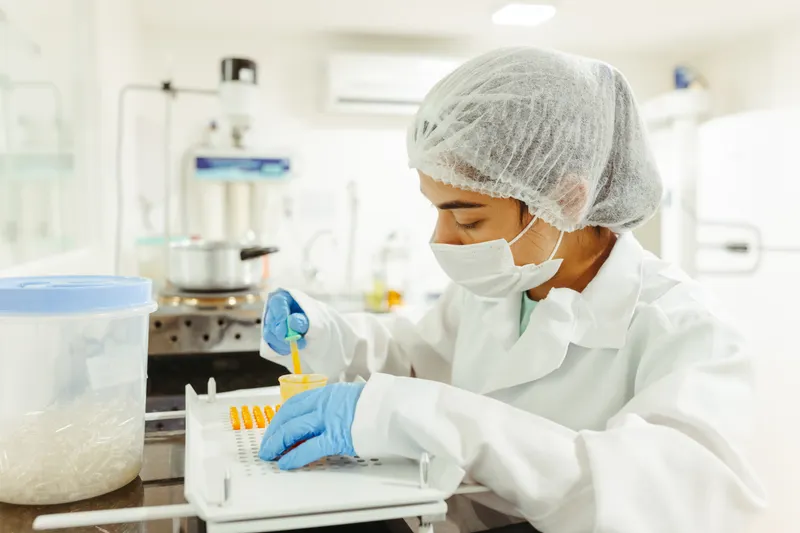
Carroll's team focused on a specific family of blood proteins called FETUA proteins, already known to circulate in the blood of vipers but poorly understood in terms of what they actually did. Individually, the research found, these proteins were either ineffective or only partially effective at blocking venom's lethal action. Combined in the right proportions, something changed entirely.
According to the PNAS paper, specific combinations of FETUA proteins fully neutralized venom lethality with roughly ten times the potency of affinity-purified commercial antivenom in laboratory testing. The mixtures didn't just work against western diamondback venom, either. They provided broad protection against venoms from multiple viper species, some separated from the diamondback by millions of years of evolution, according to the University of Maryland's reporting on the results.
The complexity behind that achievement is easy to underestimate. A single snake venom can contain roughly 100 different toxin proteins spanning multiple protein families, and venom composition varies meaningfully from one species to the next. "The ingredients are there," Carroll told ScienceDaily. "We just have to keep testing various mixtures." Finding the specific combinations that neutralize venom broadly, rather than just against one species, required systematically testing protein pairings rather than relying on a single silver-bullet molecule.
Why potency alone doesn't solve the problem
A tenfold jump in laboratory potency is a meaningful number, but it isn't the whole story behind why this approach matters. Because FETUA proteins can potentially be produced through recombinant methods rather than harvested from immunized livestock, future antivenoms built on this discovery could sidestep the batch-to-batch inconsistency and allergic-reaction risk that come with today's animal-derived approach entirely.
That manufacturing shift matters most in exactly the places where snakebite kills the most people. Rural clinics in low- and middle-income countries often can't reliably stock or afford current antivenoms, and even when supplies exist, quality varies by manufacturer and batch. A recombinant protein produced at scale in a lab, rather than extracted from a horse or sheep, offers a plausible path toward something cheaper, more consistent, and easier to distribute broadly.

The scale Carroll is already thinking about
Carroll isn't shy about the ambition behind the finding. "We could make train cars-worth of this stuff and help solve a massive global health problem," he said, a comment that signals the team is already thinking past the laboratory bench toward what industrial-scale production might look like.
That kind of talk is easy to dismiss as researcher optimism, except that the underlying biology gives it some weight: these aren't synthetic compounds built from scratch, they're proteins vipers themselves have already evolved and refined over millions of years specifically to survive their own venom. The manufacturing challenge is production and formulation, not discovering whether the biology works in the first place.
What still has to happen before this reaches a patient
The current results come entirely from laboratory and animal testing, not from treating actual snakebite victims, and the researchers themselves have acknowledged that proving the treatment works after a real bite, and against a wider range of toxin families beyond what's been tested so far, remains ahead of them.
Turning a laboratory finding this promising into an approved, manufacturable antivenom typically takes years of additional work: further toxin-family testing, formulation studies, safety trials, and eventually human clinical testing before any of it reaches a rural clinic in the regions that need it most. Given how little the fundamental antivenom manufacturing process has changed in over a century, though, a viable alternative sourced from the snakes' own evolved defenses is the kind of lead worth watching closely as it moves toward those next stages.
Written by
Mr. Jitendra Bhatt
Msc in Chemistry and field researcher.