 Blogerroom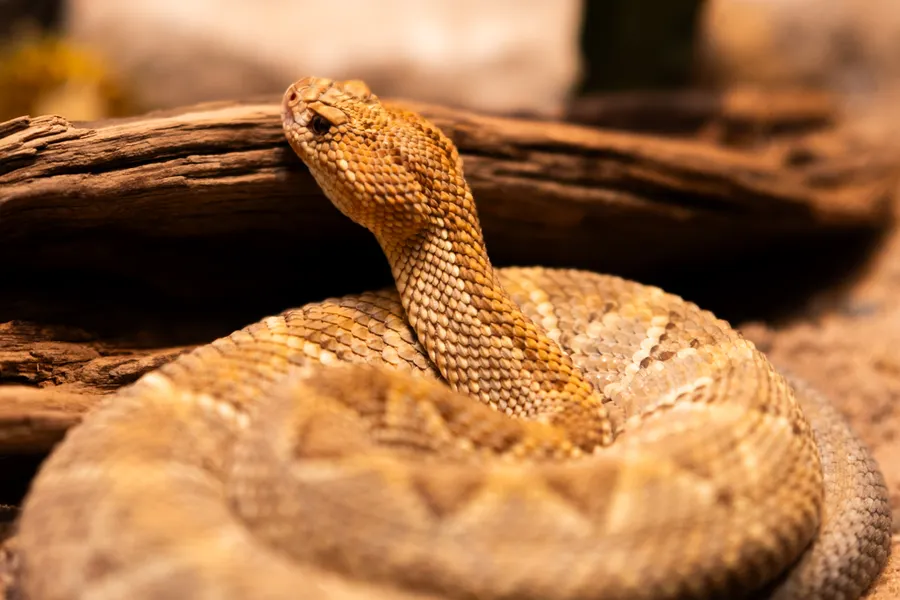
Rattlesnake Blood Yields a More Potent Antivenom
University of Maryland researchers found rattlesnake blood proteins, combined correctly, neutralize viper venom 10 times better than current antivenom.
The obvious question nobody had properly answered
Rattlesnakes carry some of the most lethal venom in North America, yet they never poison themselves with it. That basic fact has been known for decades, and researchers have long assumed the snakes' own blood must contain some kind of built-in protection. What nobody had done, until a team led by University of Maryland biology professor Sean B. Carroll, was systematically identify which specific proteins do the protecting, and whether those proteins could be harnessed into something more powerful than the antivenoms doctors currently rely on. Published in the Proceedings of the National Academy of Sciences, their answer is a genuinely striking one: combinations of these proteins performed roughly ten times better at neutralizing venom than current commercial rattlesnake antivenom in laboratory testing.
Carroll captured the appeal of the finding directly: "This is one of those great stories when nature has already solved a problem we've been grappling with for decades." Snakebite kills an estimated 80,000 to 140,000 people worldwide every year and leaves hundreds of thousands more with permanent disabilities, a toll the World Health Organization has long classified as one of the most neglected tropical diseases, precisely because the people most affected tend to live in rural, low-resource regions where reliable antivenom access is scarce.
Why current antivenom hasn't solved this problem
It's worth understanding why a treatment that already exists hasn't already fixed this. Modern antivenoms are manufactured the same basic way they have been for more than a century: by injecting horses or sheep with diluted snake venom, then harvesting and purifying the antibodies those animals produce in response. That process is expensive, labor-intensive, and produces a final product whose quality and effectiveness varies depending on the specific venom mixture used, the animal's individual immune response, and how closely the treating physician's local snake species matches whatever venom was originally used to manufacture the batch. Because different snake species produce meaningfully different venom compositions, a single antivenom often works poorly, or not at all, against species it wasn't specifically designed for. On top of that, since the antibodies come from another animal's immune system, they can trigger serious allergic or immune reactions in human patients.
Those limitations have persisted for generations, in part because nobody had a clearly superior alternative mechanism to replace the underlying manufacturing approach, only incremental improvements to essentially the same century-old process.
What the rattlesnake's own blood is actually doing
Carroll's team focused on a specific protein family called FETUA proteins, circulating in the blood of western diamondback rattlesnakes. Testing individual FETUA proteins in isolation produced disappointing results, either no protective effect at all or only partial protection against venom's damaging effects. The real discovery came when the researchers began testing specific combinations of these proteins together, rather than one at a time. Certain combinations proved dramatically more effective than any single protein, fully neutralizing the lethal action of rattlesnake venom in laboratory testing and achieving roughly ten times the potency of CroFab, the current commercial North American pit viper antivenom used as the comparison benchmark.
That combination effect makes biological sense given how venom itself works. A single snake venom can contain around 100 different toxin proteins spanning multiple distinct protein families, meaning any single inhibitor protein was always going to be outmatched trying to neutralize that much toxic complexity on its own. Multiple inhibitors working together, each targeting different toxin components, evidently closes gaps that no single protein could cover alone.
A protective mechanism old enough to predate most mammals
Perhaps the most striking supporting detail in the study concerns how ancient this protective system actually is. Carroll's team found that critical FETUA proteins are deeply conserved not just within rattlesnakes, but broadly across viper species generally, including species separated by millions of years of independent evolution. "The fact that parts of these inhibitors have been perfectly conserved over 50 million years of snake evolution tells you just how real a risk this is for these animals," Carroll said, referring to the risk snakes themselves face from their own venom, whether through internal exposure, cannibalism, or other routes.
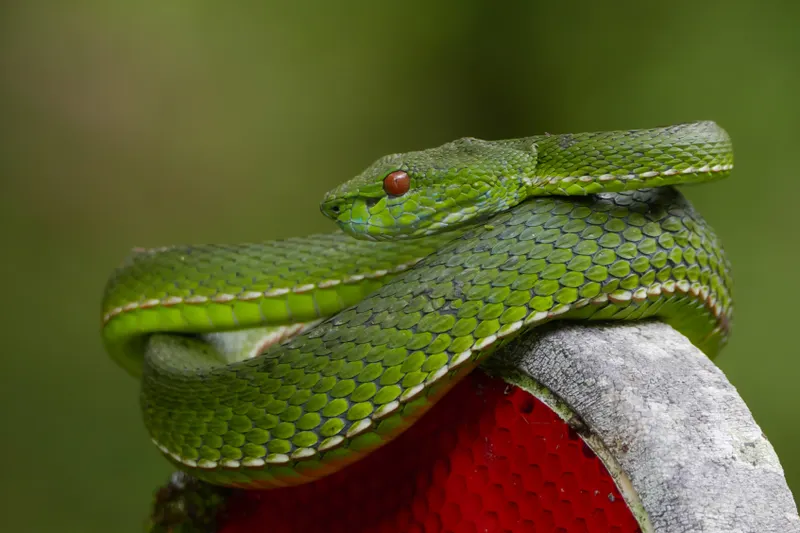
That deep evolutionary conservation isn't just a biological curiosity; it's directly useful for antivenom development. Because these protective proteins have remained functionally similar across such a wide evolutionary span, the researchers found the combinations could neutralize venom lethality from multiple viper species well beyond rattlesnakes specifically, evolutionarily distant relatives whose venom composition differs substantially from the western diamondback's own. A treatment approach that works broadly across a wide range of viper species, rather than requiring a separate, narrowly tailored antivenom for each one, would represent a genuine improvement over how snakebite treatment is currently organized worldwide.
Why this matters most for the people antivenom currently fails
The practical stakes here extend well beyond laboratory potency numbers. Because these FETUA protein combinations could potentially be manufactured through recombinant methods, essentially engineering bacteria or other cells to produce the proteins directly, rather than depending on immunizing large animals with venom and harvesting their antibodies, future antivenoms built on this approach could become considerably cheaper and easier to manufacture at scale. That matters enormously for exactly the populations snakebite affects most severely: rural communities in low- and middle-income countries where the current animal-immunization supply chain struggles to deliver consistent, affordable antivenom where it's needed most.
Bypassing the animal-antibody manufacturing process also addresses the immune-reaction problem directly, since a recombinant, protein-based treatment wouldn't carry the same risk of triggering allergic responses that current animal-derived antivenoms can produce in human patients. That combination, broader cross-species protection, higher raw potency, and a manufacturing process better suited to affordable scale-up, is what makes this finding a genuinely different proposition than simply a more potent version of the existing approach.
What still stands between this and an actual treatment
Carroll was candid about how much work remains before this becomes a deployable medical product, describing the ongoing effort in practical terms: "The ingredients are there. We just have to keep testing various mixtures." That's a considerably more involved task than it might sound, given that snake venom composition varies so substantially across species, meaning researchers will likely need to identify multiple optimized protein combinations tailored to different regional snake populations, rather than a single universal formula.
This kind of foundational biological discovery, understanding a mechanism nature had already solved, then working out how to translate that mechanism into a manufacturable human treatment, follows a familiar arc in medical research more broadly, not unlike how researchers recently traced the precise mechanical cause behind snake embryos' distinctive coiling pattern, another case where a long-observed biological phenomenon finally got a clear, evidence-based explanation once the right investigative approach was applied. Whatever timeline lies ahead for turning this discovery into an approved treatment, the underlying finding itself reframes a problem that has resisted meaningful improvement for over a century: the animals causing the world's snakebite crisis may have been carrying the blueprint for its solution in their own bloodstream the entire time.
Written by
Mr. Jitendra Bhatt
Msc in Chemistry and field researcher.

