 Blogerroom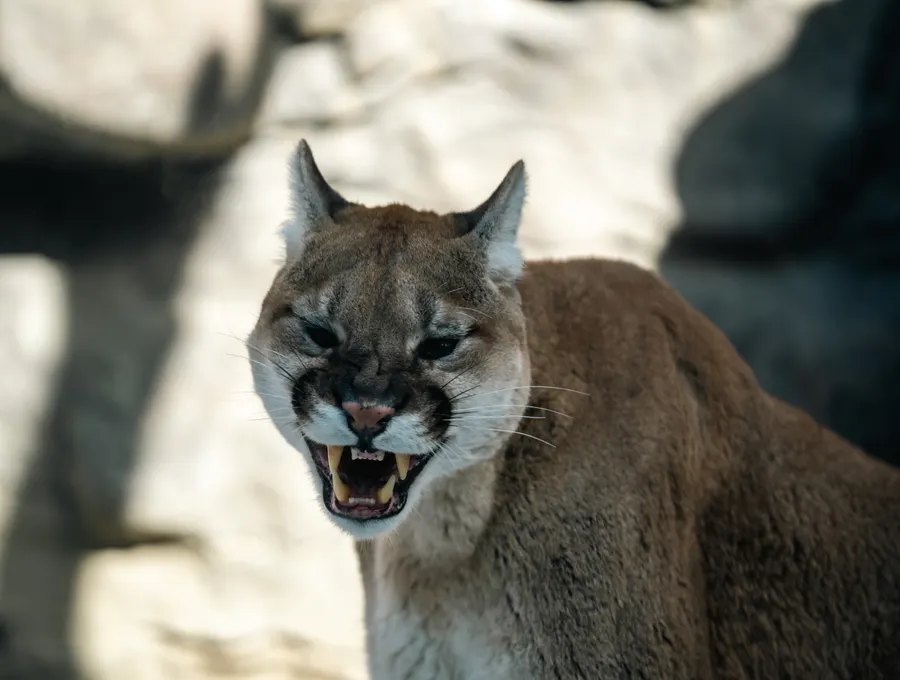
The 'American Cheetah' Wasn't a Cheetah, DNA Confirms
Ancient DNA shows Miracinonyx trumani was a puma relative, not a cheetah, and Arctic populations survived by eating salmon.
A name that stuck for the wrong reason
For half a century, paleontologists have called Miracinonyx trumani the "American cheetah," a name built entirely on how the animal looked: a slender body, elongated forelimbs, and an enlarged nasal cavity, all features that suggested a built-for-speed predator closely related to the cheetahs of Africa and Asia today. A study published September 4 in Current Biology, led by researchers at the University of California, Santa Cruz, confirms what a smaller 2005 genetic analysis had already hinted at, and pushes the correction much further: this animal wasn't a cheetah at all. It was a highly adaptable relative of the puma, and at least one population of it spent its life in the Arctic eating fish.
Molly Cassatt-Johnstone, a PhD candidate in the Paleogenomics Lab at UC Santa Cruz and the study's lead author, captured why the mistake happened so easily in the first place. "It's very hard to imagine a prehistoric species we've never seen without comparing it to something we know," she said. That's a fair defense of the original naming decision, and also exactly the trap this new genetic evidence shows scientists fell into.
What the genome actually says
The research team extracted and sequenced the first high-coverage nuclear genomes ever produced for Miracinonyx trumani, working from four specimens: one recovered from Natural Trap Cave in Wyoming and three from Canada's Yukon Territory. Comparing that genetic data against nine other cat species, ranging from lions to ordinary house cats, the team found M. trumani shared a common ancestor with modern cheetahs roughly 4.7 million years ago, a genuinely distant relationship. Its actual closest living relative turned out to be the puma, or mountain lion, with the two lineages diverging from a shared ancestor around 2.6 million years ago.
That means the cheetah-like body, the long legs, the streamlined build researchers had used for decades to justify the name, is a case of convergent evolution: two unrelated lineages independently evolving similar physical traits because they faced similar ecological pressures, chasing fast prey across open terrain, rather than inheriting those traits from a shared cheetah ancestor. It's a classic biological pattern showing up in a genuinely striking example, and it comes with a pointed lesson attached. As the research team put it, the case highlights the real danger of naming extinct species based purely on how they look, since appearance alone can point researchers toward a completely wrong evolutionary tree.
A discovery that came from the wrong end of the continent
The genetic reclassification might have been the headline on its own, but the study's second major finding is arguably more surprising: M. trumani lived far further north than anyone had previously documented. The Yukon fossils extend the species' known range more than 20 degrees of latitude, over 1,400 miles, farther north than earlier records showed. National Geographic Explorer Julie Meachen, a coauthor on the study, noted plainly that "this study is the first published record of Miracinonyx in Canada" at all.
That's a substantial revision to a species range map that had stood largely unchanged for decades. Prior to this study, researchers had essentially no evidence this predator ever reached the Arctic, let alone that it maintained a distinct, functioning population there.
Solving the mystery of what an Arctic 'cheetah' actually ate
Finding M. trumani in the Yukon immediately raised an obvious problem: pronghorn, the fast-running prey species long assumed to be this predator's primary target across its grassland range, don't live that far north. So what was a cheetah-built predator eating in a landscape without its supposed signature prey? The research team answered that question using isotope analysis, measuring the relative amounts of different forms of nitrogen and carbon preserved in the fossils, chemical signatures that shift depending on diet and position in the food chain.
The Wyoming fossils, roughly 20,000 years old, produced isotope values consistent with other predators from that era known to hunt herbivores like pronghorn, horses, bison, and bighorn sheep, exactly what researchers expected. The Yukon fossils told a completely different story. Their isotope values pointed toward a diet rich in anadromous fish, species like salmon that migrate between freshwater and the ocean, positioning the Arctic population as tertiary consumers in a food web built around fish rather than land-based grazing prey. A cheetah-shaped predator that had built at least part of its population around eating salmon is about as far from the "pronghorn-chasing plains hunter" image as this species could possibly get.

Genetic evidence of life at the edge of the world
The Yukon population's genome carried its own signature of adapting to extreme northern conditions. Researchers found loss-of-function mutations in genes that regulate circadian rhythms, the internal biological clock most animals use to time behavior around predictable day-night light cycles. In the Arctic, that predictability breaks down entirely, with near-endless daylight in summer and near-endless darkness in winter. Disabled circadian genes in this population suggest a genuine evolutionary adaptation to that extreme light environment, a level of physiological specialization that fits naturally with an animal already adapting its entire diet to whatever the local ecosystem actually offered, rather than sticking rigidly to the hunting strategy its body shape seems built for.
Undoing a story that shaped how an entire ecosystem is understood
This reclassification carries a consequence extending well beyond one species' family tree. For decades, M. trumani has anchored what's known as the "ghost of predators past" hypothesis, the idea that the pronghorn's extraordinary modern-day speed, far faster than any predator currently chasing it in North America, evolved specifically as a co-evolutionary response to relentless pursuit by a genuine cheetah-level hunter during the Pleistocene. It's one of evolutionary biology's more memorable teaching examples, cited in textbooks and nature documentaries alike as a case of prey retaining a "ghost" adaptation long after its original predator disappeared.
This new genomic and dietary evidence doesn't disprove that pronghorn were hunted by fast Pleistocene predators, but it meaningfully complicates the tidy version of the story. If M. trumani's body plan reflects convergent evolution rather than true cheetah-level specialization, and if at least one entire population of the species spent its life eating fish rather than chasing pronghorn at all, the "ghost predator" narrative built around this one animal was resting on a foundation considerably shakier than the field had assumed. Sorting out what actually drove pronghorn speed now looks like a more open question than a settled textbook answer, a reminder that even well-established evolutionary stories can unravel once the right fossils finally get sequenced.
Written by
Mr. Jitendra Bhatt
Msc in Chemistry and field researcher.

