Blogerroom
Protecting Standing Amazon Forest Beats Replanting Trees
A Science study across 3 million Amazon hectares found stopping fire and logging beats tree planting on cost and biodiversity.
Planting trees on cleared land has become the conservation move of the moment, written into Brazilian law and into global pledges. A new study says it finished last on every measure researchers took, behind a far less glamorous option: keeping fire and chainsaws out of forest that is already standing.
The paper, published in Science on September 17, 2026, is the first systematic comparison of its kind, according to the Lancaster University-led team behind it. Researchers from the UK, Brazil, Sweden and Australia set out to answer a blunt budgeting question: when money for the Amazon is limited, which strategy buys the most biodiversity and the most stored carbon?
A decade of real land-use change
The team did not run a computer thought experiment on hypothetical land. Their analysis covered more than 3 million hectares around Santarém and Paragominas in Brazil's Pará state between 2010 and 2020, according to the research release circulated through EurekAlert and Phys.org. They combined high-resolution satellite imagery with field data from 381 survey transects across 38 catchments and 499 rural properties.
Models then mapped the distribution of 160 bird species and 426 tree species. Using what actually happened on the ground, the researchers built counterfactual scenarios: what would biodiversity and carbon have looked like had a given strategy been applied instead? They also estimated what each intervention would cost, so benefits could be compared per unit of money spent.
What came out on top
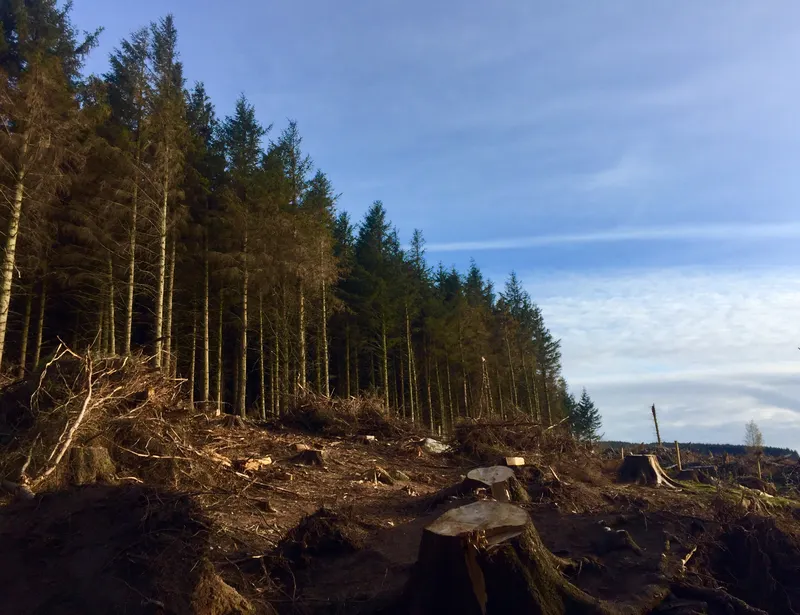
Stopping deforestation remained essential. But avoiding disturbance inside existing forest, meaning selective logging and wildfire, delivered the greatest gains for forest biodiversity and came almost as close as halting deforestation for protecting carbon stocks, according to ScienceDaily's summary of the findings. Restoration still matters, particularly where land has already been heavily cleared, but it was more expensive and less effective when used alone.
One result deserves attention from policymakers. According to a summary published by Open Access Government, net gains in both biodiversity and carbon across the region appeared only when protection against deforestation and protection against forest degradation were combined. Young restored stands also remain highly vulnerable to fire, so replanting without fire control risks paying twice for the same trees.
Why the timing is uncomfortable
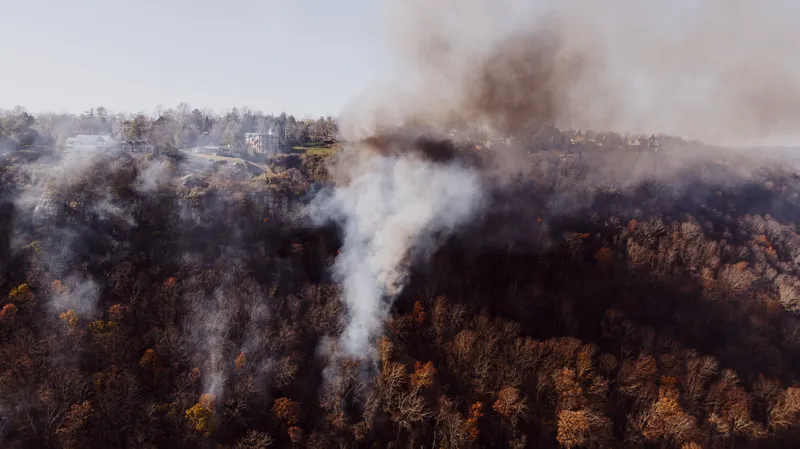
The release landed as the 2026 El Niño strengthens across the Amazon, a pattern that amplifies dry-season heat and drought in the arc of deforestation. Dry, degraded forest burns more readily, which is the core of the argument: a logged or scorched forest edge is not gone, but it is quietly losing species and carbon while attention stays fixed on the next planting campaign.
That climate backdrop is part of a wider pattern of long-standing ocean and atmosphere relationships shifting under warming. A 400-year coral and tree-ring record recently showed human-caused warming is decoupling the Indian and Pacific oceans, a reminder that the weather systems driving Amazon drought are not behaving as they once did.
The demand sits with markets, not just governments
The authors argue responsibility cannot rest with governments and conservation groups alone. "There is a need for the companies and markets that benefit from nationally and globally traded commodities like soy and beef to take responsibility not only for deforestation, but also the degradation of remaining forests that is inextricably linked to these production systems," said Dr. Toby Gardner, a co-author at the Stockholm Environment Institute and co-founder of the supply-chain initiative Trase.
Senior author Professor Jos Barlow and lead author Dr. Leonardo Miranda have pressed the same point, according to Open Access Government: state environmental budgets and corporate supply-chain commitments need to prioritize wildfire prevention and logging controls, or restoration money will be wasted while existing carbon sinks erode.
What the study cannot tell us
The findings come from two regions of one Brazilian state over ten years. That is a large, carefully measured sample, but the ranking of strategies could shift in places with different fire regimes, land prices or soils, and the authors describe protection and restoration as complementary rather than rivals. Their conclusion is about sequencing and cost-effectiveness, not abandoning replanting.
Still, the implication is hard to dodge. A pledge to plant a billion trees is easy to announce and easy to photograph. Preventing a forest from burning produces no ribbon-cutting, yet in this dataset it protected more wildlife per dollar than any planting scheme, and every year of delay makes the forests that remain more flammable.
Written by
Mr. Jitendra Bhatt
Msc in Chemistry and field researcher.