Blogerroom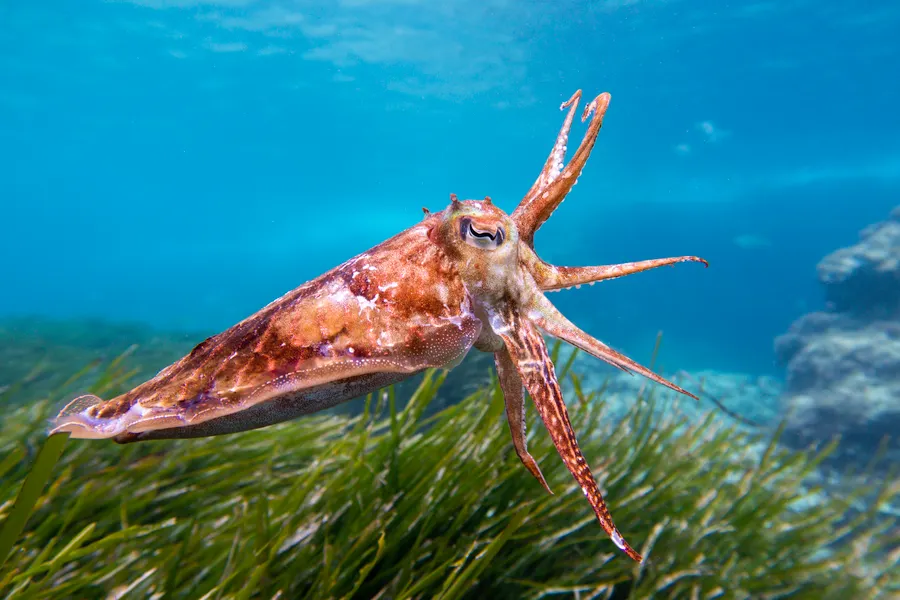
Giant Cuttlefish Population Crashes 97% After Algal Bloom
South Australia's famed giant cuttlefish aggregation fell from tens of thousands to 1,811 adults after a toxic algal bloom.
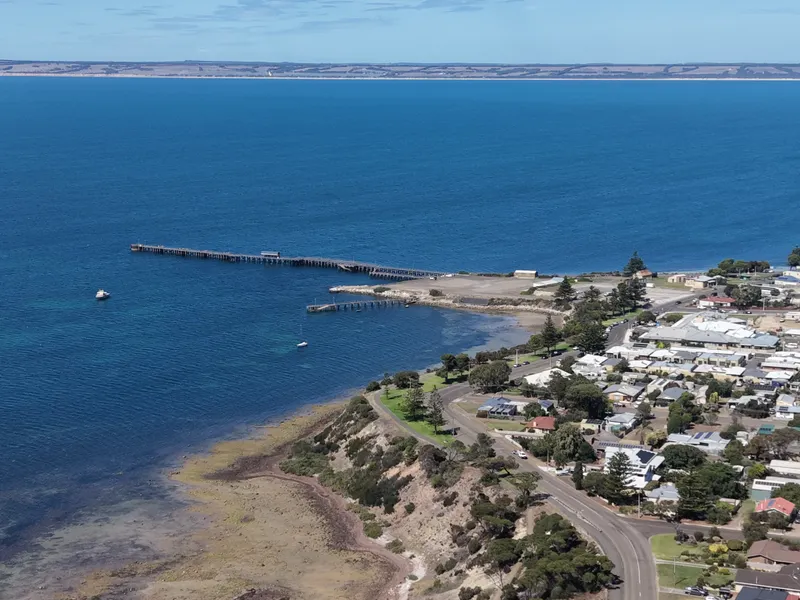
Every winter for decades, tens of thousands of giant Australian cuttlefish have converged on a narrow stretch of rocky reef near Whyalla, South Australia, in one of the ocean's more dazzling mating spectacles. This year, researchers counted 1,811 adults. That's not a slow decline. It's a 97% collapse in a single year, and marine scientists are now warning the aggregation, and possibly the species behind it, may not recover.
The cause traces back to a mysterious and devastating algal bloom that struck South Australia's coast last year, killing more than 600 different kinds of marine life along the way. A new report released by the South Australian Research and Development Institute, known as SARDI, has now quantified just how much damage that bloom did to one of the region's signature natural wonders.
A spectacle scientists call irreplaceable
"It is a real treasure, a marine wonder," Roger Hanlon, a sensory ecologist at the Marine Biological Laboratory, said of the aggregation, according to Science's coverage of the SARDI findings. The giant cuttlefish gathering in Spencer Gulf has drawn researchers and tourists alike for years, prized both as a natural spectacle and as a rare, concentrated window into cuttlefish mating behavior that's difficult to study anywhere else on Earth.
This year, that window was barely visible. Where dense, visually striking congregations of cuttlefish once carpeted the reef during breeding season, researchers found only scattered individuals, the population's official count landing at 1,811 adults, according to SARDI's report.
Why researchers think this population is genuinely unique
The scale of the loss matters partly because of what scientists believe this specific population actually is. Zoë Doubleday, a marine ecologist who has studied the aggregation extensively, put the stakes in stark terms: "This population is likely its own species, and if it's gone, we're probably never going to see the aggregation again," she told Science.
That's a significant claim. If Doubleday's assessment holds up under further genetic study, the loss wouldn't just be a dramatic population crash within a broader, stable species range, it would represent the potential disappearance of a genetically distinct lineage that exists nowhere else. Unlike a species with populations spread across multiple regions, where a local collapse leaves room for eventual recolonization from elsewhere, an isolated, self-contained aggregation like this one has nowhere else to draw new individuals from if it disappears entirely.
What the algal bloom actually did
The bloom that triggered this collapse wasn't a routine seasonal event. Described by Science as both devastating and mysterious, it swept through South Australian waters and killed marine life across an enormous range of species, over 600 distinct kinds by the report's count, a toll that points to a bloom event of unusual severity and duration rather than a typical, short-lived algal spike.
Harmful algal blooms of this scale generally work through a combination of oxygen depletion and toxin release, suffocating and poisoning marine animals across an affected area simultaneously. For a species like the giant cuttlefish, already concentrated into a relatively small, specific breeding ground during the season when the bloom struck, that kind of event can inflict damage disproportionate to what a more widely distributed population would suffer from the same environmental disaster.
The government's response so far
The scale of the collapse has already triggered an official response. Australia's federal environment minister, Murray Watt, has asked the country's Threatened Species Scientific Committee to consider an urgent assessment of the giant cuttlefish's conservation status, according to Science's reporting. That request is a formal first step toward potential legal protections, though it doesn't guarantee the species, or this specific population, will ultimately receive them.
An urgent assessment request signals that the government views the SARDI numbers as serious enough to warrant expedited review, rather than the standard, often lengthy conservation-listing process. Whether that urgency translates into meaningful protections in time to matter for a population already reduced to fewer than 2,000 adults remains an open question.
Why a 97% crash is harder to recover from than the number suggests
A population drop this steep carries risks that compound beyond the raw numbers. Small, isolated populations face a well-documented set of additional pressures once they fall below a certain threshold: reduced genetic diversity, weaker resistance to disease or further environmental shocks, and simple bad luck in reproduction becoming a much larger relative risk when so few individuals remain to breed.
For a species whose entire known aggregation now numbers under 2,000 adults, down from tens of thousands in a typical year, even a return to favorable environmental conditions may not guarantee recovery. The breeding structure that made this aggregation such a remarkable spectacle in the first place, a dense, concentrated gathering that maximized mating opportunities, could itself become harder to sustain at such reduced numbers, potentially creating a feedback loop that makes rebuilding the population more difficult than the initial decline might suggest.
What comes next for Spencer Gulf
Researchers will likely spend the coming months and years tracking whether this year's count represents the bottom of the crash or merely a waypoint in an ongoing decline, particularly if algal bloom conditions recur in future seasons. Climate-linked factors, including warming coastal waters and nutrient runoff, have been associated with increasing frequency and severity of harmful algal blooms in various regions worldwide, raising the uncomfortable possibility that last year's bloom may not prove to be an isolated event.
For now, the giant cuttlefish of Spencer Gulf stand as a stark, concentrated example of how quickly a signature wildlife population can collapse when a single severe environmental event strikes at exactly the wrong place and time. Whether Australia's conservation apparatus can move quickly enough to protect what's left, and whether what's left is even enough to rebuild from, will likely become clearer only as researchers return to the reef next winter to count whoever shows up.
Written by
Mr. Jitendra Bhatt
Msc in Chemistry and field researcher.