Blogerroom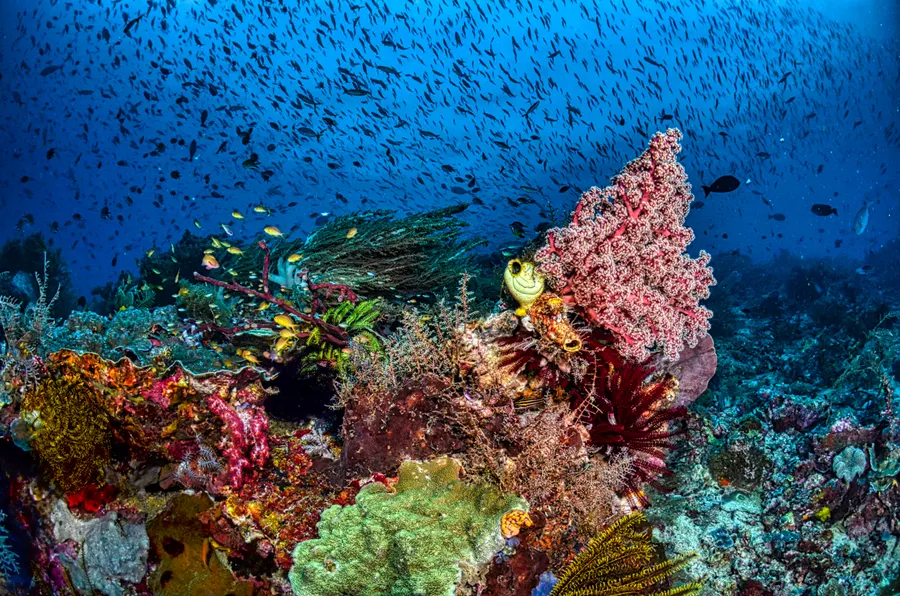
Most Ecosystem Services Rise With Each Added Species
A 423-study global synthesis finds species losses rarely cost nothing: most services keep rising with diversity, and ocean carbon storage is most sensitive.
A popular comfort in conservation biology is that ecosystems carry spare parts. If several species do the same job, losing one should cost little. A study published in Nature Ecology & Evolution on Oct. 6 tests that comfort against the largest database of its kind, and finds that for most services the spare parts are harder to find than assumed.
The paper comes from researchers at King's College London, Imperial College London, the Natural History Museum and the Alan Turing Institute, led by Emma Moffett, Joel Gayford and William Pearse, with Andy Purvis and Guy Woodward among the authors.
What the Team Gathered
The authors combined 423 studies into a database of 222,829 data points across 1,959 datasets, which they say is more than twice the size of the next largest effort. It covers land, freshwater, marine and estuarine systems, and mixes experiments with observations. They sorted the evidence into 23 categories of ecosystem services and functions, from pollination and water quality to carbon storage.
For each category they asked two questions: what shape does the relationship between diversity and the service take, and how strong is it?

Linear, Not Flat
The first answer is that most relationships do not level off. Of the 23 categories, quadratic fits were the best description for 11 and linear for 9 or 10 (the paper's text and figure caption differ by one), with only two best fit by a logarithmic curve. A linear relationship means each additional species adds a similar amount; a flattening curve would mean extra species add little.
Regulating services such as water quality, hazard regulation and pollination were typically linear, which the authors read as a broad, additive role for diversity. The paper concludes that saturation limits have rarely been reached within the diversity gradients actually studied, implying functional redundancy has been overestimated.
Some systems do saturate. For curves that level off, the median point beyond which extra species add little was about 4 species in freshwater, 14 in terrestrial and 23 in marine systems. Decomposition in freshwater is one case where gains stop quickly.
The Ocean Standout, and Its Seven Datasets
The strongest result is about the sea. Oceanic carbon sequestration showed the largest effect of any category, a Fisher's z of 1.48, against a near zero for air quality regulation. The authors suggest this reflects strong biological control of marine carbon cycling, including phytoplankton productivity and the biological carbon pump. Their conclusion is that blue carbon strategies need to include biodiversity, not just habitat area.
They also flag the catch: that result rests on just seven datasets, against 154 for terrestrial carbon storage. It is the headline number and also the thinnest evidence, which the authors ask readers to treat cautiously.
Where Biodiversity Matters Less
Not everything tracks species counts. Hazard regulation, such as protection against floods and storms, showed essentially no overall sensitivity to diversity. The authors explain this with foundational species. Sand dunes, for example, are stabilized by one or two shrub species, and adding more species does not improve the barrier.
That still does not make the rest of the community irrelevant, they argue, because the foundational species depend on it. Blogerroom's report on how waves decide where mangroves can grow is a close cousin of this point: a single coastal tree species can hold up a protective shoreline, and whether it survives depends on conditions around it.
A Forecast for Pest Control
The team also tested what the findings imply. Using projected biodiversity under two socioeconomic scenarios, they modeled the ratio of natural enemies to crop pests, a proxy for natural pest control. Under the fossil-fuel-driven scenario, pest protection falls relative to a middle-of-the-road path, and the loss is steeper in countries with rapid population growth and low scores on the UN Human Development Index.
This is a heuristic model, and the authors say so. It assumes species are lost at random with respect to their usefulness, uses terrestrial data only, and leaves out crop type and farm management.
How Far to Trust It
The headline of the university release, that nature's ability to bounce back is "vastly overestimated," is stronger than the paper's own careful wording, which says redundancy "may be" overestimated. My view is that the direction is believable and the size is not yet settled.
The caveats are in the paper. Most diversity-function relationships had low to moderate explanatory power (r-squared below 0.4). Observational studies showed slightly stronger effects than experiments. The data are heavily terrestrial, with 1,759 terrestrial datasets against 183 freshwater, 153 marine and 23 estuarine, and skewed toward developed countries, especially Europe. The authors also note that linear patterns could reflect limited sampling of the most diverse systems rather than a true linear response.
For conservation, the practical message is the one the authors draw: protect overall diversity and the foundational species at once. It echoes the case Blogerroom covered in protecting standing Amazon forest before replanting trees, that keeping intact systems is usually cheaper than rebuilding them. If the new synthesis is right, the cost of letting species go is paid in services nobody was counting.
Written by
Mr. Jitendra Bhatt
Msc in Chemistry and field researcher.