Blogerroom
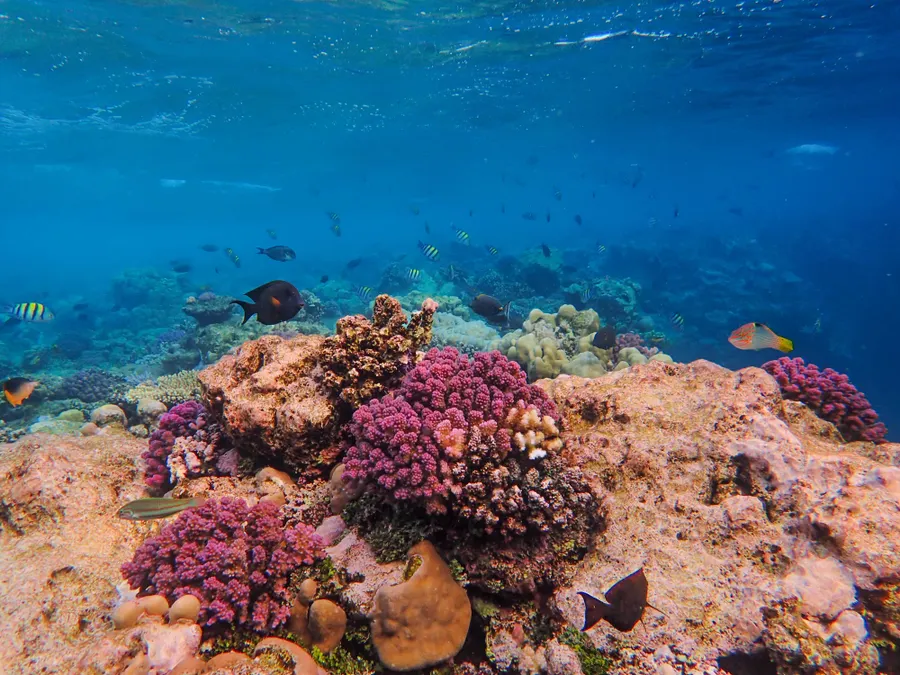
IUCN: 96% of Coral Reef Ecosystems at Collapse Risk by 2075
IUCN's first coral reef ecosystem assessment rates 122 of 127 ecoregions Critically Endangered by 2075; observed change alone puts 24% there already.
Coral scientists have counted species at risk for years. On Oct. 22, at the UN biodiversity conference in Yerevan, the International Union for Conservation of Nature released something different: the first assessment of the risk that entire coral reef ecosystems collapse. Of 127 ecosystems assessed, 122 are rated Critically Endangered, and they hold 99.8% of the assessed reef area.
The more careful reading of that headline is the gap between two numbers, 24% and 96%, and what causes it.
What the Assessment Measured
The work was carried out using the IUCN Red List of Ecosystems, a framework that rates the risk of an ecosystem collapsing in the way the species Red List rates extinction risk. It was coordinated by IUCN, its Commission on Ecosystem Management, the University of Melbourne and CORDIO East Africa, working with regional nodes of the Global Coral Reef Monitoring Network, the IUCN said. More than 250 experts took part.
The study covers 127 reef ecosystems, each defined by distinct species and conditions, across more than 80 countries and territories. Together they span 188,362 square kilometers of shallow-water coral reef, according to a report by Down To Earth.

24% Now, 96% by 2075
Two analyses sit side by side. Using only observed changes over the past 50 years, 116 ecosystems, or 91%, are threatened, and 30, or 24%, are already Critically Endangered. Adding projected heat stress, based on the IPCC's SSP2-4.5 scenario, lifts the Critically Endangered share to 96% by 2075, the IUCN said.
The jump is about time. Marine heatwaves are projected to become so frequent that reefs may not have enough time to recover between events. That recovery gap is the point of the downgrade. Past damage explains the 24%, and the expectation of more frequent heat explains the rest.
The one reef already counted as collapsed is the Western Galápagos Islands, classified as Collapsed since the 1982-83 El Niño. Four of the 127 ecosystems lacked sufficient data. Without that and the Galápagos case, the Critically Endangered share would be higher still, IUCN noted.
Which Reefs, and Why
Heat stress from climate change was the single most consistent threat across all 127 ecosystems, the IUCN reported. Major systems placed in the top threat category include the Great Barrier Reef, the Coral Triangle in Southeast Asia, the Mesoamerican Barrier Reef System and the Red Sea reefs, according to a summary of the assessment.
Marcos Valderrábano, who leads the Red List of Ecosystems programme at IUCN, said repeated severe bleaching would likely produce less diverse reef communities dominated by algae instead of corals, per a summary of his remarks.

What Collapse Does and Does Not Mean
Critically Endangered in this framework does not mean the reefs are gone by 2075. It is a statement about the probability of collapse within roughly 50 years under the stated scenario, not a forecast that every reef disappears. The IUCN stresses that most reefs are still alive today: on observed change alone, about three-quarters of the ecosystems are not yet Critically Endangered.
The scenario also matters. SSP2-4.5 is a middle-of-the-road emissions path in the IPCC's set, not a worst case. Different emissions would change the projection, which is why IUCN frames the findings as a case for cutting greenhouse gases.
This is a different kind of result from the species study Blogerroom covered earlier this month, which found 44% of reef-building corals face elevated extinction risk. That count is of species. This one assesses whole ecosystems, which can collapse in function even if many species persist somewhere.
Where the Window Is
Despite the stark number, the assessment's authors argue the window has not closed. Mishal Gudka, the scientific lead for the global assessment, pointed to reefs' record of bouncing back from devastating bleaching events and said the findings underline the urgent need to cut emissions, according to Down To Earth. The IUCN says the opportunity for action remains but is narrowing rapidly.
Recent Blogerroom reporting shows what is at stake in the near term. A weather mechanism that can lock calm, hot conditions over the Great Barrier Reef was described in a study on the Great Barrier Reef's weather trap as El Niño builds, and Copernicus data showed September's sea surface temperature at a record. A strong El Niño during the coming southern-hemisphere summer would test several of the reefs this assessment rates.
What to Watch Next
The assessment was released at a conference meant to review global biodiversity targets, so expect it to be cited in negotiations over finance and protected areas. The next test is physical. How the Great Barrier Reef and other Pacific and Indian Ocean reefs fare through the coming El Niño summer will show whether the recovery periods the assessment depends on are holding.
My view: the most useful way to read 96% is as a warning about recovery time, not a date of death. If heatwaves arrive faster than corals can regrow, the risk of collapse rises whatever the species counts say. Reducing emissions is the one lever the assessment says works across all 127 ecosystems.
Written by
Mr. Jitendra Bhatt
Msc in Chemistry and field researcher.