Blogerroom
Great Barrier Reef Faces Weather Trap as El Niño Builds
Weather and Climate Dynamics study shows how stalled Rossby waves create calm 'doldrums' over the Great Barrier Reef, raising bleaching risk in El Niño.
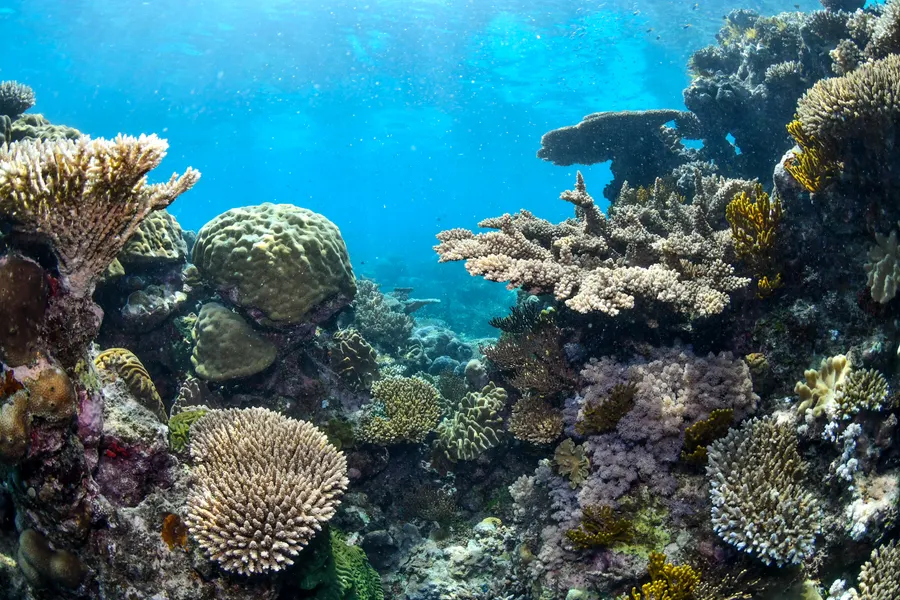
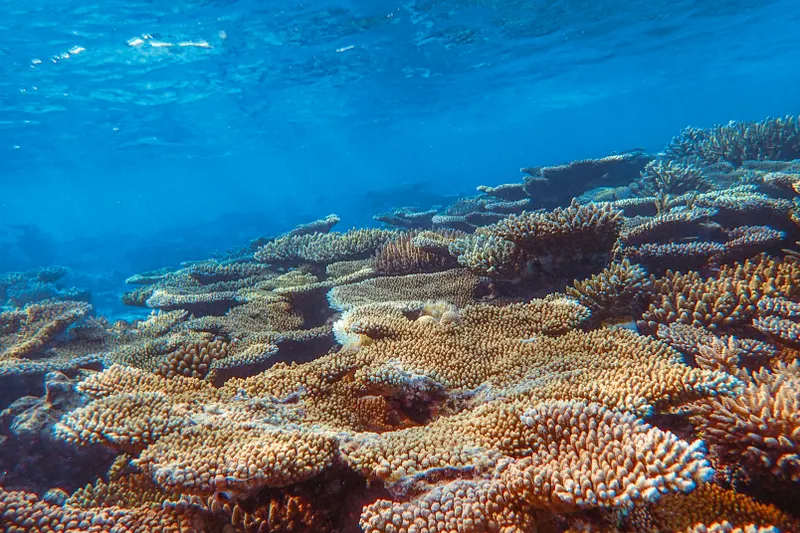
Corals do not need a heat wave to bleach. They need the sea to stay warm for long enough, and what makes it stay warm is often the weather, not the ocean. A study published this month in Weather and Climate Dynamics sets out how a calm spell over the Great Barrier Reef, known as the doldrums, can be created and prolonged by weather systems thousands of kilometers away, and why that matters in an El Niño year.
The research was led by Dr. Lara Richards, who did the work as a PhD student at Monash University and the ARC Centre of Excellence for 21st Century Weather before moving to the University of Reading, with Dr. Yi Huang of the University of Melbourne and colleagues. It was released on Oct. 16.
What the Doldrums Do
Over the Coral Sea off Queensland, the doldrums are defined by weak winds, reduced cloud cover and dry, descending air, the research release says. That is unusual for the humid tropics, where clouds and thunderstorms would be expected.
The effect on the ocean is direct. Easterly trade winds usually blow across the reef, stir the upper ocean and help heat escape from its surface. When the doldrums persist, that cooling is suppressed. "When doldrums hang around, the ocean remains in a heating phase for longer, which can produce rapid increases in temperature and contribute to coral bleaching," Richards said.
The link between weak winds, clear skies and bleaching is well understood. What was missing, according to the release, was an explanation of why the doldrums form and why some last much longer than others.
The Chain That Holds the Calm
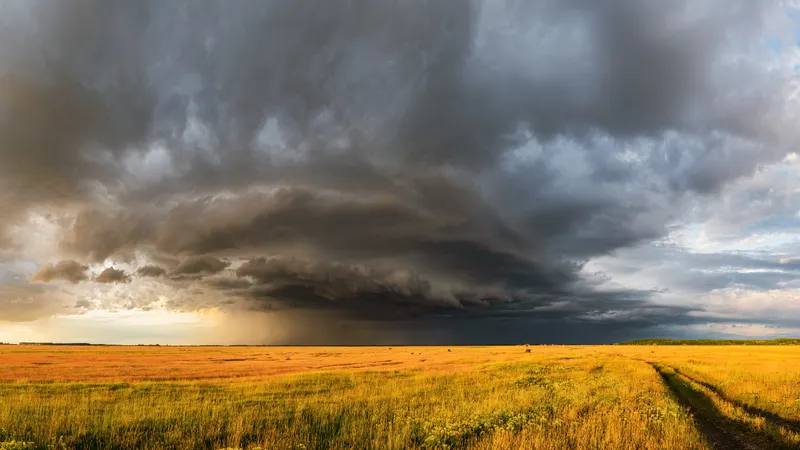
The answer starts far from the reef. Large waves of atmospheric pressure called Rossby waves can bring low-pressure systems that produce unusual westerly winds over the reef, opposing the normal easterlies. What happens next decides the outcome. If the low moves quickly east into the Pacific, the trade winds return. If it stalls over eastern Australia, the westerlies can persist.
The stalling is tied to repeated Rossby-wave breaking over Australia, a distortion of the upper-level jet stream that strengthens a blocking high near New Zealand. Together, the low and the high lock the pattern in place. Tropical rhythms add to it. During longer doldrum events, the dry phases of the Madden-Julian Oscillation and of equatorial Rossby waves were more likely to line up over the reef, reinforcing the calm. The dry air that suppresses clouds was traced to the mid-latitudes, where the stalled low steers it across Australia's dry interior before it sinks over the reef.
The team analyzed nearly three decades of atmospheric data, from 1996 to 2024, according to Australian Associated Press coverage.
A Lesson From 2022
The most striking example is not an El Niño at all. In early 2022, a series of stalled lows caused persistent flooding over northern New South Wales and southern Queensland, including the Lismore floods, at the same time as a mass bleaching event struck the reef. That happened during a La Niña, the cool phase.
"The same weather system can produce very different conditions across Australia," Richards said. Moist air was drawn south to the coast while dry air was steered north toward the reef. The case shows that mid-latitude weather can threaten the reef independently of El Niño.
Why It Matters This Summer
An active El Niño raises the background risk. A strong event is under way in the Pacific, and a long spell of doldrums during it could contribute to a marine heat wave and a harmful mass bleaching event, the researchers say. Blogerroom has followed that backdrop: NOAA gave an 83% chance of historic El Niño strength, and Copernicus reported that September's sea surface temperature set a record.
Dr. Neal Cantin, a senior research scientist at the Australian Institute of Marine Science, told SBS News that mass bleaching struck the reef in 1998, 2016 and 2024 during El Niño periods, and that this one is setting up to be the biggest on record. Increasingly, he said, an El Niño is not required to drive bleaching. The institute is preparing to coordinate science and monitoring to respond.
What Researchers Still Cannot Say
The study explains how doldrums form. It does not predict whether this summer's will, and it makes no forecast of bleaching. Huang said the next question is whether such events can be predicted using existing computer models, and that understanding bleaching ultimately requires high-resolution coupled models in which the atmosphere and ocean interact directly. The work was funded by the Reef Restoration and Adaptation Program, a partnership of the Australian government's Reef Trust and the Great Barrier Reef Foundation, along with Australian Research Council grants.
My view: the practical value is lead time. If forecasters can tell when a low-pressure system is likely to stall over eastern Australia, reef managers might get days or weeks of warning to prepare monitoring, sampling and response. That depends on models that do not yet exist in a usable form, which is the authors' own caveat.
Reefs elsewhere show how varied outcomes can be. Blogerroom reported that a coral reef declared dead in the 1960s was found alive off Benin. Whether Australia's reef gets a similar reprieve this summer may depend partly on weather patterns that a stalled low over New South Wales can set in motion.
Written by
Mr. Jitendra Bhatt
Msc in Chemistry and field researcher.