Blogerroom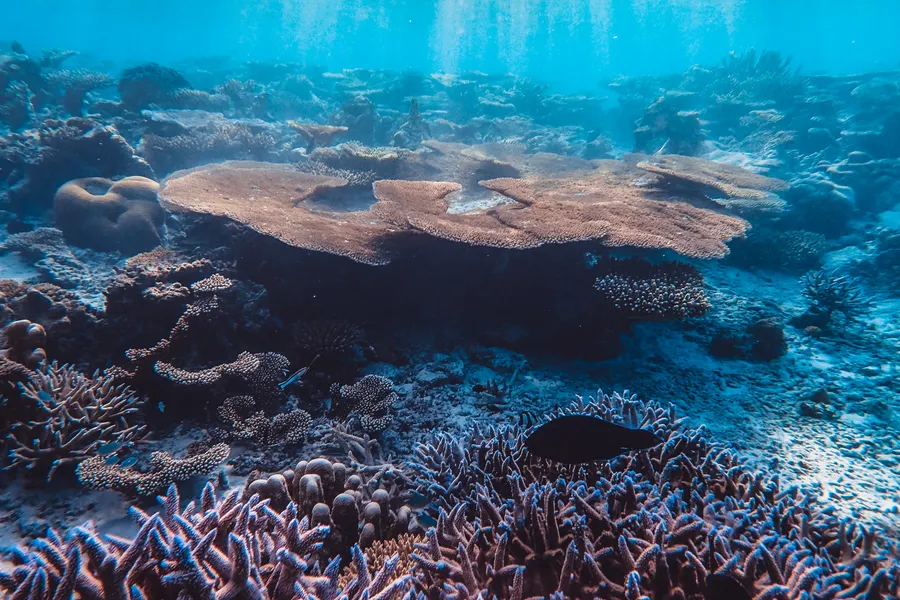
Coral Reef Declared Dead in the 1960s Found Alive in Benin
Researchers found a living mesophotic coral reef off Benin that 1960s surveys had assumed was dead, the first such confirmed record in the Gulf of Guinea.
A reef given up for dead six decades ago
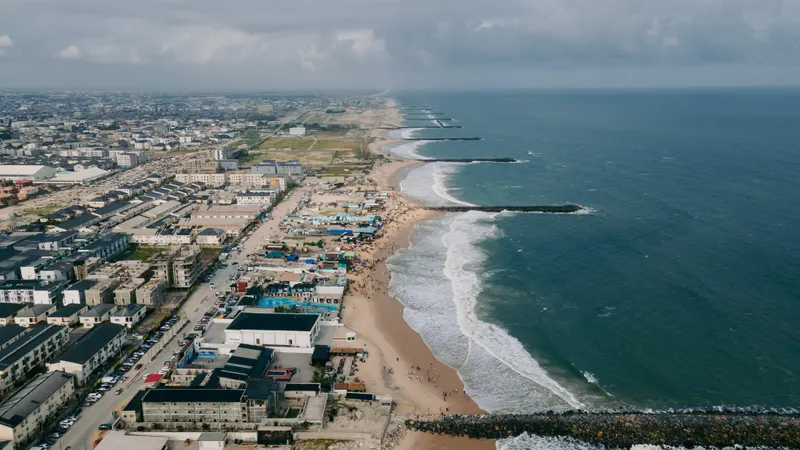
In the early 1960s, fisheries surveys along the continental shelf between Benin and Togo were searching for productive fishing grounds, not coral. Along the way, they flagged something unusual at depths of roughly 52 to 56 meters that looked like it could be a deep-water coral reef. The surveyors of that era concluded it was probably dead, filed the observation away, and nobody returned to check for decades. A study published in Frontiers in Marine Science reports what a modern research team found when they finally went back: the reef isn't dead at all. It's alive, apparently healthy, and represents the first confirmed record of a living mesophotic coral ecosystem anywhere on the Gulf of Guinea continental shelf.
Lead author Gérard Zinzindohoué of the Institut de Recherches Halieutiques et Océanologiques du Bénin described just how difficult it was to relocate a site last properly surveyed in 1963 and 1964. "It was not an easy field campaign," he said. "It was a mix of long days at sea, technical problems, and a lot of uncertainty. But then we saw structures on the sonar that looked like they could be reef signatures, which gave us hope that we were close."
Why this reef stayed hidden for so long
Mesophotic coral ecosystems occupy a genuinely tricky research niche: too deep for typical scuba-based reef surveys, which generally operate in shallower, sunlit waters, but too shallow for the kind of deep-sea submersible expeditions typically reserved for far deeper ocean environments. That gap in survey coverage means mesophotic reefs worldwide are chronically understudied compared with their shallow-water counterparts, and West Africa's coastal waters specifically have received even less dedicated marine research attention than many other coastal regions globally.
That combination, a genuinely difficult depth range to survey and a broader lack of research investment in West African coastal ecosystems, is precisely why a reef first flagged in 1963 could simply sit unexamined for more than sixty years, its "probably dead" classification never revisited because nobody had the equipment, funding, or research priority to go back and check.
The technology that finally made rediscovery possible
Zinzindohoué's team returned to the site equipped with modern sonar and the Deep Sea Camera System, technology provided by the National Geographic Exploration Technology Lab specifically suited to surveying reef habitat at depths beyond normal diving range. Researchers scanned more than 11 kilometers of seafloor before identifying two promising reef-like areas worth investigating more closely with an underwater drone. What that follow-up survey revealed was unambiguous: a healthy mesophotic coral ecosystem, with researchers documenting eight distinct coral types alongside eight fish species sheltering and feeding among the structures, including golden African snappers and Guinean angelfish, at depths exceeding 50 meters below the surface.
That's a considerably richer picture than a handful of surviving coral fragments; eight coral types and eight fish species sharing the same habitat describes a functioning, multi-species ecosystem, not merely scattered remnants that happened to survive.
Why one rediscovered reef raises a much bigger question
Zinzindohoué was careful to frame the finding's broader significance without overstating what a single site can prove. "To our knowledge, this is the first confirmed record of a living mesophotic coral ecosystem on the Gulf of Guinea continental shelf," he said. "However, I think what we found is probably not an exception. It is more likely a reflection of how little we still know about coastal regions in West Africa and elsewhere. If we were able to find this reef again after 60 years, how many others are still undocumented or simply forgotten? So yes, I do believe there are likely more coral systems out there that we have not documented yet. But we should not assume they are everywhere. Each discovery needs to be confirmed. Without going back into the field, we are really just guessing."
That's a genuinely disciplined scientific stance, resisting the temptation to extrapolate one confirmed rediscovery into a sweeping claim about how many other reefs must be hiding along the same coastline. It also captures the real practical challenge ahead: confirming additional mesophotic reefs requires the same expensive, technically demanding combination of sonar mapping and deep-sea camera deployment that made this single rediscovery such a difficult, multi-year undertaking in the first place.
Why the timing of this discovery matters
This rediscovery lands at a genuinely tense moment for coral reef ecosystems worldwide. The Global Coral Reef Monitoring Network's Status of Coral Reefs of the World report, released in August 2026 and drawing on more than 87,000 surveys, found that global hard coral cover fell from an average of roughly 30.2% during the 1980-2009 reference period down to about 27.3% during 2020-2024, a relative decline of roughly 9.5% over that stretch. Against that backdrop of documented, ongoing global decline, finding a previously written-off reef alive and apparently thriving offers a genuinely rare piece of encouraging news, even as it simultaneously underscores how incomplete the global picture of coral reef health actually is.
Mesophotic reefs specifically may carry outsized importance in a warming ocean precisely because of their depth. Sitting below the sunlit shallow zone where most coral bleaching events, driven by elevated sea surface temperatures, do their worst damage, deeper mesophotic reefs can sometimes experience less thermal stress than their shallow-water counterparts, potentially functioning as refuges that help repopulate degraded shallow reefs nearby, though that protective effect varies considerably depending on local conditions and depth.
What comes next for this stretch of coastline
Zinzindohoué's own caution about drawing sweeping conclusions points directly toward what needs to happen next: dedicated follow-up surveys, rather than assumptions, to determine how extensive this newly confirmed reef ecosystem actually is, and whether similar mesophotic habitat exists elsewhere along the West African coastline. Given how much specialized equipment and field effort this single rediscovery required, meaningfully expanding that survey coverage will likely depend on sustained international research investment and continued access to technology like the Deep Sea Camera System, rather than a single follow-up expedition settling the question.
What this discovery does establish clearly is a case study in how much of the ocean, even relatively accessible continental shelf waters lying just off a populated coastline, remains genuinely unmapped at the depths where mesophotic reefs live. A reef first noted in passing by fishing-ground surveyors more than sixty years ago, dismissed as dead without direct confirmation, and left unexamined for decades simply because nobody had reason or resources to check again, turned out to be a living, multi-species ecosystem the whole time. That's a sobering reminder of how much marine biodiversity may already exist just beyond the reach of routine scientific attention, waiting, as this one did, for the right combination of curiosity, funding, and modern equipment to finally confirm what was there all along.
Written by
Mr. Jitendra Bhatt
Msc in Chemistry and field researcher.