Blogerroom
Lake-Ending Glaciers Melt 57% Faster, Models Miss Them
A Nature Communications study of 216,502 glaciers finds the 3.2% ending in lakes, oceans or shelves lost 134 Gt a year, with lake-ending ice 57% faster.
Most of the world's glaciers end on dry land. The few that do not are responsible for most of the ice that is disappearing. A study published in Nature Communications in late October, led by researchers at the University of Birmingham and the University of Leeds, sorted 216,502 glaciers outside the Greenland and Antarctic ice sheets by what their fronts touch, then compared how fast each type flows and melts. The result is a very uneven ledger.
A small group, a large share
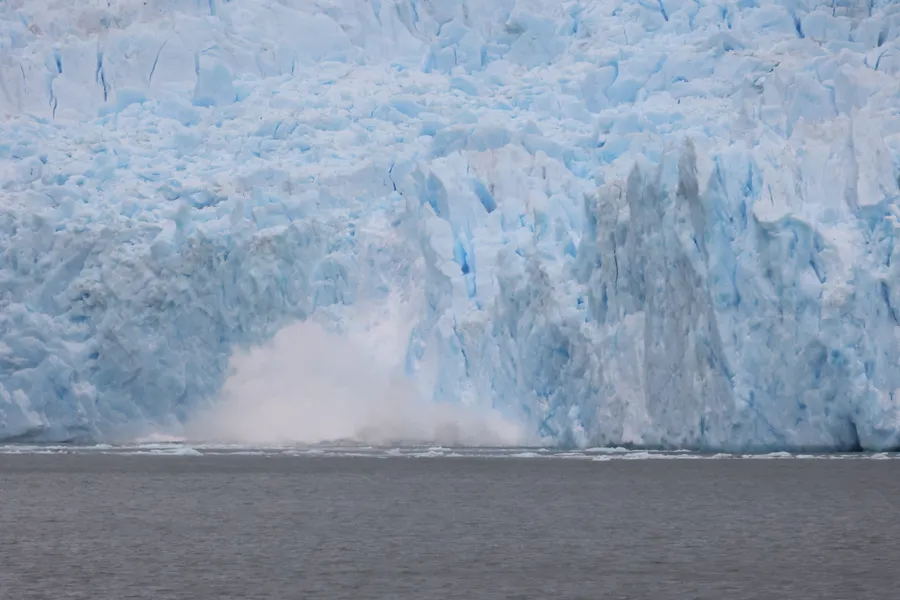
Glaciers that end in lakes, oceans or ice shelves make up just 3.2 percent of all glaciers, but they lost 134 billion tonnes of ice a year between 2000 and 2019, which is more than half of all glacier ice loss, according to the study. They are also much bigger than land-ending glaciers and together cover more than half of the world's glacier area, the University of Birmingham said.
That means part of the finding is arithmetic. Large glaciers lose a lot of ice in absolute terms. The more informative part is what happens once size is taken out.
Terminus type changes the pace
Adjusted for size, lake-ending glaciers lost ice about 57 percent faster than those ending on land over the same period, the researchers report. They also flow faster. Lake-ending glaciers move on average 10 percent faster than land-ending ones, and ocean-ending glaciers 44 percent faster, according to the paper's abstract.
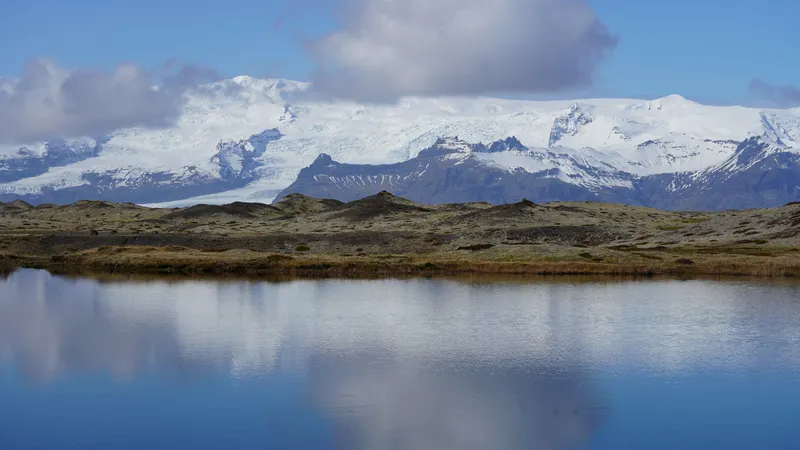
The pattern is consistent. In 15 of the 18 regions with sufficient data, lake-ending glaciers were losing ice faster than both land-ending and ocean-ending ones, Earth.com reported. In Iceland, the Southern Andes, Svalbard and the Russian Arctic, lake- or ocean-ending glaciers account for more than half of regional ice loss.
Why a lake speeds things up
The authors point to two mechanisms. Lake-ending glaciers can lose large chunks of ice from the front as icebergs, a process called calving, and lake water can melt the ice below the waterline, both of which speed up loss, the University of Birmingham explained. Eurasia Review's summary adds that the precise drivers remain unclear.
That caveat matters. The study shows an association across hundreds of thousands of glaciers, and the physical explanation is plausible but not fully quantified. Author Joseph Mallalieu said untangling it is the next big question, especially because glacier lakes are becoming more common in a warming climate.
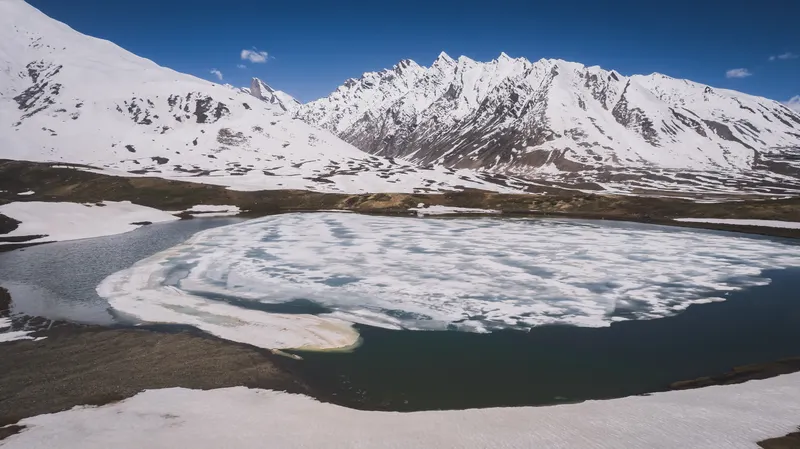
The models have a gap
The reason the finding matters for projections is practical. Many of the models used to project glacier change do not yet fully account for glaciers ending in lakes, according to the University of Birmingham. A glacier that is treated like a land-ending one in a simulation but behaves like a lake-ending one in reality will be melting faster than expected.
The situation is also changing under the models' feet. Ocean-ending glaciers in parts of the Arctic are retreating onto land, which would likely slow them down, while across the world, growing glacier lakes are turning some land-ending glaciers into lake-ending ones, which could make them lose ice faster. The study's results suggest these shifts could pull in opposite directions.
Dr Nicholas Barrand of the University of Birmingham said the last decade has seen a large increase in global glacier and climate data, and that bringing datasets together makes it possible to compare how glaciers behave in different settings. As more glaciers move from one setting to another, he said, those differences will matter more.
What this means outside the Arctic
The finding connects to mountain regions where lakes are already multiplying. An earlier, separate study of the Himalaya found that lake-terminating glaciers were only about 10 percent of the region's glaciers but accounted for up to 32 percent of mass loss in some sub-regions, and warned that regional projections did not consider that scenario. That is a different dataset and period, but it points in the same direction as the new global result.
For people downstream, the practical stakes are three: sea-level rise, water supplies and natural hazards. Eurasia Review's summary says the new classification should help improve projections of all three. Glacial lakes carry flood risks of their own, though the new study does not quantify them.
What it does not show
The data cover 2000 to 2019, and the study excludes the Greenland and Antarctic ice sheets, so the 134 billion tonnes figure describes mountain and peripheral glaciers, not the ice sheets that dominate sea-level projections. It is also an observational classification. It does not predict how fast any individual lake-ending glacier will retreat, and it cannot say what share of the loss would have happened anyway.
The finding is best read as a correction to how glaciers are categorized, not as a new total. Warming drives the loss everywhere. What the study shows is that the same warming melts ice at very different speeds depending on what is waiting at the glacier's front.
The wider warming path is laid out in UNEP's emissions gap report, which puts current policies on course for about 2.8°C by 2100. The study notes that warming is already turning some land-ending glaciers into lake-ending ones, the type it finds losing ice fastest, so a warmer path is likely to add to that pool.
---
Written by
Mr. Jitendra Bhatt
Msc in Chemistry and field researcher.