Blogerroom
First New Wild Cat Species in a Century Found in Bolivia
Leopardus tilcayo, a 3-pound tiger cat from Bolivia's cloud forests, is the first new living feline species identified in over 100 years.
A "weird cat" that started as a phone call
In 2016, a Bolivian wildlife sanctuary received an unusual delivery: a spotted kitten a local family had been keeping as a pet, brought in once they realized it wasn't a domestic cat at all. That single animal, and the phone call it generated, eventually led biologist Paola Nogales-Ascarrunz, a National Geographic Explorer, into a years-long investigation. The result, published Thursday in Current Biology, is the first new living wild cat species scientists have formally identified in more than a century: Leopardus tilcayo, known locally as the tilcayo, a small tiger cat native to Bolivia's Yungas cloud forest.
That's a genuinely rare kind of scientific milestone. New species get described constantly in less charismatic corners of the animal kingdom, insects, deep-sea invertebrates, obscure fungi, but a new species of cat, one of the most thoroughly studied and culturally prominent mammal families on Earth, hadn't happened in living memory for most working biologists.
A cat small enough to be mistaken for a kitten
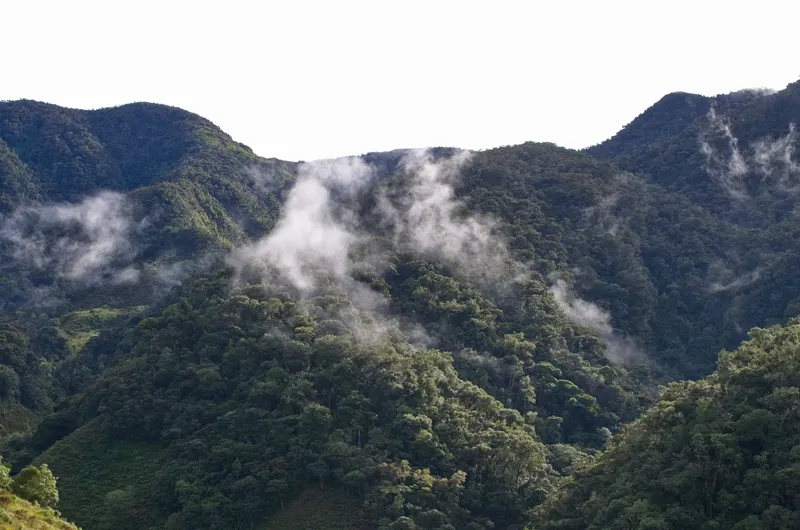
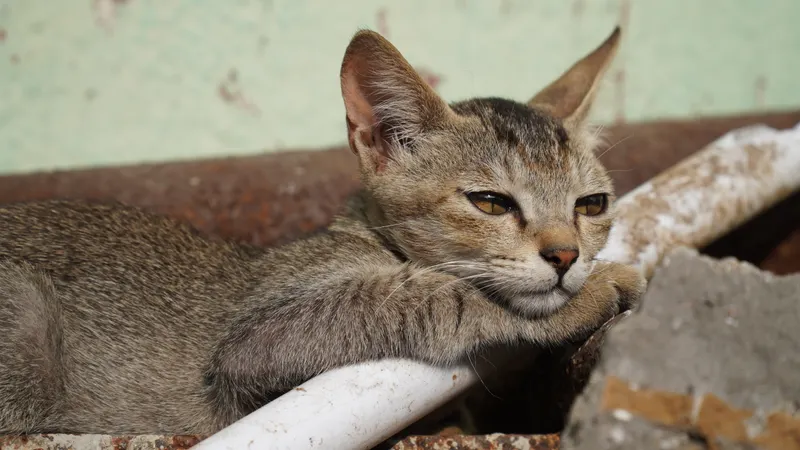
The tilcayo is a genuinely small animal, weighing just 3 to 4 pounds and measuring roughly 18 inches in length, smaller than the average house cat and light enough that its resemblance to a spotted domestic kitten fooled the family that originally took it in. It lives specifically in the Yungas, a band of mountain cloud forest running along Bolivia's eastern Andean slopes, a habitat type known for exceptionally high biodiversity packed into a relatively narrow elevational band where moist Amazonian air rises and condenses against the mountains.
Physically, the tilcayo belongs to the broader tiger cat group, a set of small, spotted wild cats found across South and Central America that have historically been difficult to sort into clean species boundaries, precisely because so many of them look broadly similar to untrained eyes and even to some earlier taxonomic methods that relied heavily on coat pattern and body measurements.
What the genetics actually revealed
The scientific case for treating the tilcayo as a genuinely distinct species rests on solid genomic evidence rather than physical appearance alone. Researchers found that Leopardus tilcayo diverged from its closest relatives roughly 1.4 million years ago, a substantial evolutionary separation that places it on its own distinct branch within the tiger cat lineage rather than simply representing a regional variant of an already-recognized species.
That timeline matters for how seriously the scientific community is likely to take this classification. A 1.4-million-year split is a genuinely deep evolutionary divergence, comparable to the kind of separation that reliably distinguishes full species in other well-studied mammal groups, rather than the shallower, more contested genetic differences that sometimes separate subspecies or regional populations whose species status remains debated for years after initial description.
Why tiger cats specifically were ripe for this discovery
Tiger cats as a group have long been recognized as taxonomically messy, and that messiness is precisely why a genuinely new species could hide in plain sight for so long. The International Union for Conservation of Nature currently assesses tiger cats as just two species, both already classified as vulnerable with declining populations. Nogales-Ascarrunz's research and its underlying genetic analysis identified five distinct genetic lineages within what conservationists had been treating as a two-species framework, a considerably more fragmented picture of tiger cat diversity than the existing conservation classification captured.
That gap between genetic reality and formal conservation categorization is a recurring problem in taxonomy, particularly for animals distributed across large, difficult-to-survey ranges where genetic sampling has historically been sparse. A species can persist for years, even decades, correctly observed by local communities and occasionally noted by field biologists, without ever receiving the dedicated genetic analysis needed to formally separate it from its closest relatives.
Why this reshapes conservation priorities, not just the family tree
The findings have already been submitted to the IUCN, and researchers expect the organization's next formal assessment to evaluate all five identified tiger cat genetic lineages separately, rather than continuing to lump them into the current two-species framework. That reassessment carries real practical stakes: the tilcayo could end up formally classified as a threatened species in its own right, a designation carrying different conservation weight and different regulatory protections than being treated as an undifferentiated part of a broader, already-vulnerable species group.
That distinction matters enormously for how conservation resources get allocated. A species assessed as vulnerable across a wide range benefits from population resilience spread across many separate populations and habitats; a species confined to one specific, narrow cloud forest region faces a fundamentally different and often more acute risk profile, since a single localized threat, deforestation, mining, or fire in that specific area, could meaningfully endanger a much larger share of the species' total population than the same threat would pose to a more widely distributed relative.
The threats already closing in on its habitat
Bolivia's Yungas cloud forest, the tilcayo's only known habitat, faces mounting pressure from deforestation, wildfires, mining activity, and broader habitat fragmentation, threats that were already well documented in the region before this species was even formally named. That timing creates a genuinely urgent situation: researchers have just established that a previously unrecognized cat species exists, in a habitat actively shrinking and degrading, before comprehensive population surveys, range mapping, or targeted conservation planning specific to this species have had any chance to get underway.
That's the recurring, somewhat bittersweet pattern running through a lot of recent species discoveries in biodiversity-rich but threatened regions: the same genetic tools finally sophisticated and accessible enough to properly distinguish cryptic species are often revealing those species right as the habitats supporting them face their most acute pressure in generations, turning what should be purely a moment of scientific celebration into an immediate conservation deadline as well.
What happens next for the tilcayo
Nogales-Ascarrunz's work establishes the tilcayo's existence and its genetic distinctiveness, but a formal species description is typically just the opening step in a much longer conservation process. Researchers will need dedicated population surveys across the Yungas to establish how many tilcayos actually remain, detailed habitat mapping to understand the full extent of its range, and close coordination with the IUCN's upcoming tiger cat reassessment to determine what specific protections the species needs once its threat status is formally established. For a cat small enough to be briefly mistaken for someone's pet kitten, the stakes riding on that follow-up work are considerably larger than its size might suggest, a genuinely new branch on the feline family tree, discovered just as the forest it calls home is running out of time.
Written by
Mr. Jitendra Bhatt
Msc in Chemistry and field researcher.