 Blogerroom
Oil Hits 6-Week High as US Sinks Iranian Oil Tankers
Oil rose to a six-week high after the US destroyed or disabled three Iranian oil tankers in retaliation for missile strikes on Navy warships.
A missile at an aircraft carrier changes the calculus
Oil climbed to its highest level in roughly six weeks Monday, with Brent crude extending gains to around $79 a barrel, after the United States destroyed or permanently disabled three Iranian oil tankers in direct retaliation for Iran firing ballistic missiles at a U.S. aircraft carrier and guided-missile destroyer over the weekend. It's the most serious military exchange in the six-month U.S.-Iran conflict in weeks, and unlike prior skirmishes limited to smaller vessels or infrastructure, this one involved Iran targeting a capital ship directly, a level of provocation that market participants are reading as a genuine escalation rather than another contained incident.
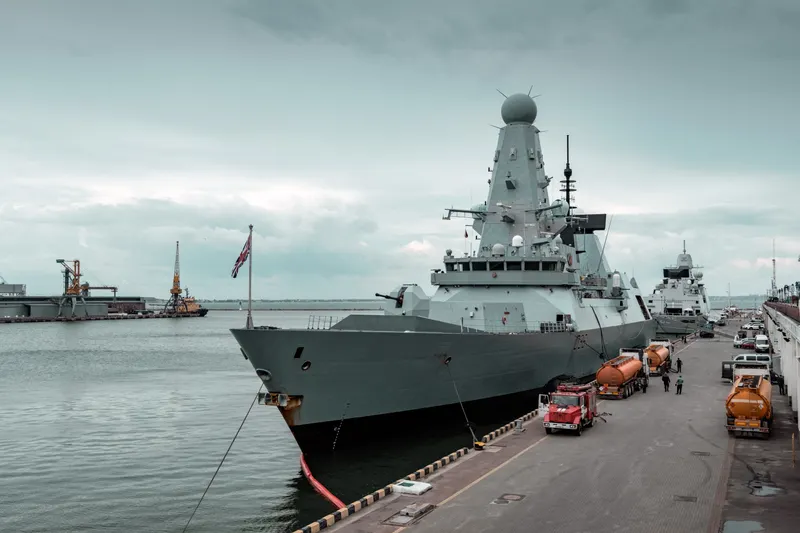
U.S. Central Command said an American aircraft carrier and destroyer "successfully evaded multiple unprovoked Iranian attacks" Saturday, with no personnel injured. The U.S. response was immediate and economically pointed: forces permanently disabled the crude carriers M/T Downy near Kharg Island and M/T Stark 1 near Jask, and destroyed a third vessel, the M/T Kylo, in the Gulf of Oman.
Why the retaliation targeted tankers specifically
The choice of target wasn't incidental. CENTCOM Commander Adm. Brad Cooper made the logic explicit in a statement: "Let the message to the IRGC be clear: If you shoot at two of our ships, we will impose an even higher economic cost, taking out three of yours. We will not hesitate to defend American forces, and if necessary, destroy Iran's limited and exposed oil fleet." Defense Secretary Pete Hegseth reinforced the same message even more bluntly on social media: "It's simple: if Iran shoots at U.S. ships, we will destroy (and sink) their oil tankers. All they have to do is stop shooting at the U.S. Navy."
That framing matters for how markets should read the likely trajectory from here. CENTCOM specifically described the targeted tankers as part of a "multibillion-dollar shadow network" funding the IRGC and its regional proxies, meaning the U.S. strategy has explicitly shifted toward treating Iranian oil exports as both a military supply line and a legitimate retaliatory target. That's a materially different posture than earlier strikes this year focused on military infrastructure, and it directly threatens the revenue stream Iran depends on to sustain the broader conflict.
The gap between rhetoric and reality
The timing here carries its own irony. Just a day before Saturday's exchange, President Trump had sought to downplay the ongoing conflict, calling it "small potatoes" and describing it as "very intermittent" in public remarks. Saturday's events undercut that framing considerably. Iran targeting an American aircraft carrier, even unsuccessfully, is not a minor military event by any conventional measure, and the U.S. response, explicitly threatening Iran's "limited and exposed oil fleet," signals a willingness to escalate the economic dimension of the conflict regardless of how the administration characterizes it rhetorically.
That gap between public minimization and the actual military trajectory is itself a market-relevant signal. Investors pricing geopolitical risk into oil and broader asset markets have to weigh not just what officials say publicly, but what the underlying pattern of strikes and counter-strikes actually suggests about where this conflict is headed, and this weekend's exchange points toward continued escalation rather than the "small potatoes" framing Trump offered.
A shipping war compounding on itself
This is the second direct exchange between U.S. and Iranian forces in roughly a week, following the earlier September strike on Iranian rocket launchers preparing to mine the Strait of Hormuz, which itself ended a month-long lull in direct hostilities. Iran's IRGC also claimed Sunday it struck an unmanned U.S. vessel attempting to enter the Strait of Hormuz, a claim the U.S. had not confirmed as of the latest reporting. Taken together, the pattern suggests both sides are increasingly willing to trade direct strikes rather than settling into the kind of extended standoff that characterized earlier phases of the conflict.
That's a meaningfully different risk environment for oil markets than the one prevailing over the summer. Iran's rial had already hit record lows against the dollar in late August amid tightening U.S. sanctions, and the economic squeeze on Tehran shows no sign of easing. A government facing mounting internal economic pressure, combined with a military posture willing to directly engage U.S. naval assets, is a combination that tends to produce continued volatility rather than a clean off-ramp.
What this means for the broader market picture
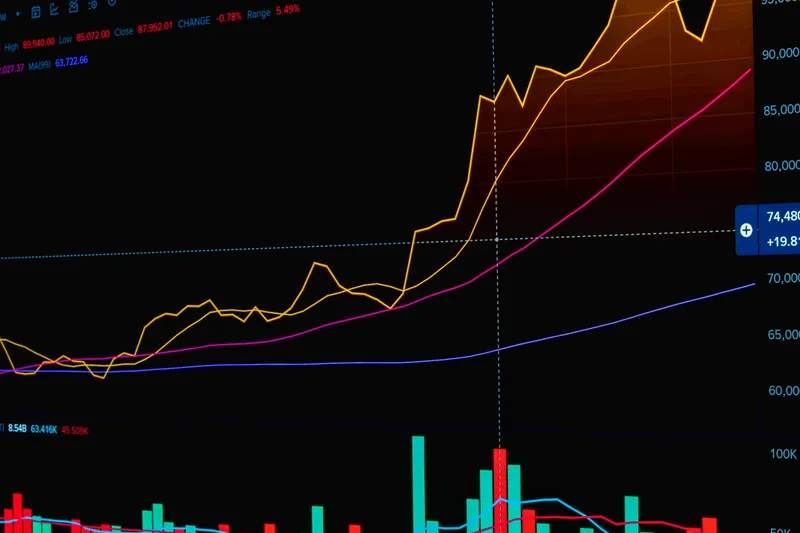
Beyond oil itself, this weekend's escalation lands at a genuinely sensitive moment for global markets. U.S. Treasury yields are already facing what analysts have described as a critical test near 4.8%, with foreign demand for U.S. government debt reportedly undergoing what one market analysis called "a historic capital flow reversal." Sustained oil price increases tied to Middle East conflict add a fresh inflationary pressure point precisely when the Federal Reserve is weighing a possible September rate hike, a decision already complicated by a stronger-than-expected August jobs report and Fed Chair Kevin Warsh's hawkish public commentary on underlying inflation trends.
Higher, geopolitically-driven oil prices function as exactly the kind of supply-side inflation shock that central banks find hardest to address through interest rate policy alone, since raising rates does little to resolve a shipping conflict in the Persian Gulf, but still tightens financial conditions across the broader economy. That dynamic puts the Fed in an uncomfortable position: inflation data reflecting genuine geopolitical disruption rather than domestic demand pressure, arriving at precisely the moment policymakers are trying to determine whether current price pressures justify further tightening.
What to watch this week
Markets will be parsing two things closely in the days ahead: whether Iran responds to Saturday's tanker strikes with further direct action against U.S. assets or commercial shipping, and how Friday's upcoming U.S. inflation data interacts with oil's fresh upward pressure ahead of the Fed's September meeting. A continued escalatory cycle, strikes followed by counter-strikes followed by further counter-strikes, tends to keep a persistent risk premium embedded in oil prices even during periods without active fighting, since traders have to price in the probability of the next exchange rather than assuming a return to calm. Given how quickly this conflict has moved from a month-long lull to direct missile fire at an American aircraft carrier within the span of about a week, the safer assumption for markets right now is that volatility, not de-escalation, remains the dominant near-term trend.
Written by
Mr. Jitendra Bhatt
Deep understading of finance area and writer covering markets, investing, and economic policy.

