Blogerroom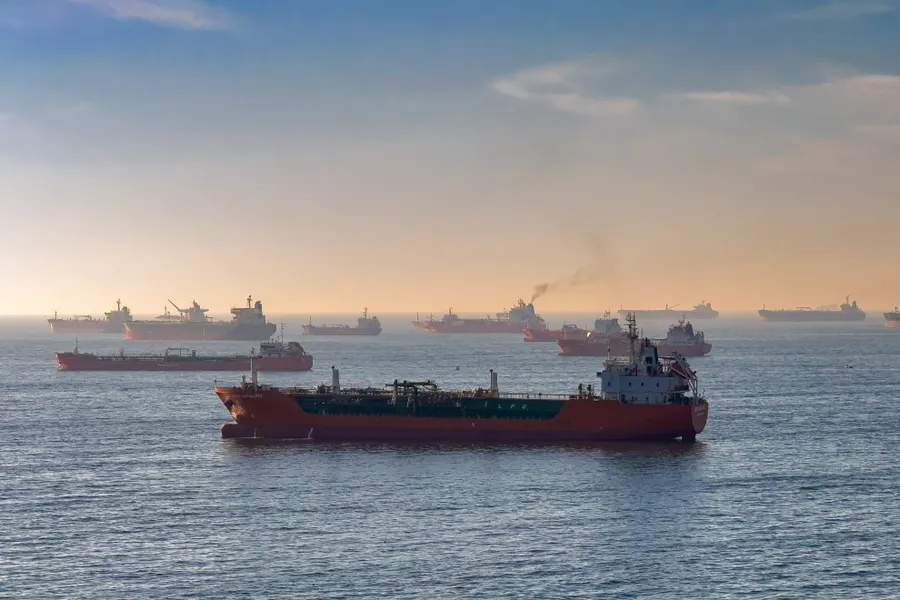
Oil Jumps, Markets Slide After US Strikes Iran Assets
Oil rose and Asian stocks slid after the US struck Iranian rocket launchers preparing to mine the Strait of Hormuz, ending a month-long lull.
A month of quiet ends with an early-morning strike
Oil traders had gotten used to something resembling calm. For nearly a month, the six-month-old conflict between the U.S. and Iran had settled into an uneasy lull, no new strikes, no fresh mining incidents, just a slow, contested effort to reopen the Strait of Hormuz to normal shipping traffic. That lull ended Sunday. U.S. forces struck two Iranian rocket launchers on Larak Island after observing Islamic Revolutionary Guard Corps units preparing to fire rockets carrying sea mines into the strait, according to U.S. Central Command spokesperson Navy Capt. Tim Hawkins. It was the first publicly acknowledged American strike on Iranian territory in over a month, and markets reacted almost immediately.
Global benchmark crude jumped roughly 2% at the open of Asian trading, while U.S. stock futures slipped and Asian equity markets tumbled hard: South Korea's Kospi fell 3.5%, Japan's Nikkei 225 dropped 2.16%, and Hong Kong's Hang Seng slid nearly 1%. For a market that had been quietly pricing in a durable, if fragile, calm, Sunday's strike was a reminder of how thin that calm actually was.
What CENTCOM says happened, and why it matters that mines were involved
The specifics of the strike matter more than the strike itself. According to Hawkins, IRGC forces were caught preparing to launch rockets carrying sea mines into the strait, not conventional weapons aimed at a target, but a delivery method aimed at re-mining a waterway the U.S. military had just spent weeks clearing. CENTCOM said last week it had completed clearing sea mines from the strait's internationally recognized shipping routes, work Adm. Brad Cooper, the CENTCOM commander, described as "challenging and dangerous," adding, "we got the job done."
That timing is what turns Sunday's strike from an isolated incident into a direct test of an ongoing, fragile project. If Iran was moving to re-seed mines into freshly cleared shipping lanes, the U.S. response reads less like an escalation for its own sake and more like an attempt to protect weeks of demining work from being immediately undone. Alex Plitsas, a nonresident senior fellow at the Atlantic Council and former Pentagon official, framed the broader exchange as tit-for-tat, telling RFE/RL that "today's tit-for-tat strikes began after Iran struck a ship off the coast of Oman and then was attempting to launch a small number of mines into the strait," prompting the American response.
The gap between "open" and actually open
President Trump has repeatedly declared the Strait of Hormuz open, pointing to 24 vessels that passed through last week as evidence. But that figure undercuts the point more than it supports it: roughly 130 vessels transited the strait daily before the war began in earnest, meaning current traffic sits at a small fraction of pre-war levels. A multinational coalition overseen by the U.S. Navy confirmed Sunday that commercial traffic through the strait remained at "reduced levels," even as U.S. officials insist the corridor is functionally open for business.
That gap between official messaging and actual shipping volume has been visible at the pump for months. Gas prices in the U.S. averaged roughly $4.07 per gallon as of Sunday, according to AAA figures cited by The Hill, up from just $2.98 per gallon two days before the U.S. and Israel launched the broader conflict against Iran. It's the kind of sustained increase this site tracked closely back when Trump first floated a 20% "Guardian" fee on cargo transiting the strait, a policy that itself briefly rattled oil markets even before Sunday's military escalation added a fresh variable.
Iran's retaliation threat, and why it carries real weight
Iran's Revolutionary Guards acknowledged Sunday's strike, reported casualties, and vowed to respond, according to the Associated Press. That's not an idle threat in this particular conflict. Iran retains enough drones and missiles to strike individual vessels transiting the strait even without controlling the waterway outright, giving Tehran a form of leverage that doesn't require military parity with U.S. forces in the region, just the ability to make transit risky enough that shipping companies and insurers stay cautious. That dynamic helps explain why crude tanker traffic remains a fraction of pre-war levels even during periods, like the one that just ended, when no active strikes were occurring.
Iranian and Omani officials had been holding talks this week aimed at setting up a temporary corridor for commercial vessels, with Omani Foreign Minister Badr al-Busaidi expressing optimism the two sides would reach an agreement. Sunday's strike complicates that diplomatic track considerably, since any temporary shipping arrangement negotiated through Oman now has to survive both sides having exchanged fire days beforehand.
Why Warsh's hawkish tone from Friday suddenly matters more
The timing compounds an already jittery week for markets. Fed Chair Kevin Warsh delivered a notably hawkish Jackson Hole speech Friday, pushing September rate-hike odds higher and rattling both bonds and stocks even before Sunday's strike. The same underlying inflation risk Warsh flagged Friday, driven partly by energy costs that refuse to fully normalize, is now compounded by a fresh oil price jump tied directly to renewed Middle East hostilities. A resurgence in oil prices from an active military conflict is exactly the kind of supply-side inflation pressure that complicates the Fed's job, since it isn't the sort of demand-driven inflation interest rate policy is well-equipped to address in the first place.
Stocks were still on track to close out August with solid monthly gains despite Sunday's jump. The Dow had risen roughly 2.1% for the month heading into the weekend, on pace for a fifth consecutive monthly advance, while the S&P 500 and Nasdaq Composite were each up 3% and 4% respectively, led largely by AI-linked tech names. Whether Sunday's strike is a one-off event or the opening move in a renewed exchange will likely determine whether that monthly winning streak survives into September largely intact.
What investors are actually watching now
The practical question for markets isn't really whether Sunday's specific strike was significant in isolation, a pair of rocket launchers is a modest military target by any measure. It's whether it marks the end of the month-long lull or simply an isolated incident inside it. If Iran's promised response stays limited and diplomatic talks with Oman resume, Sunday's price jump could prove temporary, much like several earlier spikes during this six-month conflict that partially reversed within days. But if the exchange escalates further, energy markets are positioned to move quickly, and the Federal Reserve, already leaning hawkish after Friday's speech, would find itself managing an inflation picture shaped as much by geopolitics in the Persian Gulf as by anything happening in the domestic economy.
Written by
Mr. Jitendra Bhatt
Deep understading of finance area and writer covering markets, investing, and economic policy.