 Blogerroom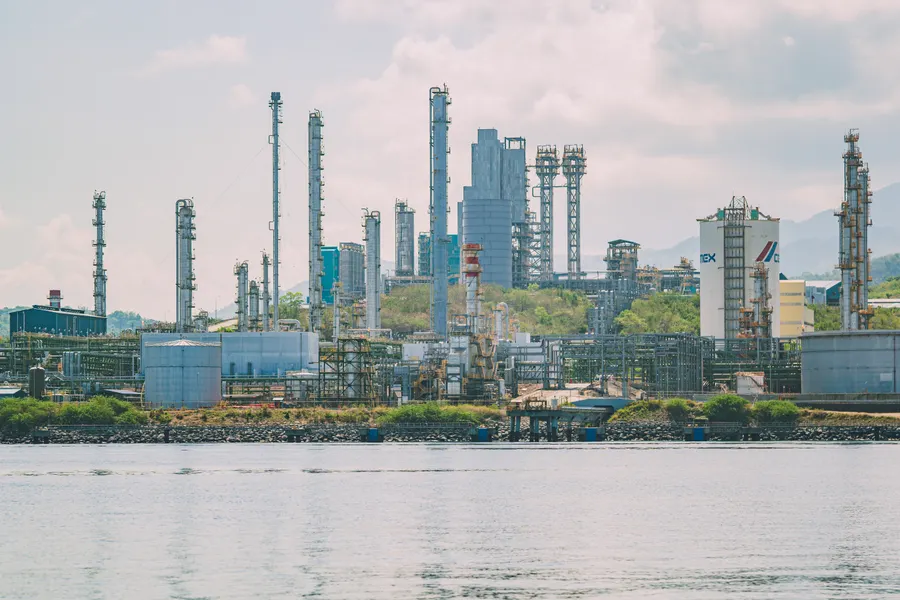
Dow Drops 600 Points as Oil Nears $100, Tariffs Bite
Oil surged toward $100 after Houthi strikes on Saudi oil facilities, while Canada's new retaliatory tariffs pushed the Dow down 600 points.
Three separate fires, one bad day for markets
Wall Street opened the shortened post-Labor Day week with its worst session in weeks, the Dow Jones Industrial Average shedding more than 600 points as three separate pressure points converged on the same trading day. Overnight attacks set fire to Saudi Arabian oil facilities. Canada's retaliatory tariffs on U.S. goods officially took effect at midnight. And Treasury yields, still digesting Friday's stronger-than-expected jobs report, pushed briefly above 4.8% before easing. Any one of these developments alone would have been a notable market story. Together, they produced the kind of session where, as one market analyst put it, "the market never really found its footing."
Brent crude climbed 2.2% to $99.16 a barrel and West Texas Intermediate rose 3.3% to $94.46, oil's sharpest single-day move in weeks, pushing the global benchmark to the edge of the psychologically significant $100 threshold for the first time since the current conflict cycle began escalating this summer.
What actually happened in Saudi Arabia
Yemen's Iranian-backed Houthi rebels launched a wave of missile and drone attacks against southern Saudi Arabia on Tuesday, striking the cities of Abha, Khamis Mushait, Jazan, and Najran and wounding more than 70 people, according to Saudi authorities. The Saudi energy ministry confirmed fires broke out at multiple energy facilities and utilities, forcing operations to halt at some sites while emergency crews worked to contain the blazes. The Financial Times reported that Aramco's Jazan oil facilities, home to a roughly 400,000-barrel-a-day refinery, were among the sites hit, though the full extent of the damage was still being assessed as of Tuesday.
Saudi-led coalition spokesman Turki al-Malki called the attacks a "serious escalation" and vowed the coalition "will take all necessary operational measures to deter the terrorist Houthi militia with utmost resolve." That's a significant statement from a country that is the world's top oil exporter, and one whose energy infrastructure markets have treated as relatively insulated from the broader U.S.-Iran conflict until this point.
Why this attack matters more than earlier ones this year
Context matters enormously here. This isn't the first Houthi strike on Saudi energy infrastructure this year, but it represents a meaningful expansion of the conflict's geography. The Houthis have specifically been targeting the Bab el-Mandeb, the strategic shipping route Saudi Arabia has increasingly relied on to route oil exports as an alternative while the Strait of Hormuz remains throttled by the ongoing U.S.-Iran war. That's precisely why Tuesday's attack rattled oil markets more than an isolated strike might have: it threatens the workaround route traders had been counting on to keep at least some Saudi crude flowing while Hormuz remains disrupted.
That combination, a primary chokepoint already constrained and now an alternative route also under direct attack, is what's pushing traders to price in genuinely reduced global supply capacity rather than treating this as another contained regional incident. Kyle Rodda, senior financial market analyst at Capital.com, described the effect succinctly: "The military activity is maintaining a significant risk premium in energy markets amidst the heightened possibility of deeper and more protracted disruptions to global supply."
What it's already costing at the pump
The price impact isn't theoretical for American consumers. The national average for a gallon of regular gasoline stood at $4.15 on Tuesday, up from just $3.20 a year earlier, according to AAA figures, while diesel set a fresh record of $5.90 a gallon on Monday. Those aren't abstract commodity-market numbers; they're costs showing up directly on household budgets and business logistics bills, and they're part of why oil-driven inflation has become such a politically charged issue heading into a midterm cycle already dominated by affordability concerns.

Canada's tariffs add a second front
Tuesday's selloff wasn't purely an oil story. Canada's retaliatory tariffs on U.S. goods took effect just after midnight, with Prime Minister Mark Carney following through on the dollar-for-dollar retaliation he promised after trade negotiations with the U.S. collapsed last month. Canada doubled its counter-tariffs on U.S. steel and aluminum to 50% and applied fresh 50% duties on American-made goods including dairy, furniture, clothing, and electronics.
That tariff escalation compounds the inflationary pressure already building from oil, since tariffs function as a direct tax passed through to consumers on both sides of the affected trade relationship. Markets rarely enjoy pricing two simultaneous, independent inflationary shocks at once, and Tuesday's session reflected exactly that difficulty, with energy and utilities among the only relative outperformers in an otherwise broadly negative trading day.
The Fed's problem just got measurably harder
All of this lands at a genuinely inconvenient moment for the Federal Reserve. Friday's stronger-than-expected August jobs report had already pushed September rate-hike odds higher, removing one of the strongest arguments for holding rates steady. Edward Jones' market commentary framed the implication bluntly: "With labor-market conditions remaining healthy, the Fed is also likely to focus squarely on its price stability mandate. As a result, policymakers are likely to have limited tolerance for an upside inflation surprise."
Tuesday's oil spike is precisely the kind of upside inflation surprise that commentary warned about, and it arrives from a source, geopolitical conflict disrupting global energy supply, that interest rate policy has essentially no direct tool to address. Raising rates doesn't extinguish fires at Saudi oil facilities or roll back Canadian tariffs; it simply tightens financial conditions across the broader economy while the actual inflationary source keeps running independently. That mismatch is exactly the kind of scenario that makes the Fed's upcoming September 15-16 decision considerably more fraught than it would be if inflation were being driven purely by domestic demand.
What markets are watching next
Crucial U.S. price data is due later this week, and traders will be parsing it closely for signs of how much of Tuesday's energy-driven pressure is already showing up in broader inflation measures. Beyond the data, the more immediate question is whether Tuesday's attacks mark an isolated escalation or the start of a sustained campaign against Saudi energy infrastructure specifically. Given that Houthi attacks on Saudi targets have continued intermittently since the ongoing Iran war's early months, and given Riyadh's explicit vow of forceful retaliation, the near-term trajectory looks more likely to bring further volatility than a return to calm. For markets already juggling a hawkish Fed, an escalating Canada trade fight, and a widening Middle East conflict simultaneously, Tuesday's session offered a preview of how quickly multiple independent risks can compound into a single, genuinely difficult trading day.
Written by
Mr. Jitendra Bhatt
Deep understading of finance area and writer covering markets, investing, and economic policy.

