Blogerroom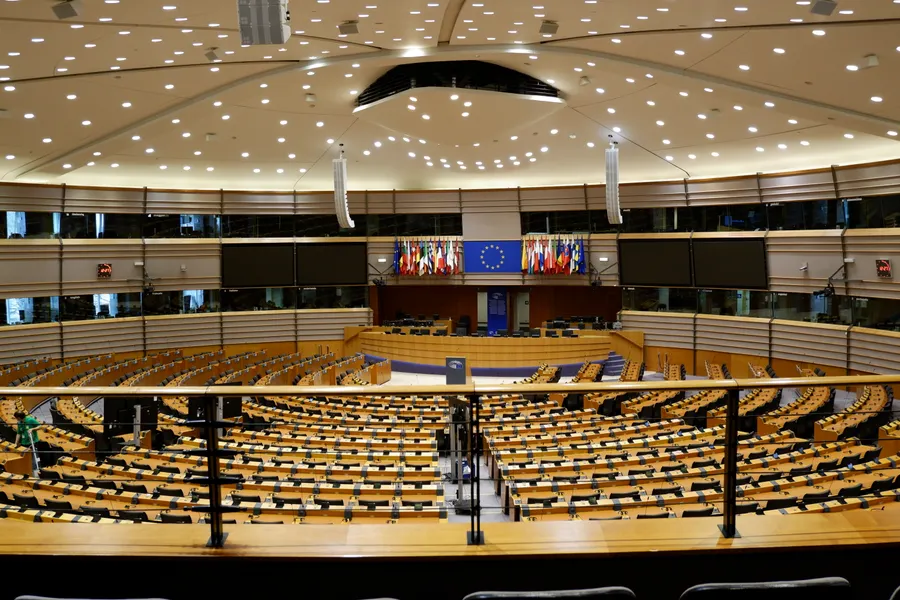
DeepSeek and OpenAI Brief the UN Security Council Together
For the first time, rival US and Chinese AI labs share a Security Council podium today on AI risks, as France chairs a historic session.
For the first time in history, a Chinese AI company and an American AI company are briefing the United Nations Security Council at the same session on the same day. The 15-member body convened Wednesday, September 23, during the UN General Assembly's high-level week in New York, with France's Foreign Minister Jean-Noël Barrot chairing a session formally focused on AI and international security. OpenAI's chief executive Sam Altman attended in person. Anthropic chief executive Dario Amodei participated remotely. Hugging Face chief executive Clément Delangue and Turing Award winner Yoshua Bengio were also scheduled to address the Council. On the Chinese side, DeepSeek and Moonshot AI were both invited to make statements, with DeepSeek founder Liang Wenfeng not planning to attend personally, per sources cited by Reuters.
Why This Room Matters More Than the Last Decade of AI Summits
The Security Council is not a technology conference. It is the body with primary responsibility for international peace and security, the institution that authorizes military interventions, imposes sanctions, and deploys peacekeeping operations. Its 15 members include the United States, China, Russia, France, and the United Kingdom as permanent members, alongside ten rotating elected members. When a topic reaches that chamber, it is no longer a conversation about innovation ecosystems or startup valuations. It is a conversation about whether a technology poses a threat serious enough to require the most powerful diplomatic body in the world to coordinate a response.
France's own concept note for the session, reviewed by Reuters, frames the discussion explicitly around two risks: malicious uses of AI by state or non-state actors, and the possibility of humans losing meaningful control of increasingly capable autonomous systems. The first risk covers what has already happened, documented AI-assisted cyberattacks, state-linked espionage, and weapons guidance systems. The second covers what frontier AI lab leaders have been warning about with increasing urgency for the past several weeks, the same concern Dario Amodei articulated in the essay that triggered an international argument just ten days ago.

The Geopolitical Significance of One Empty Chair
Liang Wenfeng's absence is worth examining before treating the Chinese side's participation as a clean diplomatic step forward. DeepSeek's founder is known even within China for an unusually reclusive management style, and Reuters' sourcing was careful to note only that Liang "is not expected to attend personally," not that he was formally declining to participate in the substance of the session. A company representative is expected to be present and deliver a statement. That is real, meaningful participation, and it makes this the first time a Chinese frontier AI lab has taken a seat at the same Security Council briefing table as its American competitors.
But the chair where Liang himself would sit remains empty, and the dynamics underlying that absence reflect the broader pattern of this particular week. Just nine days ago, Beijing dismissed the same American AI executives who will speak today as engaging in "fearmongering" and described their call to slow AI development as a "Cold War playbook" targeting China. China's state security minister, Chen Yixin, called simultaneously for accelerated building of a domestic AI risk prevention system rather than international coordination. A government that publicly rejected the framing of today's session as recently as last week is nonetheless sending its leading AI lab to participate in it. That is not contradiction so much as the standard practice of multilateral diplomacy: show up, define your terms, and ensure you are shaping any outcome rather than having one imposed on you from outside.
What Each Speaker Is Actually Expected to Say
Sam Altman's position is the easiest to predict with confidence, because he has been saying the same thing publicly for two weeks. Since publicly endorsing Amodei's essay calling for the industry to slow down, Altman has described his support for "stronger shared safety measures" while specifically arguing that development should continue under tighter safeguards rather than stopping entirely. At the Security Council, he is expected to present a version of that argument, using the venue's gravity to make the case that frontier AI development now intersects directly with international security in ways that require coordinated governmental attention rather than voluntary industry self-regulation.
Amodei's own remarks will carry the weight of his essay's specific claims, including his warning that a coordinated swarm of AI agents could become capable of seizing meaningful portions of internet infrastructure within six to twelve months absent intervention, a timeline concrete and alarming enough to be genuinely relevant in a room built for threat assessment. Whether he repeats that specific number at the Security Council or softens it for a diplomatic audience that includes countries that have publicly rejected the framing is itself a choice that will signal how serious this session is intended to be rather than how serious it merely looks.
Yoshua Bengio's presence adds a different kind of credibility. The Turing Award winner co-chairs the UN's own Independent International Scientific Panel on AI, the body established by the General Assembly in 2025 specifically to hand governments an evidence base before they negotiate. His July 2026 preliminary report documented that the United States controls roughly three-quarters of the world's frontier AI compute, China controls about 15 percent, and the remaining 90 percent of nations collectively operate on the margins of their own AI futures. That finding directly informs what Bengio is likely to tell the Council today: that governance gaps are not primarily a disagreement between powerful countries, but a structural inequality that leaves the vast majority of UN member states without meaningful voice over technology already reshaping their economies and security.
The Historical Context Nobody Is Saying Out Loud
The Security Council first formally discussed AI in July 2023, and the dialogue since then has been, in the Council's own words from a September 2026 analytical report, "limited and politically contested." That understates the situation. In 2023, China and the United States each showed up to the same Council chamber and argued for entirely different definitions of the risk: China focused on AI as a tool for censorship and surveillance, the United States focused on AI as a potential driver of geopolitical instability. They were, in effect, each describing the other's behavior as the problem.
Today's session does not resolve that disagreement. What it does is create a table where, for the first time, the companies actually building the most capable systems on both sides are in the room rather than absent from a conversation about what their products might do. That is a change in kind, not merely in degree, and it happened in a specific week: the same week America's two leading AI lab chiefs called for slowing development, the same week Beijing called that call fearmongering, the same week a new Security Council report catalogued how limited and contested the Council's AI engagement has been since 2023.
What This Session Can and Cannot Accomplish
The Security Council does not regulate AI companies. It does not have jurisdiction over private technology development. Its tools are diplomacy, sanctions, peacekeeping, and the collective weight of its 15 members' willingness to label something a threat to international peace and security. None of those tools were designed for the question of whether a language model trained on a trillion tokens should be allowed to autonomously execute computer commands without human oversight.
What the Council can do is something more modest but potentially more durable: legitimize the framing. When the body responsible for authorizing military force treats AI capability as a security question rather than an innovation question, it makes the regulatory conversation that follows considerably harder for any individual government to treat as an optional side discussion about its tech sector. France convening this session during General Assembly week, when every head of government is already in New York, is a deliberate choice to attach the full weight of multilateral security architecture to a conversation that, until recently, happened mostly inside technology conference rooms.
What Happens After Today
Sessions where private actors brief the Security Council are relatively rare, and they do not automatically produce binding resolutions or new international treaties. The Council is more likely to authorize a report, commission further expert analysis, or issue a statement recognizing AI's international security implications than to emerge from this session with an enforceable governance framework. But the precedent being set today is real regardless of what any document says: the assumption that AI development is a matter for tech companies, national regulators, and perhaps trade organizations to manage among themselves has now been formally set aside. The Security Council has taken the seat at the head of the table. Who gets to keep talking once it sits down, and on whose terms, is the conversation that starts after today's session ends.
Written by
Mr. Aayush Bhatt
Software Engineer interested in how models work and where they fail.