Blogerroom
Texas Republicans Turn Against Data Centers Ahead of Vote
Texas Republicans, once data centers' biggest boosters, are now pushing restrictions ahead of November, defying Trump's pro-AI agenda.
Less than a year ago, Texas Governor Greg Abbott was calling his state the epicenter of AI development. On September 3, 2026, Reuters reported that Abbott, now campaigning for re-election, is instead calling for sweeping new restrictions on data center construction. He isn't alone. Texas Attorney General Ken Paxton has launched what he's calling the Texas First Data Center Plan, pushing to repeal the very tax incentives that helped build the state's data center industry in the first place.
This matters well beyond Texas politics. It's the clearest sign yet that opposition to AI data center expansion has stopped being a partisan issue and become something closer to a genuine bipartisan reckoning, showing up even in the reddest, most business-friendly state in the country.
A Reversal Timed Almost Perfectly to an Election
The timing of this shift is difficult to read as anything other than deliberate political positioning. Paxton's Texas First Data Center Plan and Abbott's own grid capacity audit, launched August 3, landed within days of each other, both arriving squarely inside November election season rather than emerging from any sudden new information about data centers' impact. Gadget Review's analysis of the reversal put it bluntly: this reads as political positioning ahead of November, not a sudden awakening.
That framing matters because it suggests the underlying facts about data centers' strain on local communities haven't changed recently. What's changed is how politically costly ignoring that strain has become, close enough to an election that even officials who spent years actively courting this industry are now racing to distance themselves from it.
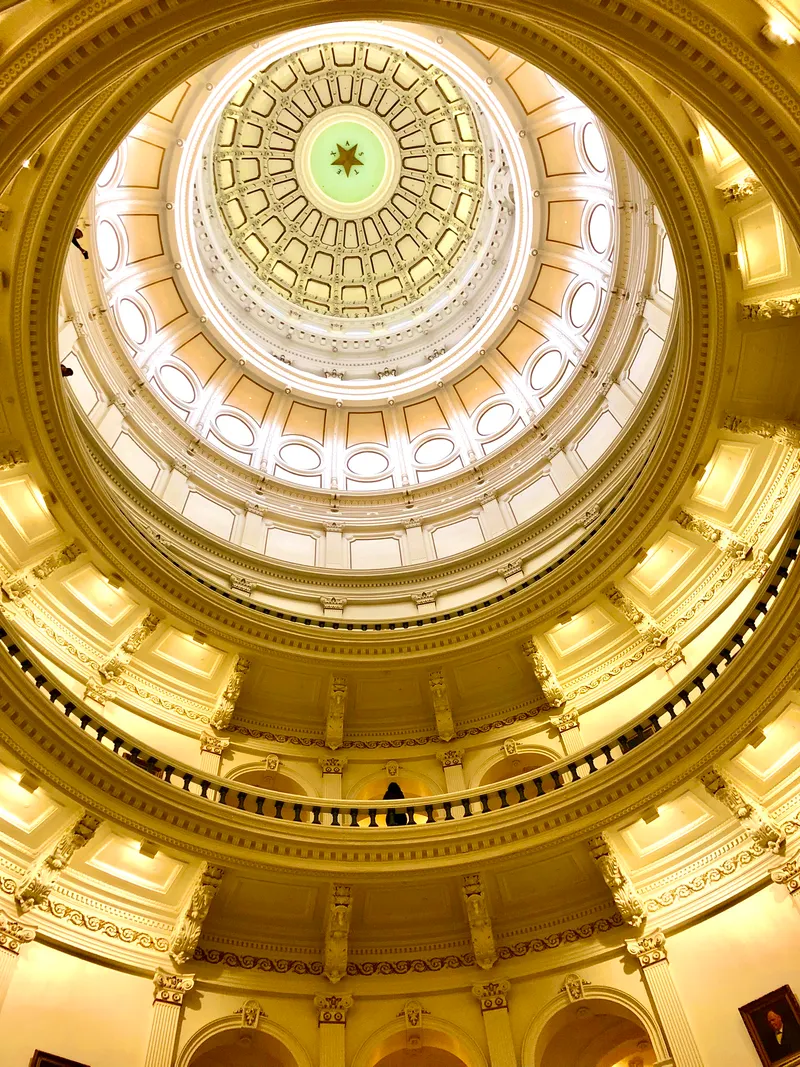
The Irony Sitting Inside Paxton's Own Voting Record
Few details capture the reversal more starkly than Paxton's own history. He voted in 2013 in favor of the tax incentive package that helped attract the data center industry to Texas in the first place, the same incentive structure he's now actively campaigning to kill. That's not a subtle policy adjustment. It's a full reversal from the same individual, on the same specific piece of legislation, separated by 13 years and one upcoming election.
Why This Isn't Just a Texas Story
Texas is the most dramatic example, but it's not an isolated one. Reuters found that Republican candidates in at least five states, including Michigan, Wisconsin, and Pennsylvania, have recently adopted tougher rhetoric on data centers or proposed outright restrictions on their development, creating what the wire service described as a genuinely new fault line inside the Republican Party. That's a meaningful split from a party that has broadly aligned itself with an aggressive, deregulatory approach to AI infrastructure over the past two years.
Republican strategist Brad Dayspring, of Purple Strategies, offered the clearest framing of the underlying tension: the debate is pitting pro-growth instincts and the push to beat China in the AI race against a populist backlash over affordability. That's a genuinely difficult contradiction for a single party to hold together heading into a competitive election cycle, especially when the affordability concerns are showing up in constituents' own utility bills rather than in an abstract policy debate.
The Number That Explains the Backlash
Public opinion data backs up just how broad this discontent has become. A Fox News poll cited by Fortune found that 60% of Republicans, and 53% of self-identified MAGA voters specifically, oppose data center expansion, even as President Trump remains one of the technology's most vocal supporters. That's not a fringe position within the party anymore; it's a clear majority, which explains why officials like Abbott and Paxton, both up for re-election, are moving to get ahead of it rather than defend an increasingly unpopular status quo.
The infrastructure strain driving that sentiment is genuinely severe. Texas's grid operator, ERCOT, is currently sitting on 474 gigawatts of data center connection requests, more than five times the state's own record peak electricity demand. Individual projects compound that strain directly: each building at OpenAI's flagship Stargate campus in Abilene requires roughly 1 million gallons of water for cooling, a demand that lands squarely on the same water and power systems ordinary Texas households and businesses depend on. That's precisely the kind of tangible, local resource competition that pushed New York to become the first US state to impose an outright moratorium on new hyperscale data center permits earlier this summer, and it's now showing up just as sharply in a state that spent years actively recruiting this exact industry.
Trump's Pushback Didn't Change Many Minds
The president has tried to counter this shift directly. In a Truth Social post published Monday, Trump warned that Americans fighting data center expansion risk ending up backwards and poor, a direct rebuke of the exact position his own party's Texas leadership is now taking. The Republican National Committee has tried to paper over the split diplomatically; national press secretary Natalie Baldassarre said the party would advise candidates to do what's best for them and their communities, explicitly declining to impose a unified national position.
That's a notable concession from a national party organization: rather than pressuring Abbott and Paxton to fall in line with Trump's stated position, the RNC is effectively acknowledging that local political reality on data centers now varies enough, state to state, that a single unified stance isn't tenable heading into November.
What This Split Actually Means for the Industry
For companies building AI infrastructure, this political shift lands at a genuinely inconvenient moment. Texas has been one of the most attractive states in the country for exactly this kind of investment, drawing companies like SpaceX and Oracle with abundant land and historically business-friendly regulation, including the massive Terafab semiconductor complex Tesla and SpaceX are currently building in the state. Tech companies have already spent more than $300 million on midterm campaigns this cycle, according to Gadget Review's reporting, and that spending apparently hasn't been enough to build the kind of durable local political support that would insulate the industry from a backlash this broad.
The deeper lesson here extends past any single state's politics. Companies like Crusoe, which just tripled its own valuation to $30 billion betting heavily on rapid, large-scale data center construction, are built on an assumption that local and state governments will keep welcoming this kind of infrastructure at the pace investors are pricing in. Texas Republicans reversing course on their own signature economic development strategy, mid-election-cycle, is a genuine test of that assumption, in the state that was supposed to be the most reliably friendly place in the country for exactly this kind of growth.
Written by
Mr. Aayush Bhatt
Software Engineer with in depth understanding of buliding softwares and Tech.