Blogerroom
Tesla's Cybercab Launches, Feds Investigate a Day Later
Tesla launched its steering-wheel-free Cybercab in Austin, and NHTSA opened a federal audit into its safety certification the next day.
Tesla put its first paying passengers into a car with no steering wheel on September 3, 2026. By the next morning, federal regulators had opened a formal investigation into whether the company was even allowed to do that.
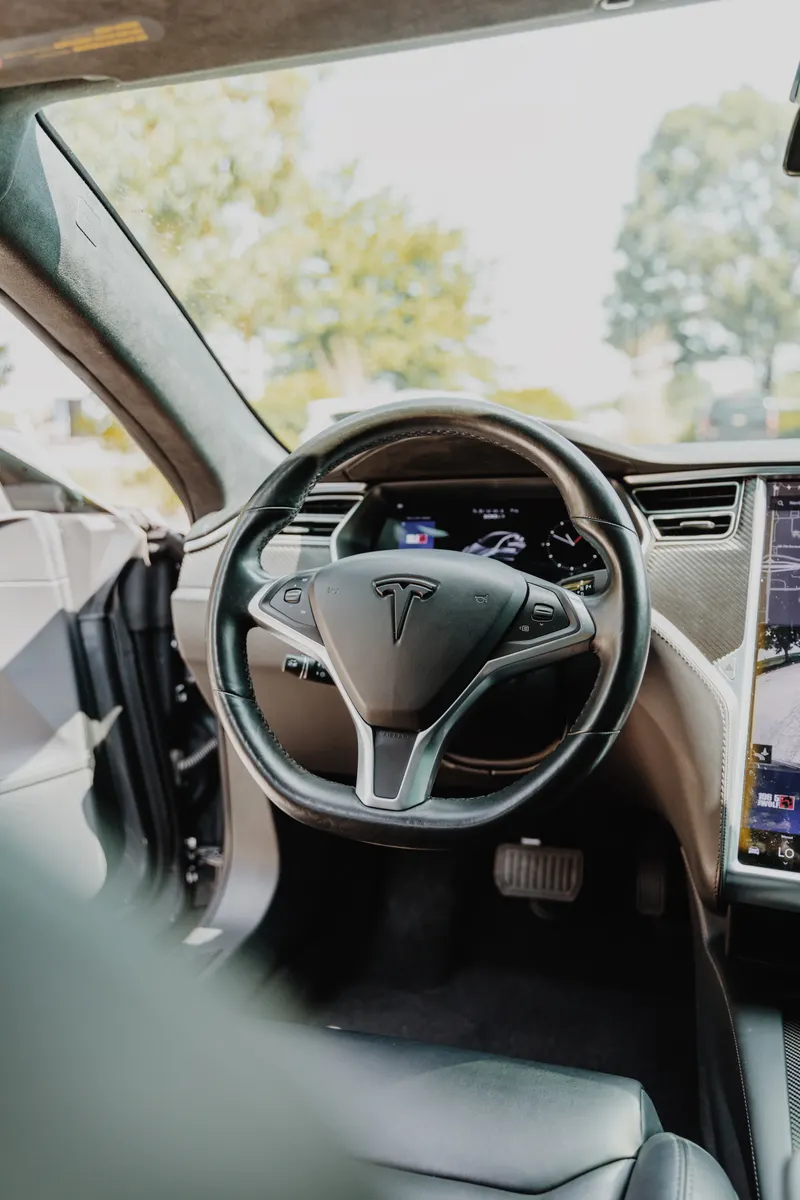
The vehicle is Cybercab, a two-seat robotaxi Tesla began operating commercially in Austin, Texas, with roughly 1,000 vehicles deployed and about 45 registered and bookable through Tesla's Robotaxi app at launch. It has no steering wheel, no brake pedal, and no mirrors, a genuinely unusual design for a vehicle now carrying paying customers on public roads. The National Highway Traffic Safety Administration opened Audit Query AQ26002 on September 4, examining the technical basis for Tesla's decision that the vehicle complies with federal safety law despite lacking equipment nearly every car on the road is required to have.
A Launch With No Fanfare, Followed by a Federal Audit
Notably, Tesla's own rollout was unusually quiet for a company known for elaborate product theater. According to Electrek's coverage of the launch, there was no livestreamed reveal, no stage presentation, and no public remarks from Elon Musk. The muted approach stands in contrast to what followed almost immediately: NHTSA Administrator Jonathan Morrison issued a public statement making clear the agency's position, saying it fully supports the safe development of automated vehicles, but that as the federal regulator, it needs to ensure that all of its laws are followed.
That's not a routine administrative response. Opening a formal audit query within roughly 24 hours of a vehicle carrying its first commercial passengers signals NHTSA saw something in Tesla's launch specific enough to warrant immediate scrutiny, rather than routine post-launch monitoring.
What Tesla Actually Decided on Its Own
The dispute centers on a specific legal and technical judgment Tesla made unilaterally. Federal Motor Vehicle Safety Standards were written decades ago, built around the assumption that every vehicle has a human driver operating a steering wheel, watching mirrors, and pressing pedals. Cybercab has none of those. Rather than seeking a formal exemption from the standards that assume those controls exist, Tesla instead determined that certain FMVSS requirements simply don't apply to a vehicle with no human controls at all, then self-certified the car as compliant under that interpretation.
NHTSA's audit is specifically aimed at examining the process and technical data behind that determination, essentially asking Tesla to show its work on a legal judgment call the company made about its own product before deploying it commercially. That's a meaningfully different regulatory posture than a company waiting for government approval before launching. Tesla built the case itself, launched on the strength of that self-assessment, and is now being asked to defend it after the fact, with paying customers already riding in the vehicles under review.
The Company That Already Tried This Exact Move
Tesla isn't the first company to attempt this specific approach, and the precedent isn't especially reassuring. Amazon's Zoox self-certified its own steering-wheel-free robotaxi using the same basic logic back in 2022, and NHTSA responded by opening what it called a special order, the same fundamental audit process now being applied to Tesla. That investigation genuinely slowed Zoox's path to commercialization. The company was still in its testing phase at the time, and rather than fight the audit to a self-certification victory, Zoox eventually filed for a formal Part 555 temporary exemption covering eight specific federal safety standards, receiving permission last year to demonstrate, though not yet commercially operate, its technology under that exemption.
Tesla skipped that exemption process entirely, betting its own self-certification would hold up without needing to go through the queue every other steering-wheel-free autonomous vehicle maker has used. Zoox has continued facing its own safety scrutiny even after finally reaching commercial deployment, including a software recall across its entire 105-vehicle fleet earlier this summer after one robotaxi failed to detect heavy smoke at an active emergency scene. That history suggests reaching commercial operation, however a company gets there, doesn't end the safety scrutiny. It just shifts what regulators are watching for next.
Why the Rules Themselves Are Shifting Underneath This Dispute
Adding real uncertainty to the outcome, the regulatory ground Tesla is standing on isn't fixed. The Department of Transportation has separately proposed, but not yet formally enacted, new rules that would remove manual pedal requirements entirely for vehicles specifically designed to operate autonomously. If that proposal becomes final regulation, it could retroactively validate the exact judgment Tesla made on its own initiative. If it doesn't, or takes years to finalize, Tesla's current self-certification remains legally exposed under the older standards NHTSA is now actively auditing it against.
That's a genuinely unusual position for a company to launch a commercial product from: betting that regulation currently being written will eventually catch up to and endorse a decision the company already made and is already profiting from.
This Isn't Tesla's Only Open Safety Question
Cybercab's audit doesn't exist in isolation from Tesla's broader regulatory relationship with NHTSA. The agency already has an open investigation into Tesla's Full Self-Driving software covering 3.2 million vehicles, opened after a series of visibility-related crashes, and it has separately collected data on an incident where a Tesla remote operator crashed a robotaxi earlier this year. Cybercab represents a new, more ambitious layer stacked on top of an already active regulatory relationship, not a fresh start.
The stakes of getting this specific dispute right are considerable. Tesla has built manufacturing capacity for more than 125,000 Cybercabs annually and plans to eventually sell them to consumers at prices under $30,000, a scale that makes clear this was never intended as a limited pilot program. It's a full product launch, with an entire planned manufacturing and sales strategy already built around it, running in parallel with a federal audit questioning whether the vehicle should be on public roads carrying passengers at all.
What Happens If NHTSA Doesn't Like What It Finds
An audit finding against Tesla wouldn't necessarily mean an immediate shutdown. Historically, NHTSA's tools in cases like this have ranged from requiring design changes and additional safety documentation to, in more serious cases, forcing a recall or restricting operations until compliance is demonstrated through the formal exemption process Tesla bypassed. Given how aggressively Tesla has already scaled Cybercab, with vehicles already generating fare revenue and a much larger manufacturing ramp already underway, any regulatory setback now carries considerably higher stakes than it would have during a smaller, slower pilot rollout. Whether Tesla's bet on self-certification holds up, or whether the company ends up following Zoox down the slower, exemption-based path anyway, is a question NHTSA's audit is now positioned to answer, with real commercial consequences already riding on the outcome either way.
Written by
Mr. Aayush Bhatt
Software Engineer with in depth understanding of buliding softwares and Tech.