Blogerroom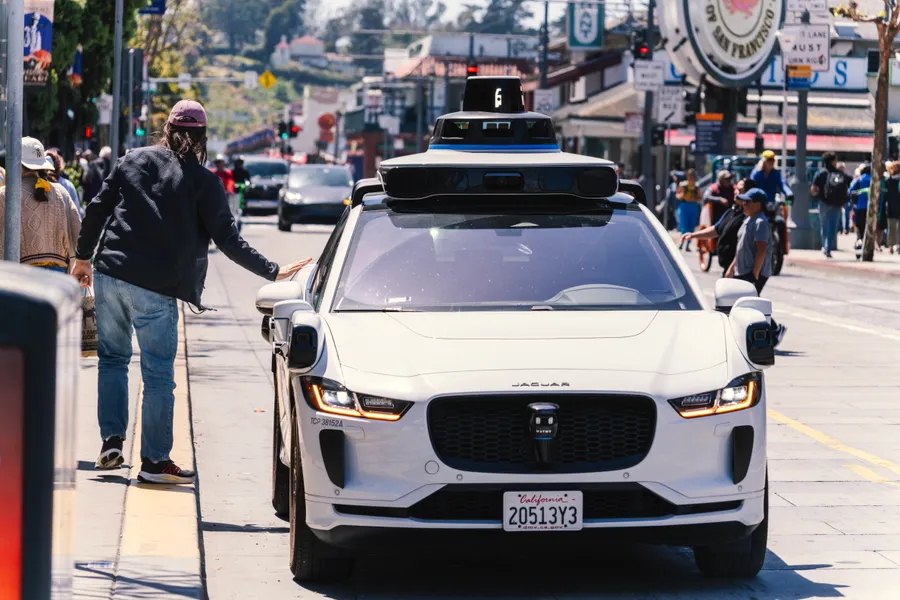
NHTSA Probes Tesla's Cybercab Hours After Austin Launch
Federal regulators opened a probe into Tesla's Cybercab within a day of launch, questioning how it certified a car with no pedals.
Tesla sent its gold-colored Cybercab onto the public streets of Austin on September 3. By Friday morning, federal regulators had already opened an investigation into whether the vehicle should have been allowed on those streets at all. The National Highway Traffic Safety Administration announced it is examining the process and technical data Tesla relied on when certifying a two-seat vehicle that has no steering wheel, no pedals, and no mirrors, the fastest gap between a major vehicle launch and a formal federal safety inquiry in recent memory.
What Tesla Actually Launched
The Cybercab is Tesla's first genuinely new passenger vehicle in years, and it represents a real departure from every prior Tesla robotaxi deployment. Tesla's existing Robotaxi service, running in Austin and five other Texas and Florida cities for more than a year, uses standard Model Y vehicles retrofitted with self-driving software but still equipped with a conventional steering wheel and pedals, allowing a human to take over if needed. The Cybercab has none of that. It is a two-door, two-seat vehicle built from the ground up with no manual controls whatsoever, designed around the assumption that Tesla's Full Self-Driving software will handle every mile without any possibility of human intervention.
Tesla held an invitation-only launch event in downtown Austin on September 3, notably choosing not to livestream the proceedings, and rolled out a dedicated new app for riders to hail the vehicle. The company has described the Cybercab as "democratizing clean transportation for all," specifically touting its accessibility benefits for riders with disabilities who cannot drive themselves.
The Specific Legal Gap NHTSA Is Examining
In the United States, automakers are permitted to self-certify that their vehicles meet Federal Motor Vehicle Safety Standards, rather than submitting new models for pre-approval by regulators before selling or deploying them. Tesla used exactly that process for the Cybercab, notifying NHTSA that it had determined the vehicle complies with all applicable federal standards. NHTSA's own filing lays out precisely why that determination is now under scrutiny: "The vehicles lack permanently attached, conventional manual controls, such as a brake pedal, gas pedal, steering wheel, and mirrors," standard equipment that existing federal vehicle safety rules generally require.
NHTSA Administrator Jonathan Morrison framed the agency's position carefully, avoiding language that presumes wrongdoing while still making clear the investigation is not routine paperwork: "NHTSA fully supports the safe development and deployment of automated vehicles. But as the federal regulator, we need to ensure that all of our laws are followed." As part of the audit, the agency will specifically examine whether Tesla was correct in concluding that certain federal safety standards, ones written decades before a car with no manual controls was technically possible, simply do not apply to a vehicle like the Cybercab at all.
The Rulebook Has Not Caught Up to the Technology
The regulatory gap NHTSA is probing is not really about the Cybercab specifically. It is about federal vehicle safety standards that were written assuming every car would need a human-operable steering wheel and brake pedal, an assumption a genuinely driverless vehicle simply does not fit. The U.S. Department of Transportation has separately proposed updating those standards, specifically around requirements like brake pedals, for vehicles designed to be driven exclusively through an automated system. That proposed rule change is not yet final, which means Tesla launched the Cybercab commercially into a regulatory gray zone the government itself has acknowledged needs updating, rather than waiting for the rules to actually catch up first.
Whether that timing reflects confidence in Tesla's own legal reading of existing standards, or a calculated bet that regulatory approval would eventually follow commercial deployment rather than precede it, is a distinction NHTSA's audit will now have to sort out directly.
Zoox Already Walked This Exact Road
This is not the first time NHTSA has confronted a vehicle with no manual controls, and the precedent is directly relevant to how this investigation is likely to unfold. Amazon-owned Zoox self-certified its own cube-shaped robotaxi back in 2022, a vehicle that similarly lacks a steering wheel and pedals, and NHTSA responded with the same audit process it is now applying to Tesla. That inquiry meaningfully slowed Zoox's path to commercial operation, and the company ultimately received a formal government exemption in 2025 allowing it to demonstrate the technology publicly, not commercially operate it, a materially more restrictive outcome than what Zoox itself had originally pursued through self-certification alone.
That history carries real weight given Zoox's own safety track record since. Amazon's robotaxi subsidiary was forced to recall its entire 105-vehicle fleet earlier this year after one of its vehicles drove directly into a smoke-obscured emergency scene, a failure that only became visible once vehicles were actually operating continuously in unpredictable real-world conditions rather than controlled testing. If Tesla's Cybercab investigation follows a comparable trajectory to Zoox's, a multi-year audit process that constrains commercial scale well before it concludes, the vehicle Musk unveiled with launch-event fanfare this week could remain in a genuinely limited, closely watched deployment for considerably longer than the company's own public framing suggests.
Tesla's Track Record Makes This Scrutiny Sharper
This investigation does not land on a company with a clean recent safety record, and that context shapes how seriously regulators and the public are likely to treat it. Tesla's Miami robotaxi expansion earlier this year launched directly into an active federal investigation over how the company's camera-only Full Self-Driving system handles degraded visibility conditions like rain and glare, an investigation that remains open. Separately, Tesla was forced to issue its largest-ever China recall this August, covering nearly 3 million vehicles, after regulators tied the company's flush, electronically operated door handles to real entrapment incidents and confirmed fatalities following crashes. Both of those episodes involve a recurring pattern worth naming directly: Tesla design choices, made in service of a distinctive look or a specific technical philosophy, running into hard safety questions only after real-world deployment exposes the gap between design intent and actual failure conditions.
The Cybercab fits that same pattern almost too neatly. A vehicle engineered with no manual override specifically because Tesla is confident in its software's reliability is, by design, a vehicle with zero fallback the moment that confidence turns out to be misplaced in any specific scenario regulators have not yet stress-tested.
The Market's Immediate Verdict
Investors did not wait for NHTSA's audit to conclude before reacting. Tesla shares fell more than 5 percent to $357.38 in early Friday trading, reversing a meaningful share of the gains the stock had posted just one day earlier following the Cybercab's celebrated launch. That is a genuinely fast reversal, a company's stock rising on launch-day enthusiasm and then giving much of it back within 24 hours once regulators signaled the launch itself might not have followed proper process. Markets are not typically this quick to price in regulatory risk unless the underlying concern looks credible rather than reflexive.
What Happens While the Audit Runs
NHTSA's inquiry does not automatically halt Cybercab operations in Austin while it proceeds, and Tesla has indicated it plans to gradually expand deployment to additional locations and vehicle models regardless of the ongoing investigation. That means Cybercabs carrying real passengers, with genuinely no physical means for anyone inside the vehicle to intervene if the software fails, will likely continue operating on public roads throughout the audit process, a real-world bet running in parallel with the regulatory review examining whether that bet was ever properly authorized in the first place.
The genuine test here is not whether NHTSA's audit eventually concludes Tesla's self-certification was technically defensible under existing rules, a determination that could easily take months or longer based on the Zoox precedent. It is whether anything goes wrong with a Cybercab carrying a passenger before that audit concludes, a scenario that would immediately reframe the entire question from a paperwork dispute over which federal standards technically apply into a much harder conversation about whether a car with zero manual override was ever a reasonable thing to put on public roads before regulators had actually finished deciding whether the rules allowed it.
Written by
Mr. Aayush Bhatt
Software Engineer with in depth understanding of buliding softwares and Tech.