Blogerroom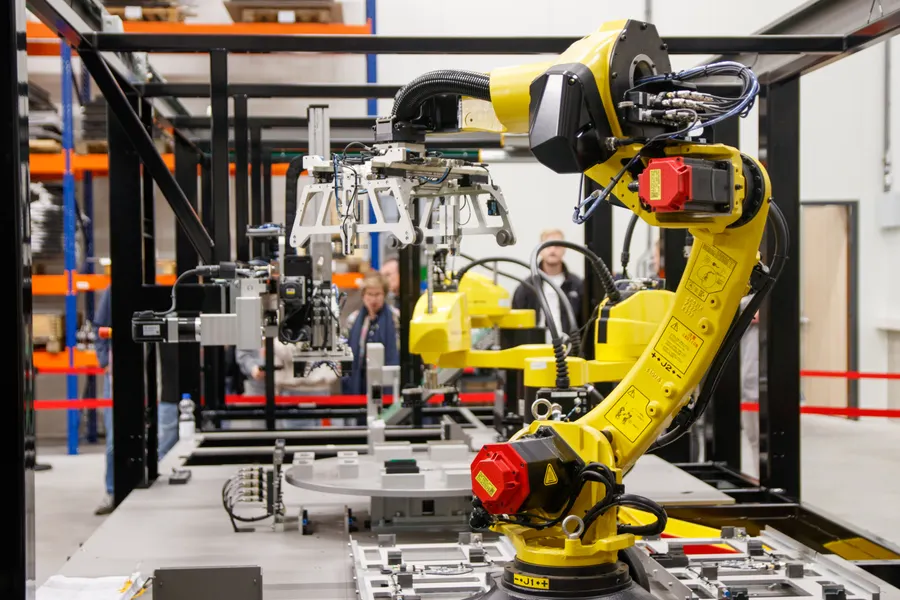
Tesla Lines Up $30B in Credit to Scale Cybercab and Optimus
Tesla secured $30B in new credit from Citibank and Wells Fargo for Cybercab, Optimus, and Semi, replacing a $5B facility it outgrew overnight.
Tesla had a $5 billion revolving credit facility heading into 2026. On September 30, it replaced that facility with $30 billion in new credit agreements, a six-fold increase arranged across three separate instruments from two banks, to fund what Elon Musk described in July as probably the fastest industrial scale-up since World War II in America.
The new package comprises a $20 billion three-year delayed-draw term loan with Citibank as administrative agent, an $8 billion five-year revolving credit facility and a separate $2 billion revolving facility with a 364-day term, both with Wells Fargo. Tesla filed regulatory disclosure of the agreements the same day.
Why Six Times More Credit, Right Now
The gap between Tesla's old $5 billion facility and this new $30 billion package reflects how dramatically its capital requirements have changed within a single year. Tesla's second-quarter 2026 SEC filing projects capital expenditures "in excess of $25 billion" for the full year, a figure that already exceeds what the old credit facility could meaningfully backstop by itself. The company ended June with roughly $9 billion in debt and more than $40 billion in cash and investments, meaning it isn't financially distressed — it's building credit capacity specifically to match the scale of commitments it's already made, not to cover a shortfall.
The new arrangements replace, rather than stack on top of, the old $5 billion facility, which is an important structural detail. This isn't Tesla accumulating leverage. It's updating its available borrowing capacity to reflect a business that now expects to spend five times what it previously needed in a single year.
Three Products, Three Dedicated Factories
The regulatory filing lists the intended uses: AI initiatives, compute infrastructure, data centers, manufacturing and research facilities, AI-enabled assets, and expansion of retail, service, and charging networks. In practice, TechCrunch's reporting on the deal identifies three programs as the primary drivers: Cybercab, Optimus, and Tesla Semi.
All three share a manufacturing feature that distinguishes them from Tesla's existing vehicle programs. Where the Model 3, Model Y, and Model S share assembly infrastructure within Tesla's existing Gigafactory footprints, the Semi, Optimus robot, and Cybercab are each receiving dedicated factory footprints. Tesla is currently building the Semi factory in Reno, Nevada, and separate Optimus manufacturing capacity elsewhere. Building dedicated production lines rather than extending existing ones is why capital expenditure has accelerated so sharply: you don't scale a robotaxi fleet by adding a wing to a car factory.
The Cybercab's Launch and Its Open Regulatory Question
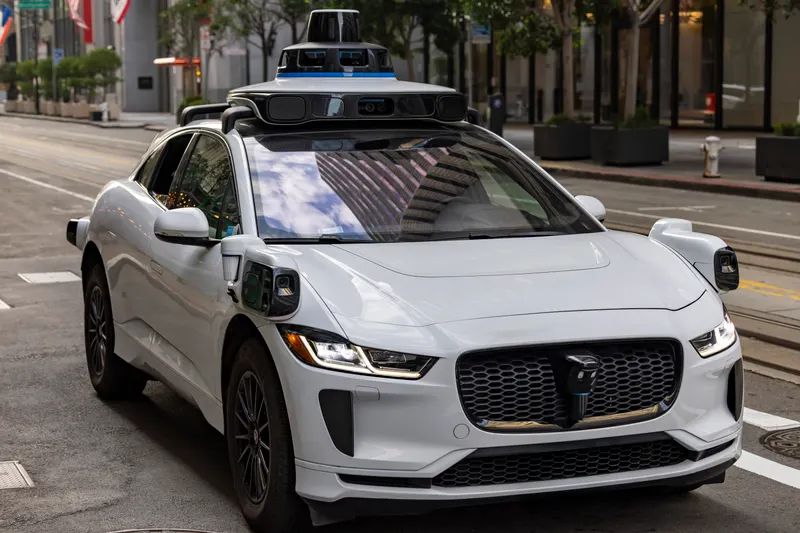
Tesla launched Cybercab commercially in Austin on September 3, with approximately 1,000 vehicles and about 45 available for booking through the app at debut. NHTSA opened a formal audit of the vehicle's safety self-certification the following day, specifically examining Tesla's unilateral determination that the steering-wheel-free, pedal-free vehicle complies with federal safety standards designed around the assumption that every car contains a human driver. That audit remains open.
The credit line signed on September 30 makes the financial position clear regardless of the regulatory outcome: Tesla has arranged the borrowing capacity to scale Cybercab production whether the Austin deployment expands as planned or faces a compliance-driven setback. Elon Musk has previously stated a target of 2 million Cybercabs per year across more than one factory, a production rate that would dwarf current volumes and, at Tesla's targeted operating cost of less than $0.30 per mile, potentially reshape the unit economics of the entire ride-hailing industry.
Optimus: The Robot Getting Its Own Factory
Optimus is the program with the highest long-term uncertainty relative to its capital commitment. Tesla is building a dedicated factory for a humanoid robot that has not yet shipped commercially at any significant volume. The $30 billion credit line treats Optimus scale-up as a near-term capital priority alongside Cybercab, reflecting Musk's publicly stated belief that Optimus will eventually be the most valuable product in the company's history.
The humanoid robot industry has attracted serious investment across multiple companies this year, and the competitive dynamics around physical AI are reshaping how chip companies think about their own roadmaps — AMD's $8.2 billion World Labs acquisition this week being a direct example. Tesla's approach differs: rather than acquiring research capability, it is committing factory capital directly to production of its own in-house design.
Undrawn, for Now, and What That Actually Means
Tesla's filing specifies it does not currently plan to draw on the new credit facilities in 2026. That statement requires context. A delayed-draw term loan, like the $20 billion Citibank facility, isn't money sitting in an account; it's a committed obligation from the bank to provide funds if and when Tesla requests them, within the agreed window. Tesla isn't holding $30 billion in unused cash — it's holding an option to access $30 billion, at predetermined terms, without needing to negotiate a new deal in the middle of a capital deployment cycle.
That structure makes sense for a company whose spending is sequenced across several years of factory builds and product ramps. Having the credit in place before it's needed is what prevents a funding gap from interrupting construction timelines that can't be paused cheaply once started. Free cash flow turned negative this year as spending accelerated past operating income. Lining up $30 billion in credit before drawing it is Tesla's version of building its own liquidity runway ahead of a ramp it has committed to, publicly and in regulatory filings, whether the market cooperates with favorable debt terms or not.
A Balance Sheet Moment That Mirrors the Broader Industry
Tesla's credit line lands in the same week that the broader pattern of AI-era industrial scale-up financing is more visible than it has been all year. The same dynamics driving Tesla to need six times its previous credit capacity — new product lines requiring dedicated factories, AI compute requirements growing alongside autonomous vehicle deployments, the need to move faster than operating cash flow allows — have produced comparable financing rounds across the semiconductor, data center, and AI infrastructure sectors throughout 2026. Tesla is pursuing that race from a position of genuine financial strength, which makes the size of this credit package a statement about ambition rather than distress. What the next twelve months of drawdowns, if any, reveal about how that ambition translates into actual production volume is the story this filing sets up without yet resolving.
Written by
Mr. Aayush Bhatt
Software Engineer with in depth understanding of buliding softwares and Tech.