Blogerroom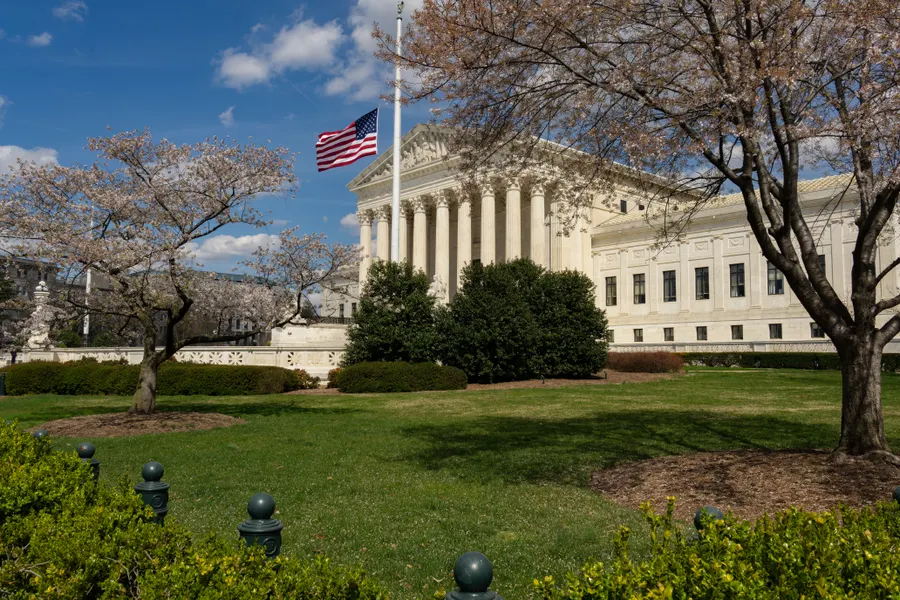
Supreme Court Blocks Missouri GOP Map for Third Time
The Supreme Court again blocked Missouri's GOP-drawn map, its third intervention this month, ending chaos before the midterms.
Missouri's congressional map changed five times in three weeks. On Friday, September 25, 2026, the Supreme Court finally called a stop to it, blocking a Republican-drawn map for the third time this month and ensuring voters already casting absentee ballots won't see the rules shift again before November.
The unsigned order, with no dissents noted, closed out what the Missouri Independent described as three weeks of dramatic court action that tested the jurisdiction and overlap of state and federal courts and left local election officials exasperated. For a redistricting fight that started as an unusual mid-decade gerrymandering push encouraged by President Trump, it ends with Republicans right back where they started: using the same map Missouri has run elections under since 2022.
What the disputed map would have changed
At stake was a single congressional seat. The Republican-drawn map targeted Missouri's 5th Congressional District, held by Democratic Rep. Emanuel Cleaver, restructuring it in a way that would have shifted the state's House delegation from a 6-2 Republican advantage to a lopsided 7-1 split, according to MS NOW's reporting on the dispute. That single seat carries real weight nationally: with control of the House up for grabs in November, every additional seat either party can lock in through redistricting affects the broader math in Washington.
The push to redraw the map traces back to 2025, when the Trump White House began pressing Missouri Republicans to reconfigure the state's district lines specifically to help the GOP retain House control heading into the midterms, according to Wikipedia's documentation of the redistricting effort. That kind of direct White House involvement in a single state's map is itself unusual, and it's part of why this fight drew national attention well beyond Missouri's borders.
A legal ping-pong match across three courts
The sequence of events leading to Friday's ruling reads like a procedural whiplash case study. The Missouri Supreme Court unanimously ruled on September 3 that state law required any new map to first go through a voter referendum before it could take effect, a decision that effectively blocked the Republican map from use in November. Missouri officials asked the U.S. Supreme Court to intervene, but the request was rejected on September 8 in a decision authored by conservative Justice Brett Kavanaugh, according to CNBC's reporting.
Federal district Judge Stephen Clark then issued his own order that same day barring any map except the state's existing 2022 lines, since those had already been used in Missouri's August 4 primary elections. The U.S. Supreme Court blocked the Republican map again on September 10. That seemed to settle things, until the 8th U.S. Circuit Court of Appeals ruled Monday that the Republican map should actually be used after all, arguing the Constitution doesn't permit a state to use a different congressional map in a general election than it used in the preceding primary, according to CNN's reporting on the appellate decision. That ruling set up Friday's third and, for now, final Supreme Court intervention.
Why the timing mattered as much as the legal arguments
The Supreme Court's reasoning leaned heavily on practical election administration concerns rather than settling the underlying legal dispute outright. "Ballots using the 2022 map have been printed and mailed. Absentee voting has already begun, as has military and overseas voting," the court wrote, according to CNN. "At this late date, ordering reversion to the 2025 map in the midst of an ongoing election would usher in electoral chaos."
That framing effectively treats the practical reality of an election already underway as decisive, regardless of which map might ultimately prove correct under a fuller legal review. Boone County Clerk Brianna Lennon's office had already begun accepting absentee ballots the Tuesday before the ruling, according to the Missouri Independent, meaning any further map change at this point would have forced election officials to notify voters whose district assignments had shifted yet again, some of whom, in Boone County specifically, would have moved between the 3rd, 4th, and 5th districts depending on which version of the map applied.

What the winning side and the losing side each said
Richard von Glahn, executive director of People Not Politicians Missouri, the group that brought the emergency challenge, framed Friday's outcome as vindication for a fight over process as much as outcome. "We are done with corrupt politicians trying to force their map into effect outside the process outlined in the Missouri constitution," he said in a statement, according to NBC News.
Missouri Gov. Mike Kehoe, a Republican, struck a more resigned tone in his own response, posting on X that the outcome was "disappointing" because it meant the general election would run under a different map than the one used in the primaries. "Voters deserved consistency and certainty, and not for the rules to be changed between elections," Kehoe wrote, before adding that Missouri would comply with the court's order regardless.
A defeat that fits a broader midterm pattern
This ruling doesn't exist in isolation from the rest of this year's election-administration litigation. It follows closely behind the Supreme Court's decision earlier this month blocking the Trump administration's new USPS mail-ballot rules from taking effect for the 2026 midterms, another case where the court prioritized preserving the status quo voters were already operating under rather than allowing a late-breaking rule change to disrupt an election already in motion.
Taken together, the two rulings suggest a consistent judicial instinct this cycle: when election mechanics get contested close enough to Election Day that voters and officials have already begun acting under one set of rules, the Supreme Court has repeatedly sided with stability over last-minute change, regardless of which party's interests that stability happens to serve in a given case.
What Republicans lose, and what stays unresolved
For Missouri Republicans, Friday's ruling closes the door on flipping Cleaver's 5th District seat for this election cycle specifically, though it doesn't necessarily resolve the broader legal question of whether the 2025 map itself was validly enacted under Missouri law. That underlying question, tied to the voter referendum requirement the state Supreme Court identified, remains a live issue that could resurface in future redistricting cycles even though it's settled for November's vote.
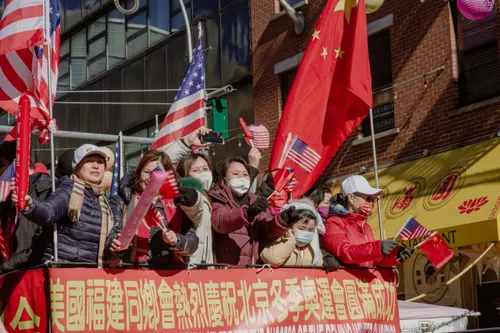
The fight also arrives at a notably busy moment on the broader political calendar, coming just days after President Trump hosted Xi Jinping for a high-profile state visit built more around ceremony than substantive agreements. Between a major diplomatic summit and a third Supreme Court intervention in a single state's congressional map, this stretch of September has offered a reminder of just how much of the president's midterm strategy, on both foreign and domestic fronts, is running through simultaneous, high-stakes legal and diplomatic tracks less than six weeks before voters render their verdict.
What happens now
With the 2022 map locked in for November and absentee, military, and overseas voting already underway, Missouri's congressional elections will proceed without further disruption, at least on the mapping front. Rep. Bob Onder and the other Republican plaintiffs who pushed for the 2025 map's implementation have exhausted their emergency options at the Supreme Court, though nothing in Friday's order forecloses future redistricting efforts ahead of the next election cycle.
For now, Missouri voters can cast their ballots knowing which district they're voting in, a small but meaningful certainty after three weeks in which that answer changed five separate times.
Written by
Dr. Anand Sharma
Deep Understanding of domestic and international policy.