Blogerroom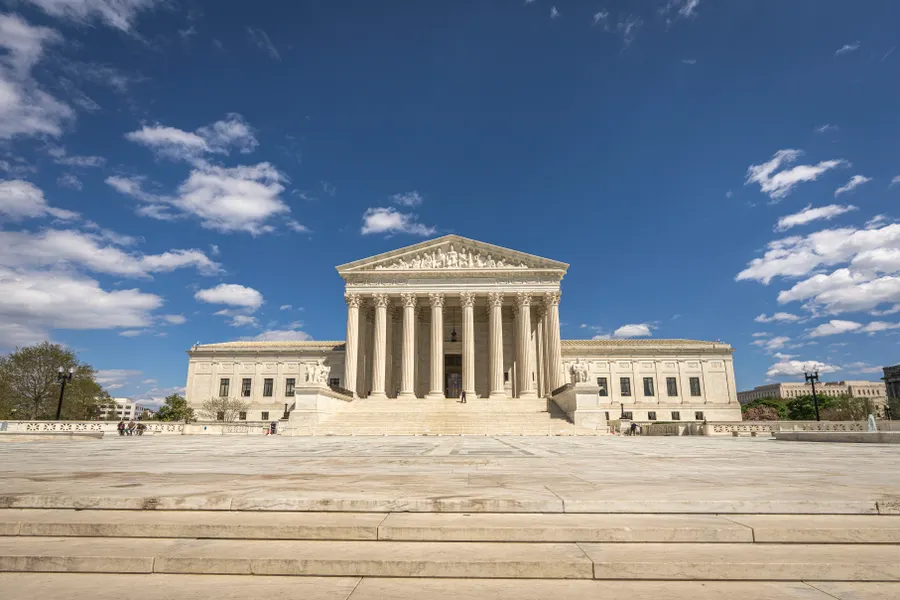
SCOTUS Lets GOP Keep Cheap TV Ad Rates for Midterms
The Supreme Court let Republican committees keep discounted TV ad rates for coordinated spending, extending the GOP's cash edge.
A one-paragraph order with midterm-sized consequences
The Supreme Court handed Republicans a significant financial edge heading into the November midterms on Friday, granting an emergency appeal that keeps discounted television and radio ad rates available to party committees coordinating spending with their candidates. The unsigned order blocked a lower court ruling that had briefly threatened to strip that discount away right as the political advertising season's most consequential window, the 60 days before a general election, opened on September 4. Only Justice Ketanji Brown Jackson publicly dissented.
It's a technical-sounding dispute over broadcast pricing rules, but the practical stakes are straightforward: Republican party committees currently hold a substantial cash advantage over their Democratic counterparts heading into the midterms, and Friday's ruling means that advantage now stretches further, since every dollar spent at a discounted rate effectively buys more airtime than the same dollar spent at full price.
The rule at the center of the fight
Federal law has long required broadcasters to sell airtime to political candidates at a discounted "lowest unit charge" during defined pre-election windows, 45 days before a primary and 60 days before a general election. That rule was designed to ensure candidates, regardless of personal wealth, could access affordable advertising time rather than being priced out by broadcasters charging premium rates during the highest-demand political season. The dispute Friday centered on a narrower, more recent question: does that same discount extend to party committees, like the National Republican Senatorial Committee and National Republican Congressional Committee, when they're running ads coordinated directly with a specific candidate's campaign, rather than the candidate purchasing the airtime themselves?
The FCC, under Trump ally Chairman Brendan Carr, issued guidance in March saying yes, party committees qualify for the discount when their ad buys are coordinated with candidates. The 4th U.S. Circuit Court of Appeals disagreed in an August 25 ruling, siding with a group of Democratic candidates, including Sen. Sherrod Brown, Sen. Jon Ossoff, Gov. Roy Cooper, and Rep. Kristen McDonald Rivet, who argued the FCC had stretched the statute's language beyond what Congress actually wrote. The appeals panel's reasoning was blunt: the law says "candidate," and a party committee is not a candidate, full stop.

Why the timing made this an emergency
Under normal circumstances, a disputed regulatory interpretation like this one would simply work its way through the ordinary appeals process over many months. What turned it into a genuine emergency was the calendar. The 60-day discount window for the general election opened September 4, the same day the Supreme Court issued its order, meaning any delay in resolving the dispute would have cost Republican committees real money during the single most expensive stretch of the entire election cycle. The National Republican Senatorial Committee and National Republican Congressional Committee asked the justices to intervene precisely because waiting for the normal appeals timeline to play out would have rendered a later, favorable ruling largely moot, since the discount window itself would have already closed by the time any final decision arrived.
The Trump administration formally supported the Republican committees' emergency request, adding executive branch weight to a case that was already unusually well-resourced on the GOP side, given the party's cash advantage heading into the underlying fight.
How this connects to a bigger case decided in June
Friday's ruling doesn't exist in isolation; it's the second half of a one-two punch that together substantially reshapes how money can flow into coordinated campaign spending. Back in June, the Supreme Court ruled 6-3 in National Republican Senatorial Committee v. Federal Election Commission that federal limits on how much money political parties can spend in direct coordination with their candidates violate the First Amendment, striking down caps that had governed party-candidate coordination for decades. NRCC Chair Rep. Richard Hudson and NRSC Chair Sen. Tim Scott celebrated that ruling as "a decisive First Amendment victory," while critics, including the Democratic National Committee attorneys who defended the limits, warned it would flood federal races with dramatically more coordinated spending than the campaign finance system had ever previously permitted.
Friday's TV ad ruling compounds that effect directly. Removing the spending cap only matters as much as what that money can actually buy, and if the same now-unlimited coordinated spending also qualifies for steeply discounted broadcast rates, party committees get considerably more advertising reach per dollar than they would purchasing airtime at full market price. Legal analysts have specifically flagged this compounding effect, describing the combination as one that could push campaigns to rely more heavily on party-committee coordinated spending rather than traditional independent expenditure programs, precisely because the coordinated route now carries both fewer restrictions and cheaper pricing.
The reactions split exactly where you'd expect
FCC Chairman Brendan Carr praised Friday's ruling, consistent with his agency's earlier guidance extending the discount to party committees. Democratic FCC Commissioner Anna Gomez took the opposite view forcefully, warning the decision "throws the midterm election into chaos" and arguing it effectively "allows the FCC to unleash a flood of dark money by letting a handful of wealthy donors pool unlimited contributions into political advertising." That's a substantive policy disagreement, not just partisan messaging: Gomez's concern centers on the interaction between unlimited coordinated spending and joint fundraising committees, structures that can pool contributions from multiple wealthy donors before funneling them into coordinated party ad buys now eligible for the broadcast discount.
Justice Jackson's solo dissent didn't come with an accompanying written opinion explaining her reasoning in detail, which is common for emergency applications decided on the Court's so-called "shadow docket," where full briefing and lengthy opinions are typically bypassed in favor of expedited, often unsigned rulings.
What happens next, and why it's still not final
It's worth being precise about what Friday's order actually resolved and what it didn't. The Supreme Court's action was an emergency stay, not a final ruling on the merits of whether the FCC's interpretation of "candidate" is ultimately correct under the statute. The underlying legal question, whether Congress's 45-year-old lowest-unit-charge language genuinely extends to party committees coordinating with candidates, remains formally unresolved and will continue working through the appeals process. What Friday's order guarantees is that, regardless of how that underlying legal question eventually gets answered, Republican committees will have already locked in access to the discounted rates throughout this critical pre-election advertising window, a practical advantage that persists no matter what the final legal outcome turns out to be months or years down the road.
That's the recurring pattern in high-stakes campaign finance litigation resolved through emergency appeals: the practical, real-world effects of a temporary order often matter more than the eventual final ruling, because elections don't pause for courts to finish their deliberations. Friday's decision guarantees Republican committees the cheaper rates for this cycle's most expensive advertising stretch, regardless of what any court eventually decides about the underlying statutory question once the midterms themselves are already over.
Written by
Dr. Anand Sharma
Deep Understanding of domestic and international policy.