Blogerroom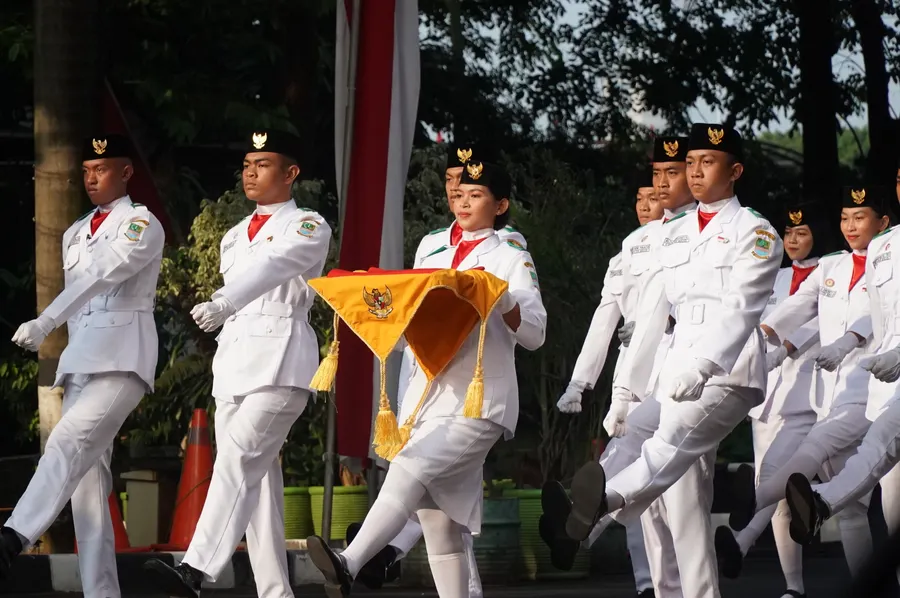
Indonesia Adds 204 Military Units as Deficit Widens
Prabowo inaugurated 204 military units on Oct. 5, 180 of them territorial development units, as Indonesia's deficit reached Rp319 trillion.
On Monday, October 5, in front of 3,378 uniformed personnel at the Indonesian armed forces headquarters in Jakarta, President Prabowo Subianto handed command batons and unit flags to the heads of six new regional military commands. Three days later, the finance minister reported that the state budget deficit had widened to Rp319 trillion, about US$19.2 billion. The two announcements are not formally connected. They are going to meet in the 2027 budget.
What was actually inaugurated
Indonesia added 204 military units at the ceremony marking the 81st anniversary of the TNI, as the armed forces are known, Malay Mail reported via Bernama. The package includes six regional commands, 30 territorial development infantry brigades and 150 territorial development battalions. The Army also added a cavalry battalion, a field artillery battalion and an air defence artillery battalion. The Navy gained a Marine infantry brigade and four Marine battalions, and the Air Force added 10 units, including a rapid-action division, two air squadrons and two radar units.
Prabowo framed it as readiness. "War today does not necessarily take a physical form," he said, urging the TNI to adapt and train. The government's broader argument, voiced by Defence Minister Sjafrie Sjamsoeddin, is that national defence underpins the stability that economic development depends on.
Count the units, though, and a pattern shows. Of the 204, 180 are territorial development units, about 88 percent. Those are not the tank and fighter-jet units that define a military modernisation. They belong to a different program.
The battalions that grow rice
The territorial development battalions are the Army's contribution to Prabowo's domestic agenda. The Jakarta Post reported that they are tasked with supporting flagship projects including the free nutritious meals programme, the Red and White Cooperatives, food security and local infrastructure. The government's goal is one battalion for each of Indonesia's 514 regencies and cities, and Defence Minister Sjafrie Sjamsoeddin has spoken of 750 battalions over five years, according to a Singapore-based think tank, RSIS.
The Army said it had established 155 battalions by April, the Jakarta Post reported, which means Monday's ceremony formalised units that had already been created. Sjafrie has also said the battalions support farming, fisheries and livestock programs, according to Asia News Network.
For supporters, this is a practical use of a disciplined organisation with a presence in every district. For critics, it is the return of an old idea. Indonesia's authoritarian past featured a "dual function" under which the military held civilian roles, and the post-1998 reforms were meant to end it.
The money, and who is asking
Defense is now Indonesia's second-largest expenditure. The Defence Ministry received Rp187.1 trillion (about US$10.5 billion) in the 2026 budget, behind only the free meals programme, according to the Jakarta Post's analysis in June. That is still under 0.8 percent of gross domestic product, which is low by regional standards, so the case for more defense spending is not frivolous.
The deficit is the other side of the ledger. Finance Minister Suahasil Nazara said on October 8 that the budget gap through September stood at Rp319.0 trillion, 1.24 percent of GDP, up from 0.93 percent a month earlier, Tempo reported. Spending had reached 69.2 percent of the annual allocation, and the government said it would accelerate spending in November and December. Indonesia's legal deficit ceiling is 3 percent of GDP, so there is room. But two flagship programs, free meals and an expanding military, will compete for it.
Al Araf of the rights group Imparsial warned in 2025 that adding 150 battalions a year was excessive and would strain the defence budget, Asia News Network reported. RSIS has made a milder point: battalion budgets should be calibrated against spending on arms modernisation.

Civilian supremacy is the real question
Gian Kasogi, a public policy researcher, said at a June 4 discussion in Jakarta that the program blurs the line between defence and civil governance, according to VOI. Asia News Network's report this week said critics fear the latest inauguration widens the military's footprint in activities such as food estates and the meals programme, and weakens civilian supremacy in the regions.
This follows a 2025 revision to the military law that lets active officers serve in civilian government posts, which Carnegie's Global Protest Tracker lists as the trigger of nationwide protests. Prabowo is himself a former army general. Supporters say that is an asset in running a complex country. Critics say it shapes who he trusts to deliver.
What to watch
The first marker is October 20, the two-year anniversary of Prabowo's inauguration, which he has already begun to prepare for by briefing 800 senior officers on October 7 on what he called national challenges, Antara reported. His October 1 cabinet reshuffle, which analysts told the South China Morning Post leaned on technocrats and trusted allies to address dipping ratings, shows a president adjusting to criticism rather than backing away.
The second marker is the 2027 draft budget. It will show how much the battalions cost, whether they are funded from the defence line or from programs such as free meals, and how much room is left once the deficit passes the year-end spending push. A military that is also the delivery arm of social policy makes the budget harder to read, and harder for parliament to question.
---
Written by
Dr. Anand Sharma
Deep Understanding of domestic and international policy.