Blogerroom
AfD Wins Saxony-Anhalt Speaker Post With BSW's Help
AfD's Tobias Rausch won Saxony-Anhalt's top parliamentary post on Oct. 6 with BSW backing, as the AfD leads national polling by nearly nine points.
On Tuesday morning, October 6, more than 500 people stood outside the parliament in Magdeburg and read aloud the first 20 articles of Germany's Basic Law. Inside, the Saxony-Anhalt Landtag was about to do the thing they had come to oppose. By the end of the constituent session, Tobias Rausch of the far-right Alternative for Germany (AfD) held the chamber's top job.
The vote the protesters expected
Adnkronos, the Italian news agency, reported that the appointment of the parliament's president was expected during the session and that the AfD does not command an absolute majority but should be able to count on votes from the Sahra Wagenknecht Alliance (BSW) to elect its candidate. The agency described Rausch as potentially the first AfD politician elected head of a German regional parliament, and the event was marked by protesters, according to organizers who spoke to the epd news agency.
The World Socialist Web Site, a left-wing outlet that opposes the AfD and every mainstream party, reported that Rausch received 48 votes, and that it came "not only" from the AfD and BSW, with at least four more from other parties. Treat the source's framing with caution. The arithmetic, however, is checkable. The AfD holds 39 of 83 seats and the BSW five, which makes 44. Forty-eight means at least four members of other groups voted for him, secretly or otherwise.
BSW parliamentary leader Thomas Schulze defended the choice on public broadcaster MDR, saying the AfD is the largest group and that Rausch had been constructive in talks on specific issues, according to the same report.
Why a ceremonial post matters
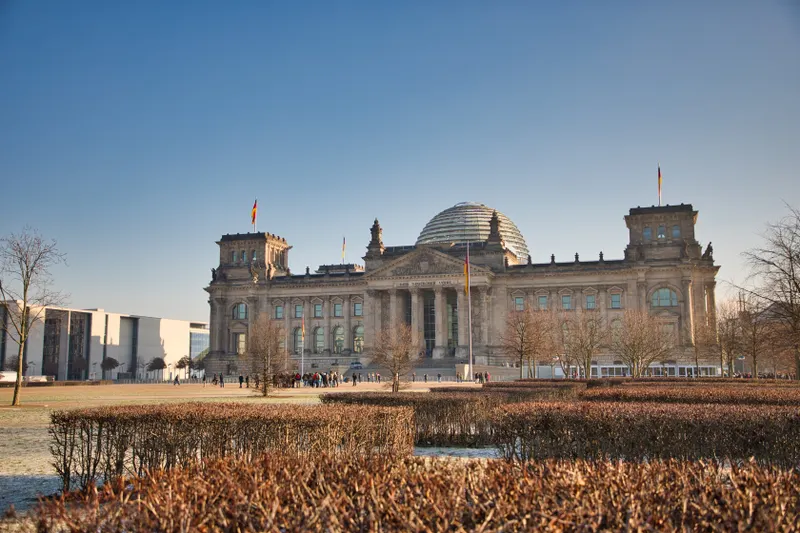
A Landtag president chairs debates and represents the chamber. It is not the post that runs the state. That job belongs to the minister-president, and there the vote has not yet taken place. The state constitution sets no deadline for electing one, the Polish think tank Centre for Eastern Studies (OSW) noted after the September 6 election.
So the Rausch vote is better read as a rehearsal. For a month, the question was whether Germany's "firewall," the agreement among established parties not to cooperate with the AfD in ways that give it power, would hold in practice. The mainstream parties kept it on paper. It took only a small party and a handful of anonymous ballots to show that a Landtag has more than one way around it.
The seat math that decides what comes next
The September 6 election gave the AfD 43.8 percent of the vote and 39 of 83 seats, with the CDU at 17.2 percent and 15 seats, according to OSW. Wikipedia's tally of the new Landtag lists the SPD, the Left and the Greens at eight seats each and the BSW at five. A majority needs 42.
That means the AfD is three seats short, and the BSW's five are the obvious bridge. Ulrich Siegmund, the AfD's candidate for minister-president, said he would stand only if he can assemble a stable majority and ruled out a minority cabinet. The BSW said after the election it would back neither Siegmund nor the CDU's Sven Schulze, and its federal leader Amira Mohamed Ali floated a non-partisan minister-president governing with shifting majorities, according to Wikipedia's account of the crisis.
The Rausch vote suggests that position may be less fixed than it sounded. A party that says it will back neither candidate for the top job but helps the AfD to the second-highest one has shown how it prices cooperation. Whether it extends the deal is the open question.
Why Berlin is watching
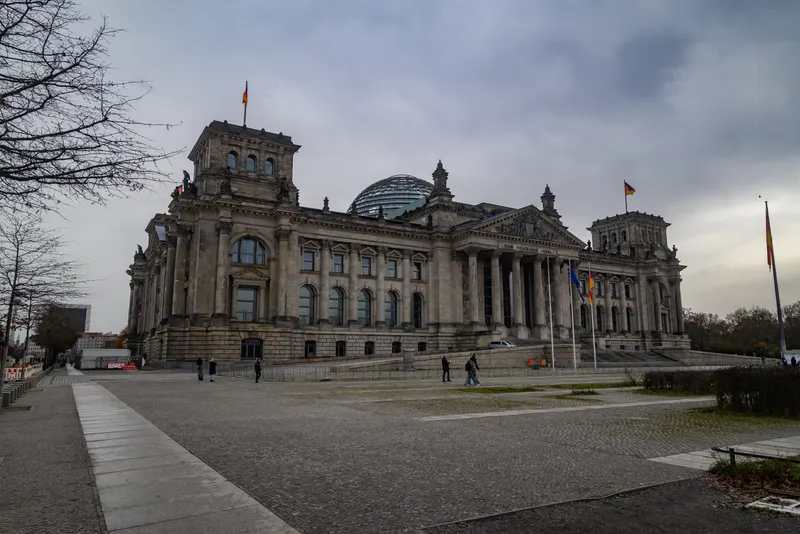
The fall of the CDU in Saxony-Anhalt is a national story. The party led every state government there since 2002 and won no constituency seat this time, as Wikipedia's account of the election records. Chancellor Friedrich Merz said after the result that Germany's institutions were resilient and stable, CNBC reported on September 7.
National numbers do not make that comfortable. The PolitPro polling aggregator's weighted average as of October 7 shows the AfD at 28.2 percent, 8.6 points ahead of the CDU/CSU at 19.6 percent, and puts Merz's approval at around 10 to 11 percent, a record low for a German chancellor in its series. These are aggregator figures, not an official count, but they point in a single direction.
For the CDU the dilemma is stark. Voting with the AfD, even for a post like this, risks the party's identity. Refusing to deal while polling at 17 percent in the state risks leaving it with no influence at all.
What to watch
Three things will show whether Tuesday was an exception or the start of a pattern. The first is whether the four or more votes beyond AfD and BSW can be identified, since CDU defectors would be a separate crisis for Merz's party. The second is whether the BSW attaches conditions to anything beyond the presidency. The third is whether a minister-president vote is even scheduled, given that nothing forces one.
The risk to the firewall was never a single dramatic vote. It was always a series of small, deniable ones, and one of them just passed.
Written by
Dr. Anand Sharma
Deep Understanding of domestic and international policy.