Blogerroom
Google Renames Lake Ontario 'Lake America' for US Users
Google Maps now shows "Lake America" for US users following Trump's order, while Doug Ford unveiled a billboard defying the change.
A search bar becomes the new battleground
Three days after President Trump signed an executive order renaming Lake Ontario "Lake America," the fight over what to call the lake moved from a signing ceremony in the Oval Office to something far more consequential for how ordinary people actually experience the change: a search box. Google confirmed over the weekend that it updated Google Maps to display "Lake America" for users searching from the United States, while users in Canada still see "Lake Ontario," and users everywhere else see both names listed together. As of Sunday afternoon, anyone in the U.S. searching for Lake Ontario on Google Maps simply couldn't find it under that name anymore.
The company explained its reasoning in a Saturday blog post: "The U.S. Geographic Names Information System has formally changed the name for 'Lake Ontario' to 'Lake America' in the United States. Since we update Google Maps to reflect name changes in official government sources, this update is reflected in Maps." That's the identical justification Google gave last year when it complied with Trump's order renaming the Gulf of Mexico the Gulf of America, and it sets up the same asymmetry this time around: the federal renaming order itself only controls how U.S. government agencies refer to the lake, but a company the size of Google choosing to follow that federal database gives the name change reach into hundreds of millions of everyday map searches that no executive order could achieve on its own.
Not every map agrees
Google's decision is notable partly because it wasn't unanimous among major mapping platforms. As of Sunday, both Apple Maps and Waze, a Google-owned navigation app with its own separate branding, continued to display "Lake Ontario" rather than adopting the new name. That split matters beyond simple trivia. It shows that "official" government terminology and default map terminology aren't the same thing, and that private companies retain real discretion over whether to fold a federal renaming decision into their own products at all. Google's stated policy, to mirror the Geographic Names Information System automatically, is a choice, not a legal requirement, and the fact that its own subsidiary Waze hadn't made the same switch by Sunday afternoon underscores how much latitude companies actually have here.
Ontario's answer: a billboard, not a lawsuit
Canada's most visible response arrived not through diplomatic channels but through a large sign planted directly on the shoreline. On Saturday, Ontario Premier Doug Ford unveiled a billboard at the Fifty Point Conservation Area in Grimsby, Ontario, reading "Lake Ontario, Now and Always" in both English and French, positioned along a route many American travelers use when visiting Canada. Ford didn't stop at the sign. In a video posted to social media standing in front of it, he said: "Let's be clear: Long before President Trump, this lake was called Lake Ontario. And long after President Trump is gone, it will still be called Lake Ontario." He added a sharper line aimed directly at the president's rhetoric: "We're resilient and we're strong Canadians who are always going to protect our sovereignty, always, and we'll never ever back down from a bully, ever."
Ford's billboard echoed language Canadian Prime Minister Mark Carney had already used the week before, when he posted on X that "Canadian women and men know that things must be called by their name, and this lake is called Lake Ontario, today and forever." The consistency between Ford's and Carney's messaging, both landing on nearly identical phrasing about permanence and naming, suggests a coordinated communications strategy rather than two officials independently reaching for the same rhetorical device, treating the renaming less as a policy fight to litigate and more as a symbolic one to simply outlast.
Why this keeps landing on top of an active trade war
None of this is happening in a vacuum, and the timing keeps reinforcing that. Trade talks between the U.S. and Canada collapsed at midnight roughly a week before Trump's renaming order, triggering 50% U.S. tariffs on a broad range of Canadian goods and prompting Carney to promise dollar-for-dollar retaliation. Trump made the connection between the lake and the trade fight explicit himself, posting on Truth Social Sunday that "Canada has been ripping us off for years, NO LONGER!" alongside continued commentary on the renaming.
That layering, a genuine economic dispute involving tens of billions of dollars in tariffs, running concurrently with a symbolic fight over what to call a lake, creates an unusual dynamic where the more emotionally resonant story, a name change everyone can see on their phone, risks overshadowing the tariff numbers that actually carry material economic consequences for businesses and consumers on both sides of the border. Whether that's a deliberate distraction or simply how these disputes tend to play out in an era of highly visible digital products, the practical effect is the same: more people are likely to notice their map app changed a lake's name than are likely to track the specific tariff schedule affecting steel, aluminum, and dairy products between the two countries.
What the renaming actually does and doesn't accomplish
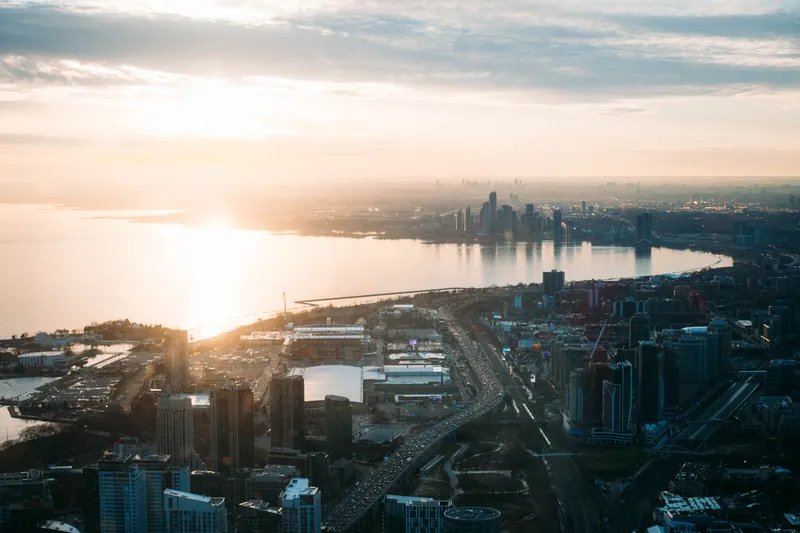
It's worth being precise about what changed here, because the scope is genuinely narrow even as the visibility is wide. Trump's executive order only controls how the U.S. federal government refers to the lake in its own maps, documents, and databases. It carries no legal authority over Canada, over private companies, or over international usage generally. Google's decision to mirror that federal database extends the name's practical reach dramatically, since Google Maps is likely the single most-used mapping product among American internet users, but it's still a corporate choice layered on top of a narrow federal directive, not a binding international renaming.
Trump himself has signaled the renaming campaign isn't finished. Referencing his earlier Gulf of America order alongside the Lake Ontario change, he said: "We have a gulf, and we have a lake, now all we need is an ocean," floating the idea of extending the practice to the Atlantic or Pacific. Whether that's a serious next step or simply rhetorical momentum from a fight that's clearly generated more attention than the administration may have expected, Sunday's developments made one thing clear: corporate compliance, not government authority alone, is what determines how far a symbolic renaming decision actually travels into the world.
Written by
Dr. Anand Sharma
Deep Understanding of domestic and international policy.