Blogerroom
Chicago Rejects Trump's Offer After Deadly Weekend
Chicago and Illinois leaders again rejected Trump's federal help after a Labor Day weekend left 54 shot, reigniting a legal fight already lost once.
A familiar fight reignites over a violent weekend
President Trump renewed his push to send federal law enforcement into Chicago this week after a Labor Day weekend left at least 54 people shot and 8 dead across the city, a toll Illinois officials confirmed came from 37 separate shooting incidents, most without a suspect in custody. "Chicago violence is unchecked and at record levels. It has never been worse!" Trump wrote on Truth Social, adding, "The city will die if the Federal Government, a fine tuned crime fighting machine, is not invited in, by the Mayor or Governor, to HELP. I am awaiting the call."
Illinois Gov. JB Pritzker and Chicago Mayor Brandon Johnson, both Democrats, rejected the offer within hours, extending a standoff between the city and the administration that has now run for the better part of a year.
Where the numbers actually stand
Trump's characterization of Chicago violence as being "at record levels" doesn't match the city's own crime data. According to the Chicago Tribune, the city recorded 297 homicides through early September 2026, and Chicago's homicide rate has dropped substantially over the past several years, continuing a downward trend that predates this administration. That doesn't mean the city's violence problem is resolved: Chicago's homicide rate remains among the highest of any major American city, and the Labor Day weekend toll was genuinely severe by any standard, including the city's single largest mass shooting of the year, a Saturday incident that wounded 15 people in Washington Park.
Both things can be true simultaneously: Chicago's violent crime has been trending downward for years, and any single weekend can still produce a toll as devastating as this one did. The disagreement between Trump and Illinois officials isn't really about whether Saturday's shootings were serious, both sides agree they were, it's about whether the city's underlying trajectory justifies federal intervention, and about who actually has the authority to make that call.

What Illinois officials actually said
Pritzker's office responded through a statement that didn't mince words: "Governor JB Pritzker would like to set the record straight: this is the same federal administration that launched a lawless, lethal invasion on Illinois and gutted funding for gun violence prevention in the U.S." Trump, the statement continued, "is not fighting crime, he is committing and enabling it." Johnson made a similar argument centered on funding rather than personnel, saying Trump "has an open invitation to invest in the people of Chicago, and we've called for these investments repeatedly," before noting the administration had "removed over $800 million out of gun violence reduction programs" and "cut the ATF budget by 30%."
That funding argument reframes the entire dispute. Rather than simply refusing help, Johnson and Pritzker are arguing the administration already withdrew resources that were actively reducing violence, then offered a different, more visible form of intervention, National Guard troops and federal law enforcement, once crime numbers gave that offer political value. Whether that framing is fair depends heavily on how directly the specific programs Johnson referenced connect to Chicago's violence trends, a causal question that's genuinely difficult to settle with certainty either way.
An executive order that raises the legal stakes further
Beyond rejecting the offer verbally, Johnson signed an executive order over Labor Day weekend explicitly barring Chicago police from cooperating with federal authorities or the National Guard on patrols, arrests, immigration enforcement, or other law enforcement activities. "We will protect our Constitution, we will protect our city, and we will protect our people," Johnson said. "We do not want to see tanks in our streets. We do not want to see families ripped apart."
That order doesn't just decline federal help; it actively blocks local-federal coordination even in scenarios where individual officers might otherwise be willing to cooperate. It's a significant assertion of local control that, depending on how broadly it's enforced, could complicate federal law enforcement operations in the city well beyond the immediate National Guard dispute, including ongoing immigration enforcement activity that has separately strained relations between Chicago and the administration for months.
A fight the administration has already lost once
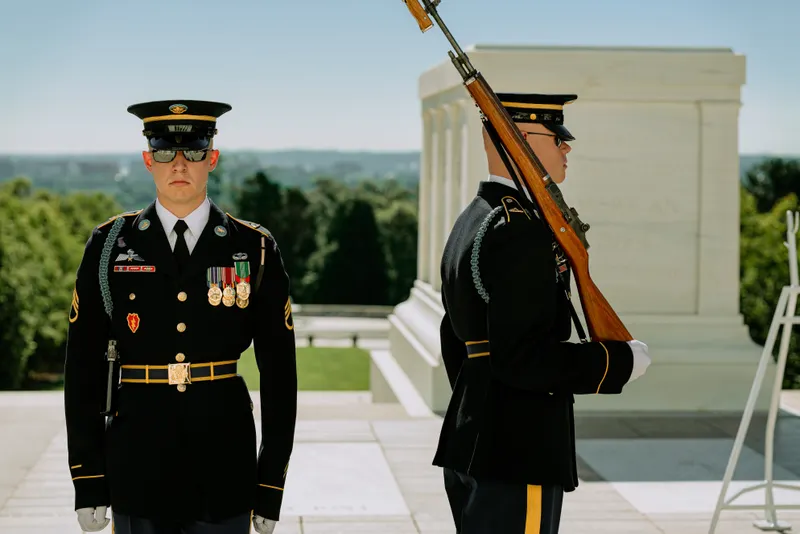
This isn't the first time this specific confrontation has played out, and the legal history matters for understanding why Pritzker and Johnson feel confident rejecting the offer again. The Trump administration previously attempted to federalize Illinois National Guard troops for deployment to Chicago, and the Supreme Court blocked that deployment in December, siding with a lower court ruling that had already been upheld on appeal. That ruling left the administration without a direct legal path to force troops into Chicago over the objections of state and local officials, a genuinely significant constraint that distinguishes Chicago's situation from other cities where the administration has moved more unilaterally.
That legal reality is precisely why Trump's current framing, waiting for Pritzker or Johnson to "call" and formally request assistance, matters so much. Absent that invitation, or a fresh legal theory the courts haven't already rejected, the administration's practical options for compelling federal intervention in Chicago remain limited, a dynamic Pritzker seems keenly aware of given how firmly he's continued rejecting the offer despite months of public pressure.
A more complicated political picture than a clean partisan split
The dispute isn't drawing purely partisan reactions. Some commentary, including from outlets not typically sympathetic to the administration, has criticized Johnson's response as insufficiently focused on the underlying violence itself, arguing that rejecting federal assistance without a clearly articulated alternative plan risks leaving Chicago residents in dangerous neighborhoods without adequate protection regardless of who's ultimately responsible for the funding cuts or crime trends driving the debate. That criticism doesn't necessarily validate the specific federal intervention Trump has proposed, but it reflects genuine dissatisfaction extending beyond the administration's usual critics about whether either side's current approach is actually reducing the violence Chicago residents experience directly.
What happens from here
With the Supreme Court's December ruling still standing and Illinois officials showing no sign of requesting federal assistance, the most likely near-term outcome is continued rhetorical escalation without an actual change in enforcement posture on the ground, similar to the pattern that has played out repeatedly since Trump first threatened National Guard deployment to Chicago last year. That doesn't mean the underlying tension is resolved, only that it remains in the same legal and political holding pattern it's occupied for months: a president publicly pressuring local officials to request help they've consistently declined, and local officials who retain, for now, the legal standing to keep declining it. Whether another particularly violent weekend eventually shifts that political calculus, for either side, remains the open question hanging over a dispute that has already outlasted several previous flashpoints without resolution.
Written by
Dr. Anand Sharma
Deep Understanding of domestic and international policy.