Blogerroom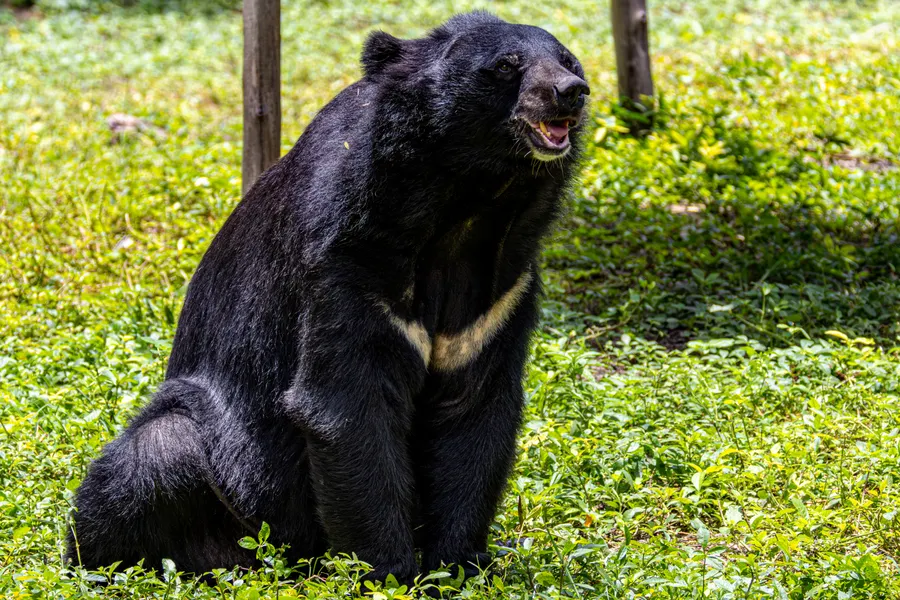
Japan Tests Bear Coexistence as Culling Tops 14,000
As Japan's record bear cull tops 14,000, one Nagano scientist is testing whether coexistence can cut deadly encounters instead.
A sensor goes off in the forests of Ina
The sensor sounded, and wildlife scientist Akiko Takii hurried through the forests of Ina, in Japan's Nagano Prefecture, toward a bear trap she'd set days earlier. Inside the cage, a young Asiatic black bear thrashed against the wire. "It's a small bear, I think, about a year and a half old," Takii said, estimating its weight at roughly 15 kilograms. "It must have just parted from mother." With no mother in sight and the bear too small for a GPS collar, Takii's team drew blood and fur samples, then released the animal back into the forest it came from.
That single, low-key encounter, tagging, sampling, releasing, is the quiet alternative Takii and colleagues are testing against a much louder national response. Since April 2025, Japan has killed more than 14,000 bears, including roughly 12,000 Asiatic black bears and 2,000 brown bears, according to government data, as the country confronts what officials and media are calling its worst wildlife crisis in decades.
Why the crisis reached this scale
The scale of Japan's bear problem is not in dispute. Bears killed a record nine people during the 2025 fiscal year, according to the Environment Ministry, more than the previous high of six set the year before, with dozens more injured in encounters that increasingly happen in daylight, near homes, schools, and shopping areas rather than deep wilderness. Experts point to a convergence of factors driving bears toward human settlements: poor acorn and beech nut harvests, which researchers link partly to climate change, combined with Japan's accelerating rural depopulation.
Shuichi Kitoh, a Tokyo University professor emeritus of environmental ethics, described the underlying dynamic plainly: "Due to depopulation, people are no longer involved in nature and the forest like they were before." As rural communities empty out, the buffer zones, managed farmland, and actively maintained forest edges that once separated human settlements from bear habitat have gone untended, letting both forest and bear range creep closer to towns that used to keep them at a distance.
The scale, and the risk, of the government's response
Japan's dominant policy response has been culling, and the numbers involved are significant enough to worry conservationists. Of the roughly 14,000 bears killed between April 2025 and January 2026, about 12,000 were Asiatic black bears, a species the IUCN Red List classifies as vulnerable to extinction, with fewer than 60,000 estimated remaining worldwide. Yuko Muroya, chair of the Japan Bear and Forest Society, a conservation and coexistence-focused organization, put the risk starkly: "If this level of trapping continues, we believe regional extinctions are a real possibility. We feel a profound sense of crisis."
The trend line makes that warning harder to dismiss. Between 2008 and 2018, Japan culled between 1,000 and 4,500 bears annually alongside roughly 500 taken through legal sport hunting each year. That number has climbed sharply since: more than 9,000 bears were killed in the 2023-24 fiscal year alone, itself a bad food year that produced six human fatalities. Even after the unprecedented 2025 cull, attacks have continued into the current year, with at least six more deaths and dozens of additional injuries reported, raising a genuine question about whether mass culling is actually solving the underlying problem or simply reducing bear numbers without addressing what's driving them into populated areas in the first place.
What Nagano is doing differently
Nagano Prefecture offers a instructive contrast. Last year, the prefecture recorded just 11 bear-related incidents, including one death, a markedly lower toll than northern prefectures managing similar bear populations. Akita, further north, recorded 59 encounters and four deaths over the same period, while Iwate reported five fatalities. Nagano's approach layers several tools together rather than relying primarily on lethal control: ongoing population monitoring through trapping and sampling, relocation of bears like the young female Takii released, fencing around vulnerable agricultural and residential areas, trained detection dogs, and direct public education, including visits Takii makes to local schools.
That education component appears to be shifting local attitudes in a measurable way. At one school where Takii had spoken to students about bear behavior, principal Hiroshi Aruga described a shift toward reassurance rather than fear: "Takii understands wild bear behavior in this area well, and she assures us they are not aggressive." That kind of trust, built through a scientist who actually knows the local bear population well enough to estimate an animal's age at a glance, is difficult to manufacture through blanket culling policies applied uniformly across prefectures with very different bear ecology.
The trade-off nobody has fully resolved
None of this means Nagano's model is a simple, exportable fix for the rest of Japan. Coexistence-based management requires sustained funding, trained personnel like Takii, and enough staffing to actually track, relocate, and monitor individual bears rather than removing them entirely, resources that shrinking, aging rural prefectures may struggle to maintain as depopulation continues eroding the very human presence that once kept bear and human territory naturally separated. Culling, by contrast, is faster and requires less specialized infrastructure, which is likely part of why it has become the default response nationally even as conservationists warn about its long-term ecological cost.
The Environment Ministry itself has tried to reframe the public conversation around this trade-off, describing the situation as a wildlife management crisis rather than, in its own framing, a war on bears. Officials have urged residents to avoid forest edges, secure garbage and food waste that can attract hungry bears toward towns, and report sightings immediately rather than confronting animals directly. But for frightened residents in Japan's north, where fatalities have concentrated most heavily, the distinction between crisis management and something closer to an extermination campaign can feel academic when a decades-old resident is mauled while gathering mushrooms in a nearby forest.
What Nagano's approach actually tests
What makes the Nagano project worth watching isn't that it has definitively solved Japan's bear crisis; it hasn't, and 11 incidents in a single year is still 11 too many by the standards any wildlife safety program would set. What it tests is a genuinely different hypothesis than the one driving national policy: that reducing dangerous encounters and reducing bear populations are not necessarily the same goal, and that a model built around monitoring, targeted relocation, physical barriers, and public trust might achieve the first without requiring the second at anywhere near the scale currently playing out in Akita and Iwate. Whether that model can scale to prefectures with fewer resources, larger bear populations, and less institutional capacity than Nagano's is the open question hanging over Japan's broader bear policy as the current fiscal year's attack toll continues climbing.
Written by
Mr. Jitendra Bhatt
Msc in Chemistry and field researcher.