Blogerroom
Amazon Fires Surge Under El Niño While Clearing Falls
Brazil's Amazonas state logged 1,679 fires in two weeks, up 253%, as El Niño drought spreads fire even though deforestation hit a decade low.
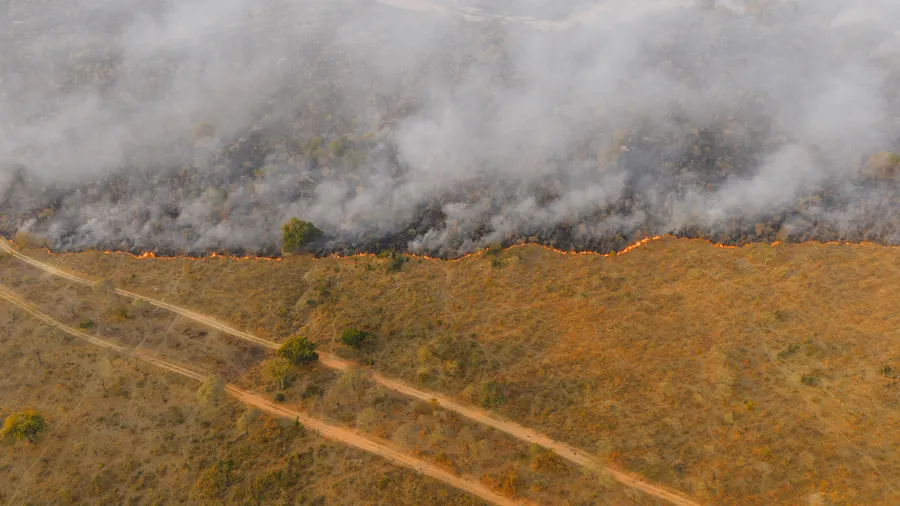
Smoke from fires on both banks of the Amazon River was thick enough on October 12 for NASA's Aqua satellite to photograph it blanketing Manaus, the capital of Amazonas state. Schools in Manaus closed that day, according to a local report. Brazil's satellite monitoring system recorded 1,679 fires in Amazonas state in the first two weeks of October, a 253 percent increase from the same period last year, Reuters reported. The surprising part is what is not driving them.
The count, and its limits
That two-week figure already far exceeds the 874 fires detected in Amazonas state throughout October 2025, UPI reported, citing Brazilian authorities. Across the Amazon biome, one tally of data from the National Institute for Space Research (INPE) found 9,141 detections from October 1 to 14, against 3,139 in the same days of 2025 and 7,572 in 2024.
These are counts of detections, not hectares. The same analysis notes that neither NASA's assessment nor INPE's detection numbers say how much forest has burned, and that smoke hides fires from satellites. A hotspot is a heat signal seen on a satellite pass. It can be a pasture fire or a forest fire, and a single large blaze can be counted once or many times.

A fire season, not a clearing season
Deforestation is not the main driver this year. INPE reported in July that Amazon deforestation had fallen to a decade low in the first half of the year. Fires and clearing measure different things, and this year's fires appear to follow the weather.
Douglas Morton, an Earth system scientist at NASA's Goddard Space Flight Center, explained that nearly all fires in the Brazilian Amazon are human-caused, and that lightning accounts for less than 1 percent of ignitions in this humid region. In normal years, a damp forest floor stops a farmer's fire at the edge of the pasture. Under severe drought, the same fire, lit to clear pasture or burn crop residue, can run into the dried understory of the forest.
That is the mechanism. The ignition is human, the spread is climatic, and a policy that reduces clearing cannot by itself reduce a drought-fed blaze.
NASA's cascade
Morton describes the pattern as a cascade of fire across the tropics that accompanies El Niño's changes in rainfall. It tends to start with drought and peat fires in Indonesia and then move to the central and eastern Amazon, according to NASA's analysis as summarized by The Eastern Herald. In his words, the burning around Santarém and Manaus is part of that sequence, and many of the same forests that burned in the El Niño years of 2015 and 2023 are burning again, Gizmodo reported.
Satellites are also missing some of it. NASA researchers detected about 40 percent more possible fire hotspots near Santarém than the standard Fire Information for Resource Management System (FIRMS) data show, according to a NASA summary distributed through ScienceDaily. The affected area runs from the forests around Manaus and Santarém to the mouth of the Amazon. Fires that burn under the canopy, or under smoke, can escape standard detection, which means official counts may understate the problem.
A larger El Niño story
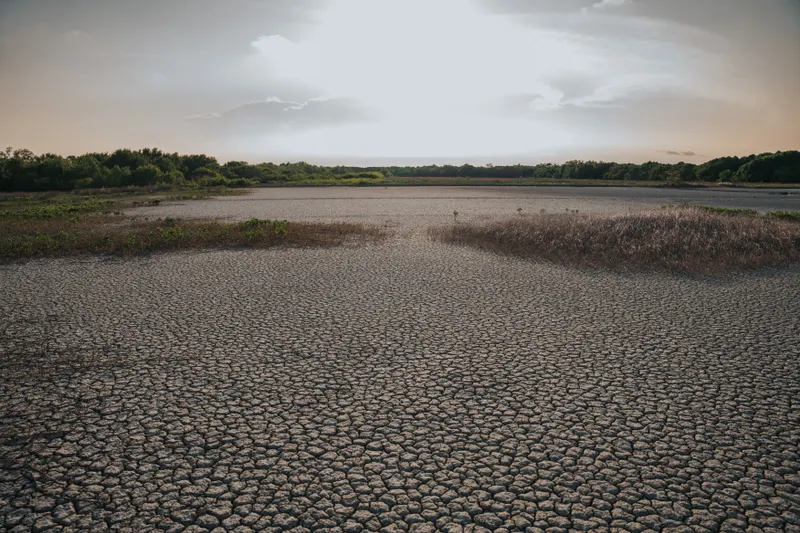
The Amazon is one front in a global pattern. The Copernicus climate service logged an El Niño record for September, according to The Eastern Herald, and Gizmodo described the event as the strongest on record, still intensifying. Its effects reach far beyond Brazil. The Great Barrier Reef is facing a calm-weather trap as El Niño builds, and Carbon Brief noted in its coverage of the UN's emissions gap report that the ongoing "super" El Niño is likely to push land-use emissions up in 2026.
Those emissions link back to the Amazon in a direct way. Forests that have already burned are widely regarded as more vulnerable to burning again, which is why the return of fire to the same areas as 2015 and 2023 matters. The fires are both a result of climate extremes and a contributor to them.
What the numbers do not say
It would be easy to turn this into a story of collapse. The data do not support that yet. As INPE's July data show, deforestation was falling before the fire surge began. And the October counts, while high, are being compared with 2025, when detections were well below 2024's. A single month, however severe, is not a whole season.
What the data do show is a forest that is more exposed than usual. NASA says the severity of this year's drought is what makes 2026 particularly dangerous, turning routine human-started fires into wildfires. The same smoke that fills Manaus is a public health problem on its own, whatever it means for carbon.
What to watch
Three things will settle how bad this becomes. The first is rainfall: El Niño is still developing, and the fire season ends when the rains return. The second is burned-area data, which will take weeks to arrive and will show whether detections translated into large losses of forest. The third is whether the same pattern shows up in other tropical regions, as NASA's cascade model predicts.
For policy, the lesson is uncomfortable. Brazil has shown it can reduce clearing. A fire season driven by drought is a harder problem, because it needs firefighting capacity, fire bans during the driest weeks and a forest that is less flammable to begin with. None of those can be switched on once the smoke is already over the city.
---
Written by
Mr. Jitendra Bhatt
Msc in Chemistry and field researcher.