Blogerroom
Doctors Are Targeting the Wrong PSA Level, Study Finds
A Cedars-Sinai study found the effective PSA target for prostate cancer treatment is 10 times lower than what most physicians aim for.
A number doctors have been getting wrong for years
For men undergoing hormone therapy for metastatic prostate cancer, one blood test result has quietly been misinterpreted as good news for longer than it should have been. A study led by researchers at Cedars-Sinai, published in the journal Cancer, found that the prostate-specific antigen level doctors should actually be targeting to gauge treatment success is roughly ten times lower than what most physicians currently aim for. The gap between assumption and evidence here isn't subtle, and it carries direct implications for how aggressively doctors treat patients whose cancer looks, by the wrong metric, like it's already under control.
"PSA levels drop dramatically when patients receive hormone therapy," said Stephen Freedland, MD, professor of urology and director of the Center for Integrated Research in Lifestyle and Cancer at Cedars-Sinai, and the study's first author. "Our study found that the optimal PSA level was less than 0.2 nanograms per milliliter of blood."
Why the wrong target matters so much in practice
The problem Freedland's team set out to address isn't abstract. Hormone therapy, more formally androgen deprivation therapy, is the backbone treatment for metastatic castration-sensitive prostate cancer, and it reliably drives PSA levels down regardless of how well the underlying cancer is actually responding. That creates a genuine clinical trap: a PSA reading that looks reassuringly low can still be well above the threshold that actually predicts good long-term outcomes, and a physician working from an outdated benchmark might conclude a patient is doing fine when there's still substantial room, and substantial benefit, to be gained from intensifying treatment.
Freedland was direct about how widespread this miscalibration has become in everyday practice. "Many physicians don't offer patients additional treatment because hormone therapy alone lowers their PSA levels below 2 nanograms per milliliter, which we previously showed was many physicians' target level," he said. "We hope these data will change that practice." That's a tenfold gap between the commonly used benchmark, 2 ng/mL, and the level this study identifies as actually predicting the best outcomes, less than 0.2 ng/mL, a difference large enough to change real treatment decisions for a substantial share of patients.
The data behind the new threshold
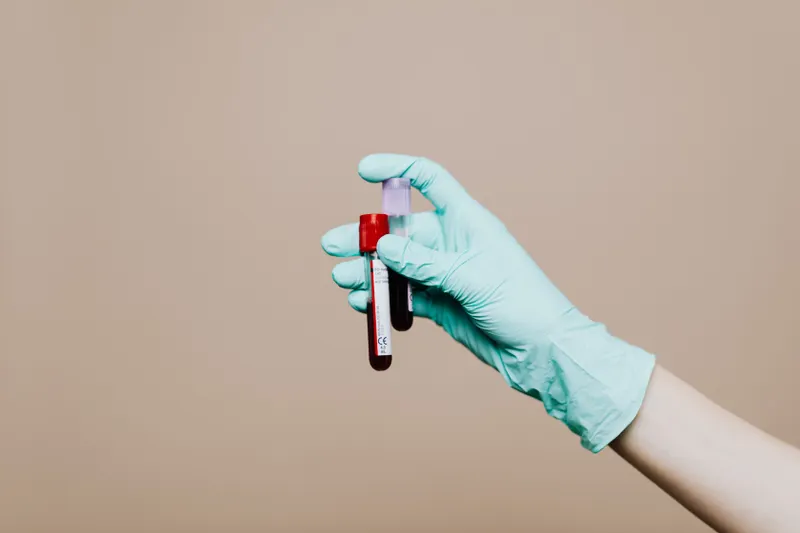
The study drew on real-world data from the Veterans Health Administration, analyzing 4,890 patients with metastatic hormone-sensitive prostate cancer who received androgen deprivation therapy, either alone or combined with additional treatments, between 2018 and 2023. Researchers used a 9-month landmark to examine the relationship between how far PSA levels dropped and subsequent overall survival, applying statistical models adjusted for other factors that could influence outcomes.
The results were striking in their magnitude. Patients whose PSA levels dropped below 0.2 ng/mL within nine months of starting treatment were 54% less likely to die over roughly two years of follow-up than patients whose levels didn't reach that threshold, and that survival benefit held regardless of whether their PSA had also dropped by at least 90% from baseline. Freedland called the scale of that effect striking in its own right: "It is pretty profound when you think about cutting the risk for death in half. It is gratifying to see how good outcomes can be among patients who receive appropriate treatment and reach that threshold."
Real-world confirmation of what trials already suggested
It's worth being precise about what this study adds versus what was already known. Multiple phase 3 clinical trials had already pointed to 0.2 ng/mL as the more clinically meaningful threshold for assessing treatment response in metastatic castration-sensitive prostate cancer, and Freedland was candid that the underlying finding itself isn't new. "Are these findings surprising? No. Are they novel? No," he said. "But I think they are definitely impactful." What was missing, until now, was confirmation using real-world data collected outside the controlled conditions of a clinical trial, evidence drawn from actual patients receiving actual care across a real healthcare system, rather than a carefully selected trial population.
That distinction matters more than it might sound. Clinical trial results, while rigorous, are generated under conditions that don't always mirror everyday medical practice, and physicians are sometimes slower to update clinical habits based on trial data alone. Real-world data carries a different kind of persuasive weight precisely because it reflects the population and circumstances doctors are actually treating, which is exactly why Freedland framed the goal of publishing this study as a communication problem as much as a scientific one. "Clinical trial data have supported using 0.2 [ng/mL], but now we have real-world data to show that this should be the target to achieve better outcomes for our patients," he said. "We need to get the message out to clinicians because they are not hearing this as loudly and as clearly as we believe they should."

What "intensifying treatment" actually means for patients
The practical stakes of this threshold gap come down to a specific clinical decision point. A patient whose PSA falls to, say, 1.5 ng/mL after starting hormone therapy looks like a treatment success under the older, more lenient 2 ng/mL benchmark, potentially leading a physician to continue the current regimen without adding anything further. Under the evidence this study reinforces, that same patient sits well above the 0.2 ng/mL threshold associated with meaningfully better survival, a gap that could represent a missed opportunity to intensify treatment, whether through additional hormone-pathway-targeting drugs, chemotherapy, or other combination approaches now available for metastatic castration-sensitive disease.
That kind of treatment intensification decision connects to a broader shift already underway in how prostate cancer gets managed at the molecular level. Where this PSA threshold research focuses on measuring how well an existing treatment is working, other recent prostate cancer research has focused on making tumors more vulnerable to treatment in the first place, including work restoring an immune-recognition marker on prostate cancer cells using CRISPR, turning tumors that had learned to evade the immune system back into visible targets. Together, these two lines of research reflect the same underlying push in modern oncology: treat more precisely, whether that precision comes from better biomarker thresholds or from re-engineering how a tumor interacts with the immune system.
What still isn't settled
Freedland's team is careful about the limits of what this kind of real-world observational data can actually prove. The study establishes a strong association between reaching the lower PSA threshold and better survival, but observational data of this kind cannot fully rule out the possibility that patients who naturally responded better to treatment for other, unmeasured biological reasons were also more likely to reach that lower threshold in the first place, rather than the threshold itself being the entire causal story. That's a standard limitation of large real-world datasets, one the researchers themselves would be the first to acknowledge, and it's part of why the study frames its contribution as reinforcing and popularizing an already trial-supported threshold, rather than establishing an entirely new one from scratch.
Why this is a message problem, not a science problem
What makes this study worth genuine clinical attention isn't a discovery of new biology; it's a documented gap between what the best available evidence already supports and what's actually happening in exam rooms. Freedland's repeated emphasis on getting "the message out to clinicians" signals that the researchers see this primarily as a dissemination challenge rather than an open scientific question. For a disease affecting hundreds of thousands of men, where a treatment decision informed by the wrong benchmark could mean missing a window to meaningfully improve survival odds, closing that gap between known evidence and everyday practice may end up mattering more for patient outcomes than any single new drug or technology, simply because it requires nothing more than physicians re-checking a number they've been trained, for years, to read the wrong way.
Written by
Dr. Anand Sharma
Doctor and science communicator.