Blogerroom
Mistral Raises €3B, Europe's Largest Tech Funding Ever
Mistral raised €3 billion at a €21 billion valuation, Europe's largest-ever tech funding round, though it still runs on Nvidia chips.
Three years ago, Mistral didn't exist. On September 8, 2026, the Paris-based AI lab announced a €3 billion Series D funding round, pushing its post-money valuation above €21 billion, roughly $24.4 billion, and making it, by the company's own description, the largest equity fundraising round ever completed by a European technology company.
Samsung Electronics led the round with a commitment of roughly €1 billion, joined as co-leads by the EQT-managed Scaleup Europe Fund and existing backer PSG Equity. New investors this time include private equity firm Advent, funds managed by BlackRock, and, notably, the Grand Duchy of Luxembourg, participating directly as a sovereign state investor. The valuation nearly doubles Mistral's prior mark of €11.7 billion, set almost exactly a year earlier in a Series C round led by Dutch chipmaking equipment giant ASML.
The Biggest Check Europe's Tech Industry Has Ever Written
Mistral was founded in April 2023 by Arthur Mensch, Guillaume Lample, and Timothée Lacroix, and hired its first employee just two months later. Reaching a €21 billion valuation within three years of that starting point is an extraordinary trajectory by almost any standard, and it arrives at a moment when European policymakers have been actively worried about the continent falling behind American and Chinese AI labs. Mensch framed the company's founding philosophy directly in the funding announcement, arguing that who can adapt intelligence to their own needs matters as much as how powerful it is, and that this belief is why Mistral built its models on an open-weight foundation from day one.
That framing matters because Mistral has positioned itself specifically as Europe's answer to a growing dependence on American AI infrastructure, an argument that resonates strongly with governments and investors who've watched compute and model access concentrate heavily inside a handful of US companies over the past two years.

Who's Actually Behind the Money
The investor list here does real political and strategic work beyond just the dollar figures. The Scaleup Europe Fund, making its first-ever investment with this round, is a Brussels-backed vehicle anchored by a €1 billion European Commission commitment, alongside founding investors including Novo Holdings, the European Investment Fund, CriteriaCaixa, Santander's Mouro Capital, Allianz, and Wallenberg Investments, with EQT selected as fund manager through a competitive public process. Having that fund's very first check go to Mistral is a meaningful institutional endorsement, effectively the European Union's own public-private innovation vehicle betting its debut investment on the continent's most prominent AI lab.
Samsung's participation adds a different kind of signal, an Asian technology giant putting serious capital behind a European AI champion rather than exclusively backing American labs, a diversification move that fits Samsung's own broader strategy of spreading exposure across multiple frontier AI bets globally, not unlike South Korea's own aggressive push to build sovereign AI capability through companies like LG.
What Mistral Is Becoming, Beyond Just Models
The funding announcement makes clear Mistral sees its future extending well past building AI models alone. The company describes itself increasingly as a full-stack provider, combining open-weight models with dedicated compute infrastructure and deployment products, aimed at letting customers maintain genuine control over their own data rather than routing everything through a third party's cloud. That's effectively a "neocloud" positioning, the same category driving enormous recent valuations for infrastructure-focused AI companies.
Mistral currently operates in 20 countries and supports more than 125 enterprise customers, and CFO Johan Bergqvist told Reuters the company is on track to reach $1 billion in annual recurring revenue by the end of 2026. Asked about a potential public listing, Bergqvist described an IPO as always an optionality for the company going forward, while being clear there's no immediate timetable attached to that possibility.
The Paradox Baked Into "Sovereign" AI
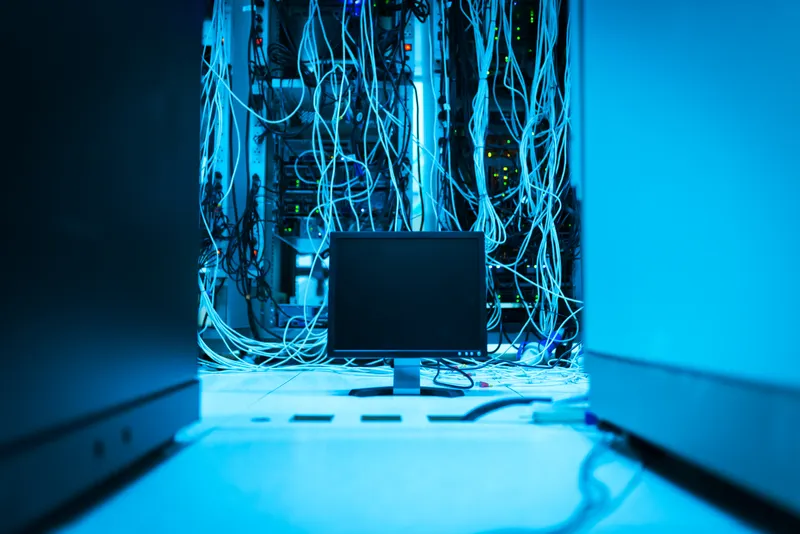
Here's the tension sitting underneath Mistral's entire pitch. The company markets itself around sovereignty, giving European governments and businesses AI infrastructure they control independently of American tech giants. But Mistral's actual physical computing backbone tells a more complicated story. Its flagship data center at Bruyères-le-Châtel, south of Paris, runs on 13,800 Nvidia Grace Blackwell GB300 GPUs across 44 megawatts of capacity, and a second site at Les Ulis is adding another 10 megawatts through the second half of 2026. Mistral has also arranged for cloud provider Scaleway to procure an additional 18,000 Nvidia GB200 GPUs on its behalf.
That's not a minor detail. According to the CNAS Sovereign AI Index, Nvidia hardware powers 45% of all tracked sovereign AI projects globally, meaning Mistral's situation isn't unique so much as representative of a structural reality facing every country's AI sovereignty ambitions right now: genuine independence at the software and data-governance layer is achievable, but hardware independence remains almost entirely out of reach, because the physical chips and memory underpinning every AI system, regardless of which country's flag flies over the data center, still trace back overwhelmingly to a handful of dominant suppliers. Mistral's version of sovereignty, in practice, means controlling how models are trained, governed, and deployed, not controlling the silicon those models actually run on.
What This Round Actually Tests for Europe
To fund its physical buildout, Mistral raised €722 million, roughly $830 million, in debt financing back in March 2026 specifically for its Paris-area data center construction, and it's targeting up to one gigawatt of total computing capacity online by 2030, a genuinely ambitious infrastructure goal that puts it in the same conversation as aggressive infrastructure-focused AI companies like Crusoe, which recently tripled its own valuation on a similar bet that physical AI infrastructure, not just model development, is where the real durable value sits.
Whether Mistral's €21 billion valuation holds up depends on questions this funding round doesn't resolve on its own: whether the company's revenue growth actually matches its infrastructure ambitions, and whether "sovereign AI" as a category proves durable enough commercially to justify valuations climbing this fast across an entire industry segment, in Europe and elsewhere. What Tuesday's announcement does confirm, regardless of how that plays out, is that European investors, alongside a very deliberate mix of Asian capital and EU public money, are now willing to write checks at a scale that would have seemed implausible for a homegrown AI lab just two years ago.
Written by
Mr. Aayush Bhatt
Software Engineer interested in how models work and where they fail.