Blogerroom
Microsoft and Nvidia Launch the Local AI PC Era Today
Microsoft and Nvidia unveiled the Surface Laptop Ultra and RTX Spark at a San Francisco event, launching PCs that run 120B-parameter AI locally.
For two years, "AI PC" meant a laptop with a neural processing unit just powerful enough to run Microsoft's Recall feature. The feature got delayed, the marketing claims didn't match real-world use, and the Copilot+ PC launch of May 2024 was widely considered a disappointment relative to what Microsoft had promised. On October 7, 2026, Microsoft held its first major Windows event since that launch, this time in San Francisco with Satya Nadella on stage alongside Nvidia CEO Jensen Huang, and the product at the center — the Surface Laptop Ultra powered by Nvidia's RTX Spark chip — is built around a genuinely different category of claim.
RTX Spark can run approximately 120-billion-parameter AI models locally on a Windows PC, with no cloud connection required. That's not a feature. It's a different computing paradigm.
What RTX Spark Actually Is
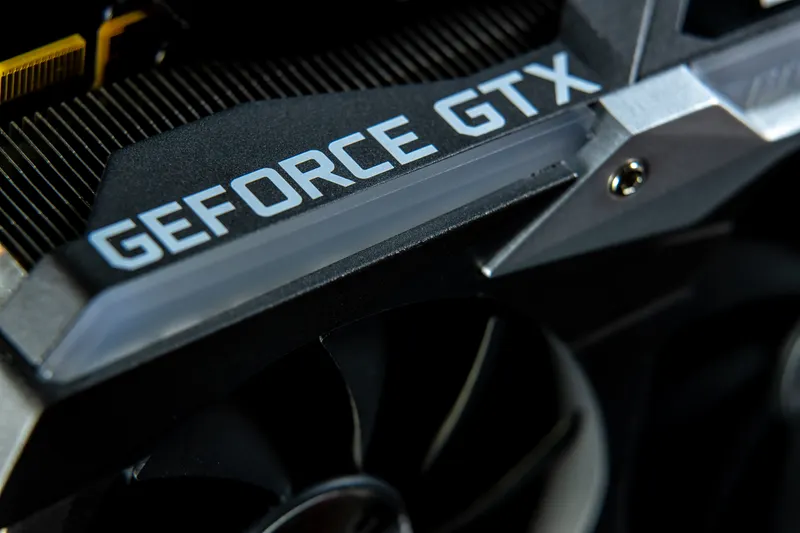
Nvidia RTX Spark is the company's first major Arm-powered chip designed for AI on Windows laptops and desktops. It pairs 6,144 Blackwell GPU cores with 20 Arm CPU cores and up to 128 gigabytes of unified memory in a single package drawing up to 80 watts — meaningfully less power than comparable discrete GPU configurations. That unified memory figure is the number that separates RTX Spark from what came before it: running a 120-billion-parameter model locally requires the entire model to fit in memory, and 128 gigabytes is large enough to hold the current generation of frontier-class models without offloading any layers to slow system RAM or storage.
The practical translation is straightforward: an RTX Spark laptop can run the same class of AI models that, six months ago, required a rented cloud GPU. That changes what "local AI" means as a product category. Previous Copilot+ PCs could run small on-device models for specific, narrow tasks. A Surface Laptop Ultra can run Claude Opus 5 or DeepSeek V4 locally, without sending any data to a server.
Two Products, Two Audiences
Microsoft unveiled two RTX Spark-based products at the event. The Surface Laptop Ultra is the consumer-facing flagship, a premium laptop that Engadget describes as otherwise a conventional premium device — the extraordinary part is what runs inside it, not its form factor. The Surface RTX Spark Dev Box is the companion desktop unit, a compact workstation aimed specifically at developers building local AI applications. Both were announced before today's event; October 7 delivered pricing, availability, and the Windows software story that ties them together.
Microsoft has listed the Surface Laptop Ultra as a pre-release product pending regulatory approval, and final availability was expected to be confirmed at today's event. The company has not yet published pricing in advance, leaving the specific cost as one of the key disclosures from the San Francisco stage.
The Windows Side of the Equation
Huang's presence alongside Nadella wasn't just brand reinforcement — it reflected the depth of engineering work Microsoft and Nvidia did together on the Windows platform specifically for RTX Spark. Windows Latest's reporting ahead of the event described several layers of that collaboration: secure AI agent execution environments that isolate locally running models from the broader system, updates to Prism, Microsoft's x86 emulation layer for Arm, to improve compatibility performance, and scheduler changes in Windows 11 to better distribute workloads across RTX Spark's heterogeneous CPU and GPU cores.
Those changes matter because the hardware capability of RTX Spark is only as useful as the software that runs on top of it. A chip that can hold a 120-billion-parameter model in memory is impressive; a chip plus an operating system that can run that model securely alongside ordinary Windows applications, switch contexts without losing model state, and keep sensitive data out of cloud logs is a product.
Two Years Since Copilot+ and Why That Matters
Microsoft is framing October 7 as a new chapter partly because the last chapter ended badly enough to need reframing. The Copilot+ PC launch in May 2024 introduced Windows machines with on-device NPUs fast enough to qualify for the Copilot+ branding, built primarily around Qualcomm's Arm-based Snapdragon X chips. The flagship feature, Recall, was supposed to create a searchable history of everything on a user's screen — it was delayed for months over privacy concerns, shipped in limited form, and never produced the "PC that remembers everything" experience Microsoft had promised. NPU-based AI performance on real tasks turned out to be narrowly applicable rather than transformative.
RTX Spark sidesteps most of those problems by starting from a genuinely more capable hardware baseline. A chip with 128 GB of unified memory isn't making modest on-device AI marginally better — it's enabling a qualitatively different category of local computation. The comparison Google has implicitly invited by simultaneously moving its Gemini free tier to its weakest available model is not accidental: if a local PC can run models of comparable quality to what a cloud service provides, the case for paying for cloud AI access becomes more complicated.
Local AI's Security Argument
The timing of this launch also intersects directly with the privacy and security concerns that have been building around AI agents all year. Apple's decision to tighten macOS Full Disk Access specifically because AI agents were reading too much user data reflects a genuine anxiety: capable AI agents on a PC need to read personal data to be useful, and sending that data to a cloud server creates a risk that local execution eliminates. An AI that runs entirely on RTX Spark hardware, using memory that never leaves the device, processes personal data in a fundamentally different privacy posture than one routing queries through a remote API.
That argument doesn't require RTX Spark to replace cloud AI entirely. It requires it to be a credible option for the users and enterprises where data sensitivity matters enough to pay a premium for local execution, a market that Microsoft's own Azure growth makes clear is very large, but also a market where many buyers would prefer not to route every AI query through Microsoft's servers in the first place.
What the Benchmark Reality Will Look Like
The honest caveat on everything announced today is the one that applied to Copilot+ as well: announced capability and experienced capability are not always the same thing. RTX Spark's technical specifications are real, and the 120-billion-parameter local model claim is verifiable in principle. Whether Windows applications actually take advantage of that capability smoothly, whether the AI agent workflows Microsoft has been describing for months ship alongside the hardware, and whether the price lands in a range that makes this an upgrade rather than a curiosity — those questions get answered over the next several weeks as real units reach real users, not on a stage in San Francisco with Jensen Huang standing next to Satya Nadella.
The PC industry needed a reason to upgrade. Microsoft needed a reason to hold a major Windows event for the first time in two years. Whether RTX Spark is that reason in practice as much as it is on paper is October's real question.
Written by
Mr. Aayush Bhatt
Software Engineer with in depth understanding of buliding softwares and Tech.