Blogerroom
Wisconsin Panel Refers Musk for Voter Bribery Charges
A bipartisan Wisconsin panel found probable cause Musk broke election bribery law with $1 million voter checks.
A bipartisan panel, a unanimous-adjacent vote
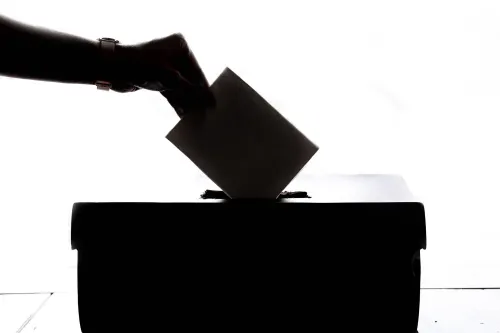
The Wisconsin Elections Commission voted 5-1 in closed session last Thursday to refer two criminal complaints against Elon Musk to the Brown County district attorney's office, finding probable cause that the billionaire violated the state's election bribery law during last year's state Supreme Court race. What makes the vote notable isn't just the outcome — it's the composition of the panel that reached it. The commission is split evenly between three Democrats and three Republicans, and a near-unanimous vote from a body designed to be politically balanced carries different weight than a party-line finding would.
The complaints center on a specific, highly publicized episode from March 2025: Musk handing out $1 million checks to Wisconsin voters in the days before the state's Supreme Court election. According to the motion the commission approved, reviewed by the Associated Press, the panel found probable cause that Musk broke Wisconsin law "by making a social media post offering $1 million to people who voted in the Supreme Court election 'in order to induce them to vote in that election.'" Wisconsin's election bribery statute makes it a crime to offer "anything of value" to an elector specifically to induce them to vote — language the commission concluded Musk's actions likely violated.
What actually happened in the days before the election
The mechanics of the giveaway, now under scrutiny, played out publicly and with considerable fanfare at the time. Musk posted on X in late March 2025 announcing he would give a talk in Wisconsin with entrance "limited to those who have voted in the Supreme Court election," adding that he would "also personally hand over two checks for a million dollars each in appreciation for you taking the time to vote." He ultimately distributed three $1 million checks to Wisconsin voters before the April 1, 2025 election — two presented in person at a Green Bay town hall event, and one delivered a few days earlier to a separately chosen recipient. Two weeks before the election, Musk's political action committee, America PAC, had also offered $100 payments to voters who signed a petition opposing "activist judges" or who referred another voter to sign it.
The scale of Musk's broader involvement in the race went considerably further than the checks themselves. Musk and organizations he funded or controlled spent more than $20 million supporting Brad Schimel, the Republican-backed candidate, in an explicit effort to flip control of Wisconsin's highest court. Combined spending from both sides of the race topped $100 million, making it the most expensive judicial election in American history. Schimel lost anyway, defeated by 10 percentage points by Democratic-backed candidate Susan Crawford — a result that preserved the court's liberal majority, which has since grown to 5-2 following a separate 2026 victory by Democratic-backed candidate Chris Taylor.
What happens next, and how much actually rides on one county prosecutor
The commission's referral doesn't guarantee criminal charges. It hands the decision to Brown County District Attorney David Lasee, a Republican, who now has 40 days to report back to the commission on whether his office intends to pursue prosecution. Lasee did not immediately respond to media requests for comment following the referral, and it remains entirely unclear which way he's leaning. That uncertainty is central to how this story plays out: a bipartisan commission finding probable cause is a meaningful institutional judgment, but it carries no binding legal force on its own. The actual decision to charge, or not, sits with a single elected local prosecutor.
Commentary following the referral has been openly skeptical that charges will actually materialize, pointing to the broader pattern of billionaires and ultra-wealthy political donors rarely facing serious criminal consequences for campaign spending decisions, however aggressive. That skepticism isn't baseless — it reflects the practical reality that election bribery statutes, even when a bipartisan commission finds probable cause for a violation, still require a prosecutor willing to bring the case, and prosecutors weighing politically fraught cases against extremely well-resourced defendants have historically shown considerable reluctance to do so.
Musk's defense: this was political speech, not bribery
Musk's legal team has consistently framed the giveaways as constitutionally protected political expression rather than illegal inducement to vote. In court filings from 2025, his attorneys argued the payments were "intended to generate a grassroots movement in opposition to activist judges, not to expressly advocate for or against any candidate," and that any attempt to restrict the giveaways would violate both the Wisconsin and U.S. constitutions' free speech protections. That argument has had real success in court so far — Wisconsin state courts declined to block the giveaways before the election even took place, and the Wisconsin Supreme Court itself denied an emergency petition from Attorney General Josh Kaul seeking to halt the payments, without explaining its reasoning.
Kaul, a Democrat, had filed suit just one day after Musk's initial announcement, seeking an injunction to stop the checks from being distributed. That effort failed at every level before the election occurred. A separate, still-pending lawsuit filed by the Wisconsin Democracy Campaign, a government watchdog group, along with two individual voters, makes a broader legal argument — alleging the giveaways violated not just the state's bribery statute but also its laws against unauthorized lotteries, and seeking to bar Musk from conducting similar giveaways in any future Wisconsin election.
A tactic with a track record, and mixed legal results elsewhere
This wasn't Musk's first attempt at this specific strategy, and its legal fate has varied meaningfully depending on jurisdiction. Musk's America PAC used a nearly identical approach during the 2024 presidential campaign, offering $1 million a day to registered voters in seven battleground states — Arizona, Georgia, Michigan, Nevada, North Carolina, Pennsylvania, and Wisconsin — who signed a petition supporting the First and Second Amendments, with additional payments offered to those who referred other signers.
That 2024 version drew its own legal challenge. Philadelphia District Attorney Larry Krasner sued Musk and America PAC, arguing the giveaway constituted an illegal lottery under Pennsylvania law. A Pennsylvania judge ultimately declined to block the payments, ruling that prosecutors had failed to demonstrate the effort met the legal definition of an illegal lottery, and the giveaways continued through Election Day. Separately, an Arizona voter has since filed a federal lawsuit against Musk over the same 2024 giveaway program, alleging fraud and breach of contract on the theory that Musk misrepresented how winners would actually be selected. Taken together, this pattern — repeated use of large cash giveaways tied to voting or petition-signing, followed by legal challenges that have mostly failed to stop the payments before an election but have continued generating litigation afterward — suggests the Wisconsin referral is unlikely to be the last legal test this specific tactic faces, regardless of how Brown County's prosecutor ultimately decides to handle this particular case.
*This article was researched using publicly available reporting from the Associated Press, CNN, CBS News, ABC News, The Hill, Fortune, and TIME's coverage of the Wisconsin Elections Commission's referral regarding Elon Musk's 2025 Wisconsin Supreme Court election giveaways. It is intended for informational purposes.*
Written by
Dr. Anand Sharma
Deep Understanding of domestic and international policy.