Blogerroom
Draft Delhi Voter List Drops 1 in 3 as Protests Hit CEC
Delhi's draft roll excluded 47.6 lakh of 1.45 crore voters, 33 lakh got notices, and police detained protesters demanding the CEC's exit.
When Delhi's election office published its draft voter list on August 31, roughly one in three names on the old roll was missing. Court filings put the exclusions at 47.56 lakh (about 4.76 million) out of a pre-revision electorate of around 1.45 crore, according to The Tribune. A month later, hundreds of people were being detained on the streets of the capital for demanding that the man who runs India's Election Commission resign over it.
Inside the numbers
The revision is called the Special Intensive Revision, or SIR, and it requires voters to be matched against the previous intensive roll from 2002 or to produce documents. According to petitioners' figures reported by The Tribune, 97.53 lakh electors submitted enumeration forms, and the 47.56 lakh who did not appear were excluded as absent, shifted, dead or duplicate. Those are the Election Commission's own categories, and they are legitimate reasons to remove a name. The open question is how many of the people in them are real voters who simply were not found.
A second group is larger and murkier. About 33.13 lakh electors who remained on the draft roll were flagged for notices, with 13.79 lakh classed as "no mapping" and 19.33 lakh as "logical discrepancies," per figures presented in the Supreme Court and reported by The Tribune. Delhi's Chief Electoral Officer has said repeatedly that a notice does not mean deletion. That is true, and it matters. But a notice is still a demand on the voter, and 33 lakh of them is a heavy load on both citizens and the officials who must process the replies.
The honest reading is that nobody outside the Commission can yet say how many of the 47 lakh are phantom entries and how many are real people, and the process of finding out is still running.

What the court has said so far
On September 22 a bench led by Chief Justice Surya Kant told the Commission that notices appeared to be going out almost mechanically, and asked it to clarify what a logical discrepancy actually is and what safeguards it could add, LiveLaw and The Tribune reported. Lawyer Prashant Bhushan, appearing for petitioners, argued that voters were being asked to produce one of 12 prescribed documents, and that many could not even check their status without knowing their part number and constituency.
This is not a case where the courts have rejected the exercise. In the Bihar SIR litigation last year, the Supreme Court accepted that the Commission can revise rolls and decide who is excluded as a non-citizen, while ordering it to publish the details of 65 lakh deleted names with reasons. The pattern is consistent: the court lets the Commission act and then pushes it toward transparency. Delhi's petitioners are asking for the same remedy.
The street and the chair
On October 2, Gandhi Jayanti, police sealed the approaches to Jantar Mantar and detained hundreds of protesters, including Aam Aadmi Party leaders Saurabh Bharadwaj and Atishi, ThePrint reported. Police said permission had not been granted and prohibitory orders were in force. The Wire described slogans demanding Chief Election Commissioner Gyanesh Kumar's removal.
The protesters' complaint is about more than lists. They question whether Kumar acts alone. The Supreme Court has agreed to list a plea asking whether he can implement decisions in the Commission's name without the concurrence of the two other Election Commissioners, according to Newsdrum. The Commission disputes the premise, and sources told reporters that every decision since February 2025 has been unanimous, including the June 24, 2025 order launching the SIR. Those assurances followed a newspaper report that Commissioners Sukhbir Singh Sandhu and Vivek Joshi had recorded objections on 14 occasions over 10 months. The Commission describes such notes as inputs rather than dissent.
Whatever the truth, this fight is hard to settle with statements. A commission that wants to be trusted with removing names from the rolls has to be seen to decide collectively. Other democracies are discovering how much institutional design matters: South Korea has just split investigation from indictment by abolishing its prosecutors' office, and in Israel a High Court disqualification fight has already forced a Balad leader to end his candidacy before a single vote is cast. Whoever draws the boundaries of the electorate wields enormous power, and independence is the only thing that makes that power tolerable.
The calendar that decides it
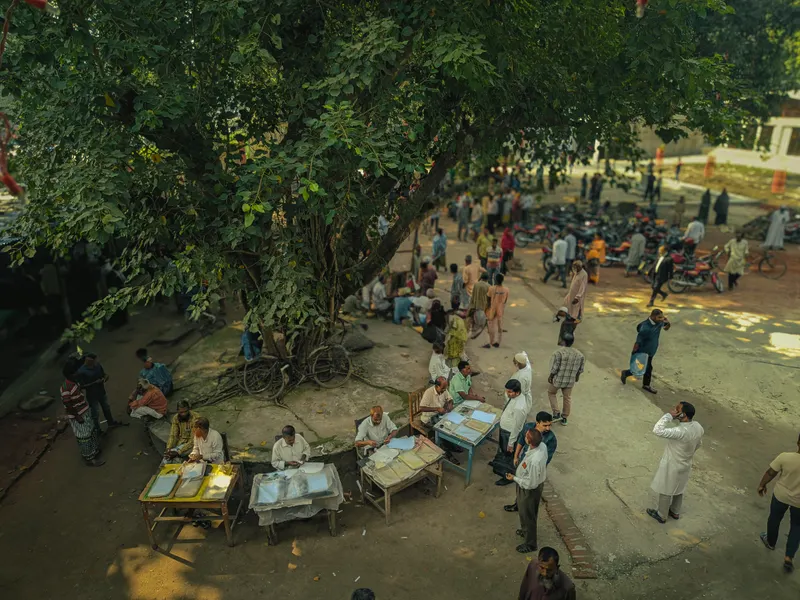
The Commission extended the claims-and-objections window by a month on September 26, to October 30. Disposal of notices and objections now runs to November 30, and the final roll is due December 4, per PTI and All India Radio. Special camps at polling stations on October 4 were meant to help people enrol through Form 6, with further camps planned at colleges later this month.
The Commission said that by late September more than 2.98 lakh hearings had been held in unmapped and logical-discrepancy cases. Set against 33 lakh notices, that looks small, though officials said most cases were validated through field verification and their names reserved for the final roll. Both claims can be tested, because the final roll will either show a gap between draft and final that is mostly restored names, or it will not.
That gap is the number to watch on December 4. If most of the excluded names come back, the exercise will look like heavy-handed housekeeping. If they do not, the street protests will look like an early warning.
---
Written by
Dr. Anand Sharma
Deep Understanding of domestic and international policy.