Blogerroom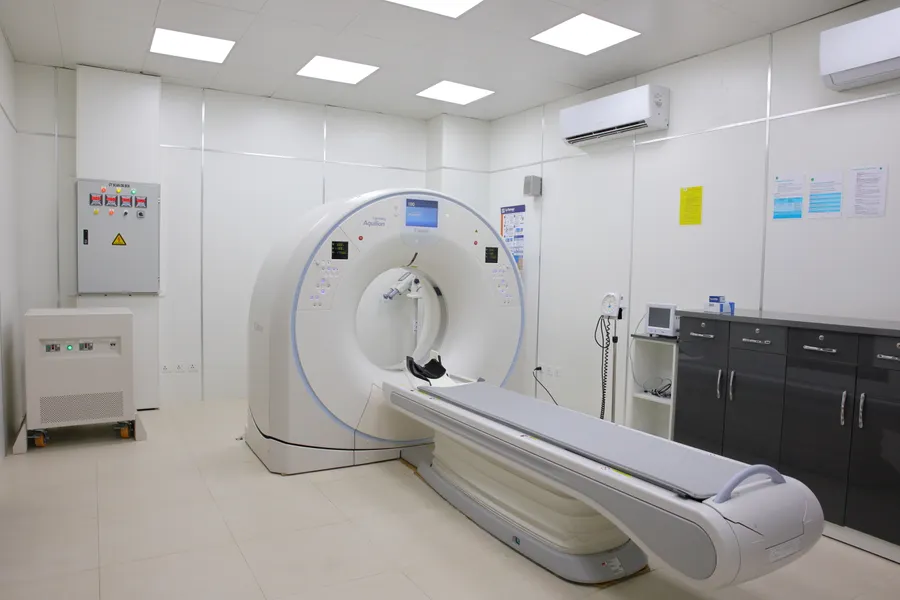
Heart Calcium Scans Help Only Some Patients, Study Finds
A 10-year study of 6,000 adults found coronary calcium scans add little to standard risk tools, except for patients at borderline risk.
A popular test that may not be helping most of the people who get it
Coronary artery calcium scans have become an increasingly common addition to routine cardiovascular checkups, marketed and often requested as a way to get a clearer, more personalized picture of heart disease risk beyond what a standard blood pressure and cholesterol reading can tell you. A new Northwestern Medicine study published in JAMA delivers a genuinely useful, if slightly deflating, answer to a question that hasn't had solid long-term data behind it until now: for most people, the scan adds relatively little to what a standard risk calculator already predicts.
Dr. Nilay Shah, the study's senior author and an assistant professor of medicine in the division of cardiology at Northwestern University Feinberg School of Medicine, was direct about what the finding means in practice. "Our findings suggest that not everyone necessarily needs or would benefit from a coronary artery calcium scan for the purpose of predicting risk of heart attack and stroke," Shah said.
What the scan actually measures, and what it's being tested against
A coronary artery calcium scan is a quick, relatively inexpensive CT test that looks for calcium-containing plaque built up inside the arteries supplying blood to the heart. The resulting calcium score reflects how much of that calcified plaque is detectable, and in general, a higher score correlates with greater future cardiovascular risk. The test has grown more accessible in recent years as CT scanning costs have declined, making it an increasingly attractive add-on for patients and physicians looking for more precise risk information.
The comparison point in this study is PREVENT, the American Heart Association's current flagship cardiovascular risk calculator, which estimates a person's chance of developing heart disease over the next 10 or 30 years using routinely available health information: blood pressure, cholesterol levels, age, and sex. PREVENT represents the standard, no-additional-testing-required approach that virtually every primary care visit already has access to, making it the natural baseline against which any additional test, including a calcium scan, needs to prove its added value.

What a decade of follow-up actually showed
Shah's team followed more than 6,000 adults, aged 45 to 79 at baseline, enrolled in the Multi-Ethnic Study of Atherosclerosis, for a full 10 years, tracking whether adding a coronary calcium score to PREVENT's existing risk estimate meaningfully improved prediction accuracy. Across the overall study population, the answer was underwhelming: calcium scores provided only a small improvement over PREVENT alone. For the majority of participants, in other words, getting a calcium scan on top of standard risk factors didn't meaningfully change how accurately their future heart disease risk could be predicted.
That's a genuinely important finding for a test that has grown popular partly on the assumption that more information, especially information from a direct imaging test rather than an indirect statistical calculation, must be more useful. A decade of real follow-up data, tracking actual cardiovascular events rather than just risk scores on paper, is a considerably more rigorous way to test that assumption than shorter studies or theoretical modeling could provide.
The exception that makes the scan genuinely useful
The study's more actionable finding is the specific patient group where calcium scans did make a real difference: people with borderline or intermediate cardiovascular risk under PREVENT's baseline calculation. For that group, the study found the scans could meaningfully improve prediction accuracy, effectively resolving genuine clinical ambiguity by revealing which borderline-risk patients were actually more likely to develop heart disease and which weren't.
That's precisely the scenario where an additional test earns its clinical keep. A patient PREVENT already classifies as clearly high-risk or clearly low-risk doesn't need a tiebreaker; their treatment path is generally already clear from existing information. A patient sitting in the ambiguous middle ground, where a physician genuinely isn't sure whether to recommend statin therapy or more aggressive monitoring, is exactly the situation where a calcium score's additional information changes an actual clinical decision rather than simply confirming what was already known.

Why routine, universal use carries a real cost
Shah was explicit about the downside of applying calcium scans indiscriminately across all risk categories rather than reserving them for patients who genuinely need the tiebreaker. "Routinely using a calcium scan in people who are at low risk may result in unnecessary radiation exposure, testing and costs with unclear clinical benefits," Shah said. That's a meaningful clinical tradeoff to weigh, even for a test as relatively low-dose and inexpensive as a coronary calcium CT. Unnecessary imaging isn't harmless by default; it carries cumulative radiation exposure, adds cost to a healthcare system already managing significant testing overuse, and can occasionally trigger further downstream testing to investigate incidental findings that ultimately prove clinically irrelevant.
That logic mirrors a broader theme running through cardiology research this year: precision in identifying exactly which patients benefit from a given intervention, rather than applying it uniformly across an entire risk category, is increasingly what separates genuinely useful clinical tools from ones that simply add cost and complexity without improving outcomes. It's the same underlying principle behind recent findings on which specific patients actually benefit from statin therapy in older age groups, and behind the age-stratified evidence supporting defibrillator implantation in younger heart failure patients specifically rather than across the board. Across all three cases, the more valuable clinical insight isn't whether an intervention works in general, it's precisely which subgroup of patients actually needs it.
What questions remain open
Shah was careful to flag where this study's conclusions don't yet extend. The utility of adding calcium scores to PREVENT estimates among certain high-risk populations, specifically South Asian and Filipino adults, remains unevaluated by this research, an important gap given that cardiovascular risk factors and disease patterns can vary meaningfully across different ethnic populations. The study also only included adults aged 45 to 79 at baseline, leaving open whether the same "borderline risk only" pattern holds for younger adults who might be screened earlier in an effort to catch developing risk factors before they become clinically significant.
What this means for anyone considering the test
For patients wondering whether to request or accept a coronary calcium scan, this study offers a genuinely useful framework rather than a blanket yes-or-no answer: the test's real value depends heavily on where your baseline risk estimate already sits. If a standard risk calculator already places you clearly in a low-risk or high-risk category, an additional calcium scan is unlikely to meaningfully change your treatment plan, and the associated radiation exposure, cost, and testing burden may not be worth it. If your risk estimate falls into that genuinely ambiguous borderline or intermediate zone, though, this decade of follow-up data suggests the scan could provide real, decision-relevant information, precisely the scenario where reinforcing PREVENT's flagship status as a well-performing standalone tool, while reserving imaging for patients who actually need the tiebreaker, offers the clearest path to using both effectively rather than defaulting to more testing simply because more testing is available.
Written by
Dr. Anand Sharma
Doctor and science communicator.