Blogerroom
Tim Cook Steps Down as Apple CEO, Ternus Takes Over
Tim Cook ended his 15-year run as Apple CEO Monday, handing the reins to hardware chief John Ternus as the company nears $5 trillion.
The end of the longest run in Apple's modern history
Monday was Tim Cook's last day as chief executive of Apple, closing out fifteen years in the job and handing the company to John Ternus, the hardware engineer who has spent a quarter-century building the products that made Apple the company it is today. The transition took effect Tuesday, September 1, exactly as Apple had scheduled it back in April, when the board unanimously approved the succession plan following what the company described as a long-term planning process rather than a sudden departure.
Cook marked the handoff with a memo to staff, writing that he was "not leaving Apple" but "stepping away from a role that I have loved deeply." He said he took "enormous comfort in handing the helm to someone as brilliant and wonderful and capable" as Ternus, adding: "Few people understand what it takes to build products that change the world the way John does." Cook, 65, moves into the newly created role of executive chairman, where Bloomberg reports his focus will center on managing Apple's relationships with the Trump administration and the Chinese government, two of the most consequential and delicate relationships the company navigates.
What fifteen years actually produced
The scale of what Cook built is easy to understate simply because it happened gradually, one strong quarter compounding into the next for over a decade. When Cook took over from Steve Jobs in August 2011, Apple carried a market capitalization of roughly $350 billion. By the time he stepped down, that figure had grown past $4 trillion, and depending on the trading day, Apple has flirted with becoming just the second company in history to touch a $5 trillion valuation. That's more than a tenfold increase in company value under a single CEO's tenure, a run few executives in any industry have matched.
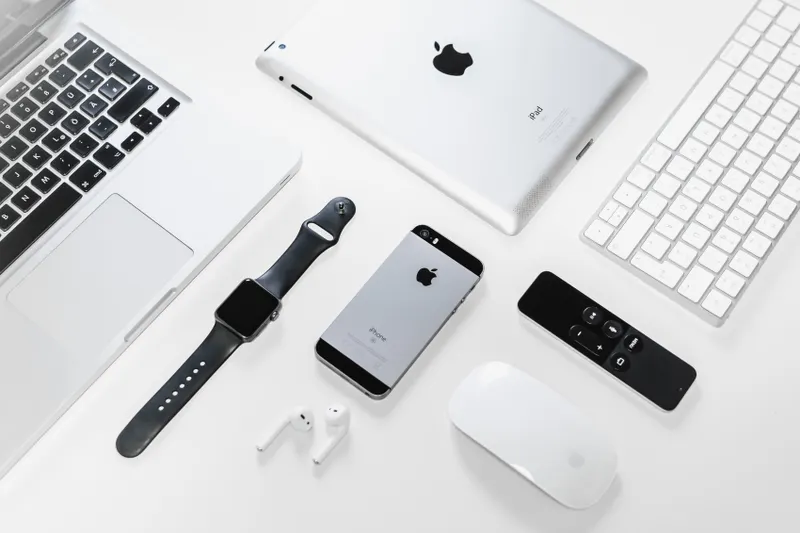
Cook's specific contribution to that growth is worth separating from Jobs's legacy, since the two men led Apple through genuinely different eras. Jobs built the product categories, the iPod, the iPhone, the App Store ecosystem, that made Apple culturally dominant. Cook, a former supply-chain operator rather than a product visionary, took those categories and scaled them into a global manufacturing, retail, and services operation of unprecedented efficiency, while expanding Apple into new territory including the Apple Watch, AirPods, and a fast-growing services division that now represents one of the company's most profitable segments.

Why an engineer, not an operator, is taking over
Ternus represents a genuine change in leadership profile, not just a change in name. Where Cook came up through operations and supply chain, Ternus, 50, joined Apple in 2001 and built his career entirely inside product development, becoming vice president of hardware engineering in 2013 and senior vice president of the same division in 2021. He's the engineer who oversaw the physical design and engineering of the iPhone, iPad, Mac, Apple Watch, and Vision Pro, giving him direct authorship over the products that generate the overwhelming majority of Apple's revenue.
That distinction matters for how investors and analysts are reading the transition. A hardware-first CEO signals a company betting its next chapter on continued product innovation rather than operational optimization, at a moment when Apple faces genuine competitive pressure in artificial intelligence from rivals who've moved faster on AI-native products. Cook has publicly backed that bet directly, telling Apple employees in July that the transition had been going "over the top great" and calling Ternus the "perfect person" to lead the company forward.
The board changes that came with it
Cook's exit wasn't the only leadership shift finalized this week. Arthur Levinson, who had served as Apple's non-executive board chairman for fifteen years, moved into the role of lead independent director, effective the same day as the CEO transition. Beneath Ternus, Apple has also reorganized parts of its executive bench: Johny Srouji, previously responsible for silicon engineering, has taken over the broader hardware technologies portfolio Ternus vacated, while Eddy Cue's services division absorbed oversight of the App Store. Bloomberg has also reported that Phil Schiller, another longtime Apple executive, has stepped back from his public-facing roles at Apple events and in App Store matters.
Together, these moves suggest a broader generational handoff across Apple's senior leadership, not simply a single name changing at the top of an org chart. That kind of coordinated reshuffling is generally viewed favorably by governance-focused investors, since it reduces the risk that a single departure creates a leadership vacuum or forces a rushed, reactive restructuring in its aftermath.
What the timing means heading into a critical product cycle
The handoff lands at a genuinely consequential moment for Apple's product roadmap. Ternus officially becomes CEO just ahead of Apple's traditional September product event, expected to unveil the iPhone 18 lineup, and reporting has indicated Apple's first foldable iPhone could debut around the same window. He also inherits the company's most ambitious software overhaul in years: a rebuilt, AI-powered version of Siri, built using underlying technology developed in partnership with Google, that represents Apple's most direct answer yet to competitive pressure from AI-native assistants built by OpenAI, Google, and Anthropic. How that overhauled Siri performs, and how enthusiastically consumers respond to it, will likely shape early market perception of Ternus's leadership far more than any specific hardware refresh will.
What comes next for investors
Succession transitions at companies this large rarely produce immediate, dramatic stock swings when they're this well telegraphed, and Apple gave the market more than four months of advance notice before Tuesday's handoff actually took effect. The more meaningful question for investors isn't Monday's transition itself, but what it signals about Apple's next decade: a company that spent fifteen years under an operations-focused CEO optimizing an already-dominant product ecosystem is now handing control to the engineer who built much of that ecosystem's hardware, betting that continued product innovation, not further operational refinement, is what the next chapter of growth actually requires. Whether that bet pays off will play out over quarters and years, not the single trading day marking Cook's final morning in the corner office.
Written by
Mr. Jitendra Bhatt
Deep understading of finance area and writer covering markets, investing, and economic policy.