Blogerroom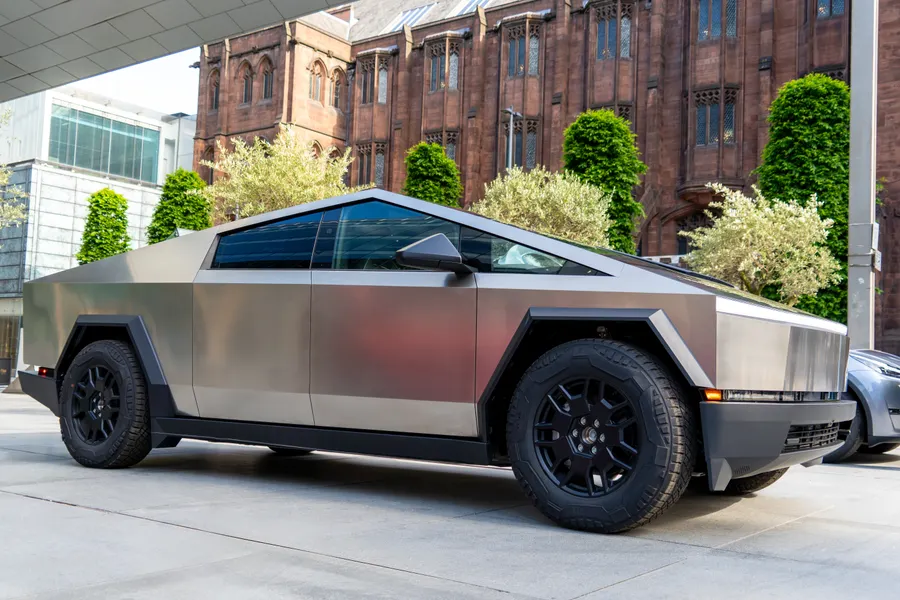
Tesla Falls 6% as Cybercab Launch Meets NHTSA Probe
Tesla stock fell 6% after its Cybercab launch left key questions unanswered and NHTSA opened a safety certification audit.
A rally that reversed itself within 24 hours
Tesla shares climbed 5.4% Thursday as investors anticipated the company's long-awaited Cybercab launch event. By Friday's close, that entire gain had reversed, and then some: shares fell roughly 6% after the event itself, held in Austin, Texas, left investors with more unanswered questions than concrete details, and after federal regulators simultaneously opened a formal audit into how Tesla certified the vehicle's safety in the first place.
That round-trip, a sharp pre-event rally followed by an even sharper post-event decline, is itself a useful signal. It suggests the market had priced in meaningful new information ahead of Thursday's event, and what actually arrived didn't clear that bar.
What Tesla actually showed, and what it didn't
The Cybercab itself isn't new; Tesla first unveiled the bronze-colored, two-seat robotaxi design nearly two years ago, and the vehicle has been in production since April. It has no steering wheel, no pedals, and scissor-style "butterfly" doors, a design built entirely around full autonomy with no manual override option at all. Thursday's event centered on a specific milestone: Tesla announced that users of its Robotaxi ride-hailing app could now book a fully driverless trip in an actual Cybercab within a geofenced area of Austin, rather than only in the human-monitored Model Y vehicles that had made up the bulk of Tesla's robotaxi fleet until now.
But the format of the announcement undercut its substance. The event was invitation-only, closed to the public, and not livestreamed, breaking from Tesla's usual pattern of broadcasting major product reveals widely. CEO Elon Musk didn't attend. Executive remarks covering pricing, manufacturing, and underlying technology lasted only about fifteen minutes, and the company still declined to say when it actually plans to start charging passengers real fares, describing only a vague "dynamic pricing model that rises with demand" without offering numbers analysts could use to model the business.
Why Wall Street's reaction was so pointed
Analyst notes published Friday morning didn't mince words. RBC Capital Markets, which maintained its buy rating on the stock despite the reaction, wrote that Tesla had "offered limited new incremental disclosure relative to prior announcements," with key questions on pricing, manufacturing timelines, and regulatory status still unresolved. Wells Fargo was blunter, titling its note simply "TSLA Cybercab Launch Event Underwhelms," and flagging that Tesla's Austin robotaxi service is already "facing early execution issues," pointing to user-reported complaints about incorrect routing, missed destinations, and unusually long wait or ride times.
Those execution complaints matter beyond the specific vehicles involved. A company asking investors to value its stock partly on the promise of a mature, reliable, at-scale robotaxi network needs its early deployment to demonstrate operational competence, not generate a fresh stream of user complaints about basic navigation reliability just as it's trying to expand into a genuinely driverless product tier.
A federal audit landing at the worst possible moment
Compounding Friday's stock reaction, the National Highway Traffic Safety Administration opened an audit query the same day as the launch event, examining the process and technical data Tesla used to self-certify the Cybercab as compliant with Federal Motor Vehicle Safety Standards. That audit centers on a genuinely unusual aspect of the vehicle's design: NHTSA specifically noted the Cybercab lacks permanently attached conventional manual controls, including a brake pedal, gas pedal, steering wheel, and mirrors, equipment nearly every other vehicle on American roads carries as standard.
U.S. auto safety regulation has historically been built around vehicles that assume a human driver is present and capable of manual intervention. A vehicle deliberately engineered without that fallback occupies genuinely uncharted regulatory territory, and Tesla's decision to self-certify the Cybercab as compliant, rather than seeking a formal exemption process before deployment, is precisely the choice NHTSA's audit is now scrutinizing. Whatever the audit ultimately concludes, its mere existence, opened on launch day, raises the kind of regulatory uncertainty that tends to weigh on a stock already trading at a valuation built substantially on future promise rather than current fundamentals.
The competitive gap the numbers actually reveal
Perhaps the most concrete, verifiable detail to emerge from Friday's coverage is the scale gap between Tesla's robotaxi ambitions and where the business actually stands today. As of this week, Tesla had registered just 45 Cybercabs in Texas, with its broader Texas robotaxi fleet, mostly human-monitored Model Ys, totaling approximately 420 vehicles. Alphabet's Waymo, the robotaxi market's current leader, operates nearly 1,000 vehicles and reported more than 500,000 fully autonomous rides per week in the first quarter of 2026 alone.
That gap matters enormously for how investors should weigh Thursday's announcement. Tesla isn't just behind Waymo in fleet size; it's behind by more than a factor of twenty in weekly ride volume, a distance that a single, limited, invitation-only event in one geofenced Austin neighborhood does relatively little to close. Framed against that competitive backdrop, Friday's muted, detail-light announcement reads less like a company pulling ahead in a race it's already trailing, and more like incremental progress that simply didn't match the scale of investor expectations already baked into the stock price.
What this means for Tesla's broader valuation story
Friday's decline left Tesla down 16% year to date through Thursday's close, making it the weakest performer among the so-called Magnificent Seven group of major technology stocks heading into the back half of 2026. That underperformance matters because Tesla's valuation, trading at a price-to-earnings ratio north of 320, depends heavily on investors accepting a story about the company's future in robotaxis and robotics rather than its current auto sales and margins, which have faced their own separate pressures this year. A valuation built that heavily on a multi-year technology bet is unusually sensitive to exactly the kind of event Thursday turned out to be: real progress, but progress that arrives more slowly, with less operational polish, and with more regulatory friction than the market had been pricing in.
None of this means Tesla's robotaxi ambitions are doomed; RBC's decision to maintain its buy rating despite the disappointing event reflects a view among some analysts that the underlying long-term opportunity remains intact even if this particular announcement fell short. But Friday's reaction is a clear reminder that for a stock priced this far ahead of its current fundamentals, the market's patience for vague pricing models, closed-door events, and newly opened regulatory audits is considerably thinner than it might be for a company whose valuation didn't already assume years of future execution going close to perfectly.
Written by
Mr. Jitendra Bhatt
Deep understading of finance area and writer covering markets, investing, and economic policy.